
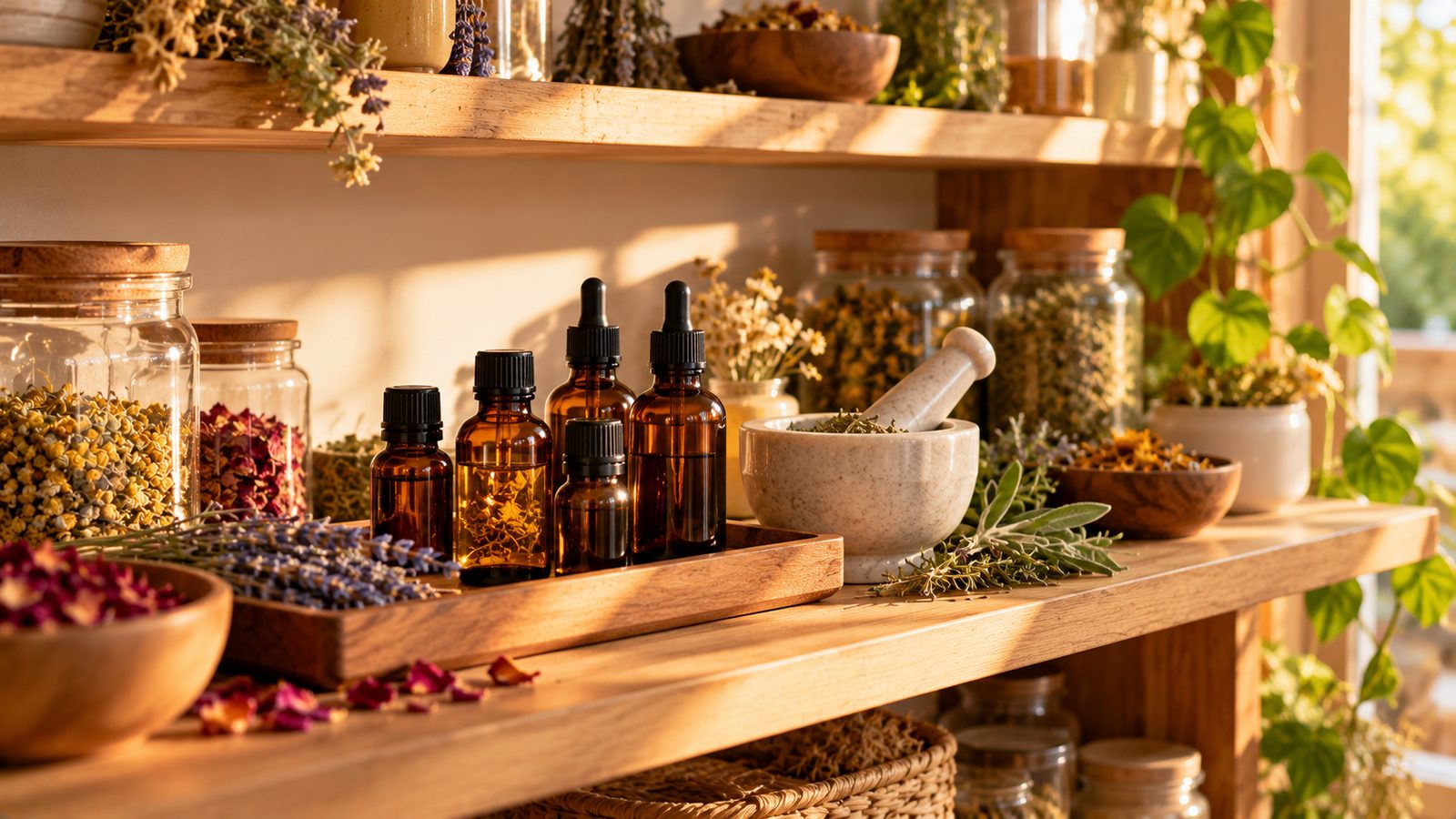
Welcome to our Oils and Tinctures guide, the home base for everything on forthefeels about essential oils, carrier oils, herbal tinctures and building a home apothecary.
Natural oils and herbal extracts have been part of home care traditions for a very long time. Today, many people keep a small shelf of them for aromatherapy, skincare, natural cleaning and quiet self-care rituals. If you are just starting out, the number of oils, butters and extracts out there can feel a little overwhelming. This page brings our guides together in one place, so you can find what you need and learn how the pieces fit together.
Here is how the guide is organized:
Essential Oils
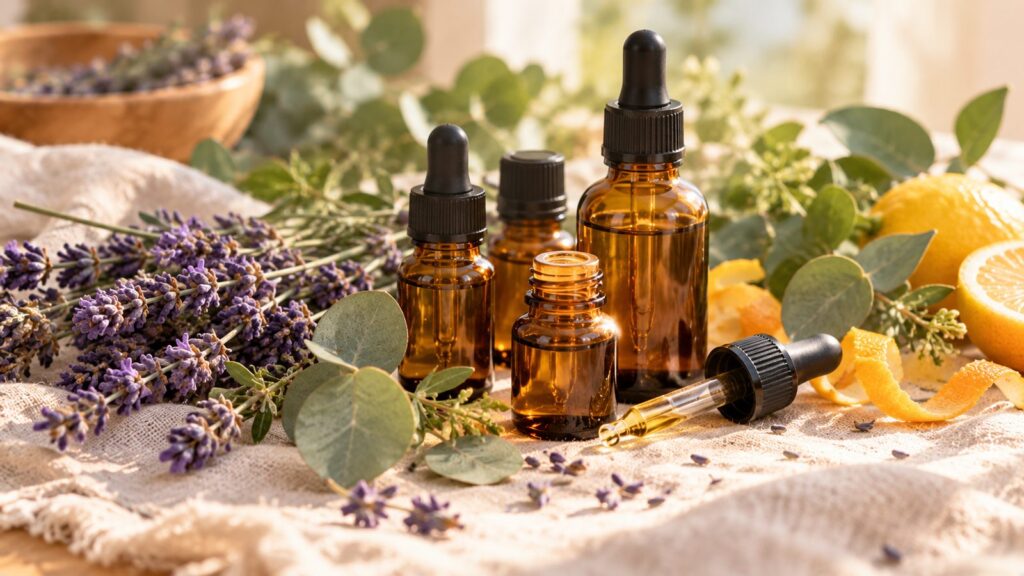
Essential oils are concentrated, aromatic oils taken from plants, usually by steam distillation or, for citrus peels, by cold pressing. Each one carries the scent and character of the plant it comes from, from the bright, fresh smell of lemon to the deep, woody warmth of cedarwood. Because they are so concentrated, a little goes a long way, and most are meant to be diluted before they touch the skin.
Our main Essential Oils guide covers what essential oils are, how they are made, the different ways people use them, and a closer look at popular oils like lavender, peppermint, eucalyptus, tea tree, lemon and bergamot. It is the best place to start if you are new.
Single essential oil guides
Want to go deeper on one oil? These guides look at a single oil, its background and the ways people traditionally use it:
- Agarwood Essential Oil
- Allspice Essential Oil
- Amyris Balsamifera Oil
- Anise Hyssop (Agastache) Essential Oil
- Fir Needle Essential Oil
- Palo Santo Essential Oil
- Star Anise Essential Oil
Using and making essential oils
- Can You Put Essential Oils in a Humidifier? looks at diffusing at home and why a humidifier and a diffuser are not the same thing.
- Essential Oil Distillers compares making your own distiller with buying one, if you are curious about producing oils yourself.
Carrier Oils
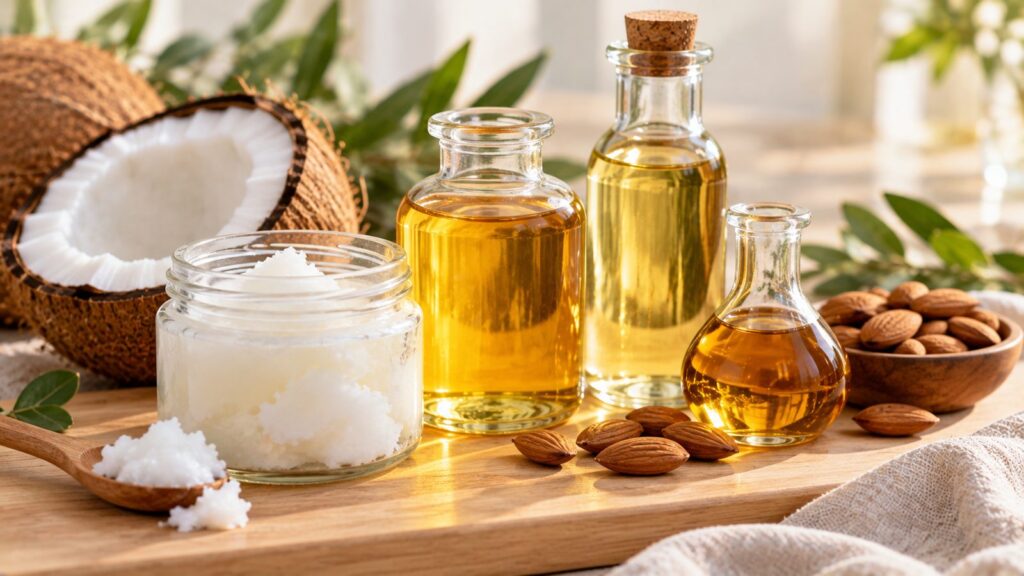
Carrier oils are the gentle partners of essential oils. They are usually pressed from the fatty parts of plants, such as seeds, nuts and kernels, and they have a mild scent or none at all. Coconut, sweet almond, jojoba and sesame oil are a few familiar examples. Carrier oils are used to dilute essential oils before they go on the skin, and many are loved on their own for massage and moisturizing.
Our Carrier Oils guide explains what a carrier oil is, introduces several popular ones and shares simple ways to use them. Butters and skin-loving oils belong in this family too:
Like any natural product, carrier oils can go rancid over time. Store them in a cool, dark place with the lid tightly closed, and trust your nose: if an oil smells sharp or off, it is time to replace it.
Tinctures
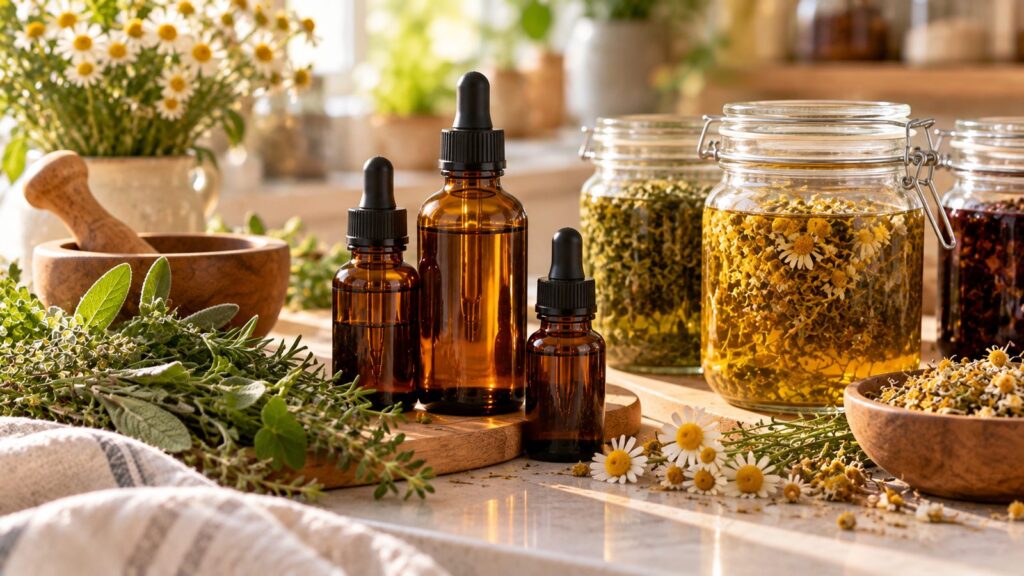
A tincture is a concentrated liquid extract made by soaking herbs, flowers, roots or bark in a liquid, most often alcohol, for several weeks. The liquid draws out the plant’s compounds, and the finished extract is strained and stored in small dark bottles, usually with a dropper. Tinctures are one of the oldest ways of preserving herbs, and many people enjoy making their own from plants they grow or gather.
Our Tinctures guide covers what herbal tinctures are, how they are traditionally used, some of the plants commonly used to make them, and how to make an alcohol-based tincture at home. Since tinctures start with herbs, this guide pairs well with it:
The Home Apothecary
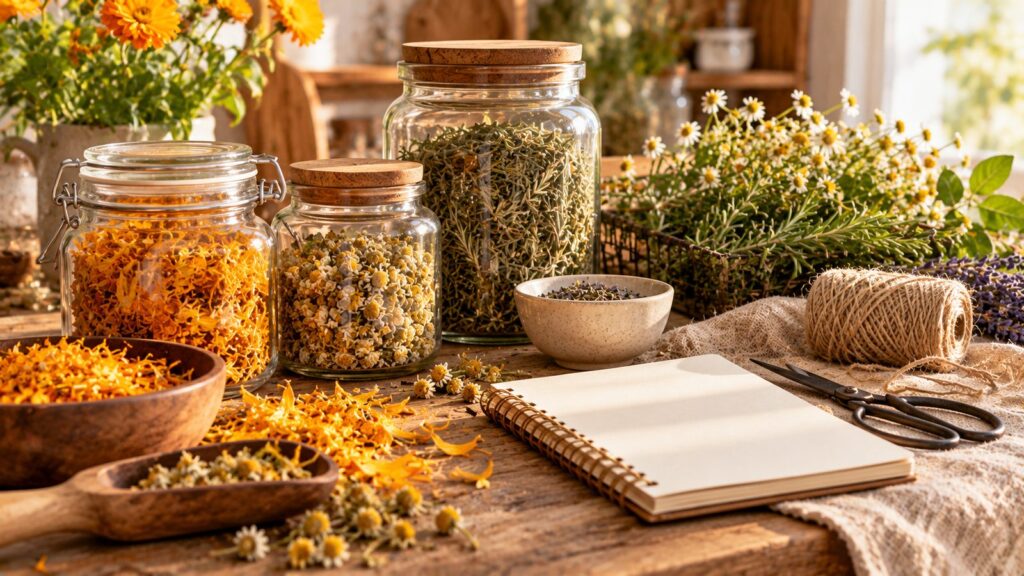
A home apothecary is simply a collection of natural ingredients kept on hand for wellness and self-care. It does not need to look like an old-fashioned pharmacy. It can be as simple as a tidy shelf or cabinet with a few carrier oils, a handful of favorite essential oils, some dried herbs and a tincture or two, all clearly labeled.
Our Home Apothecary guide walks through where the apothecary tradition came from, what you need to get started, where to find supplies, and how an apothecary can become part of a daily self-care routine. It is a lovely next step once you know which oils and herbs you enjoy most.
Dilution and Safety
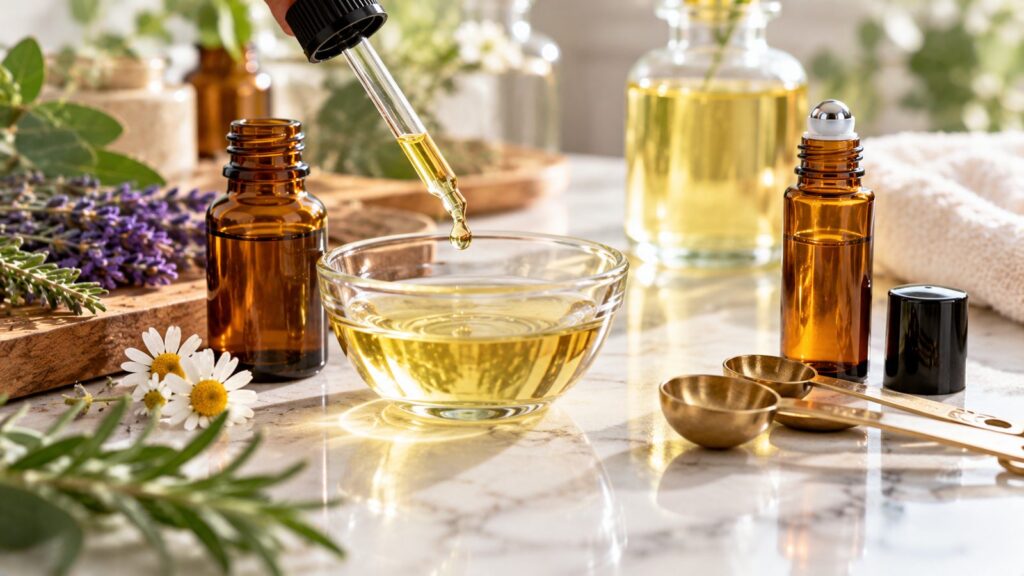
Essential oils are highly concentrated, so a few simple habits help you use them with care:
- Dilute essential oils in a carrier oil before applying them to skin, and never apply them undiluted unless a qualified professional has advised it.
- Try a small patch test on your inner arm first, and stop using any oil that causes irritation.
- Keep essential oils and tinctures out of the reach of children, and keep oils away from the eyes and other sensitive areas.
- Do not swallow essential oils.
- Some oils are not suitable for pets, and some citrus oils can make skin more sensitive to sunlight. Check before you use them around animals or before going out in the sun.
- Many tinctures contain alcohol, and herbs can interact with medicines. Talk with your doctor or pharmacist before using them, especially if you are pregnant or nursing, take medication, or have a health condition.
The information in our Oils and Tinctures guide is for general educational purposes only. It is not medical advice and is not meant to diagnose, treat, cure or prevent any condition.
Where to Go Next
New to oils? Start with the Essential Oils guide, then pick a carrier oil you like for dilution. Curious about herbs? Head to Tinctures and the Home Apothecary. We are adding new oil and herb guides over time, so check back here to find them all in one place.