
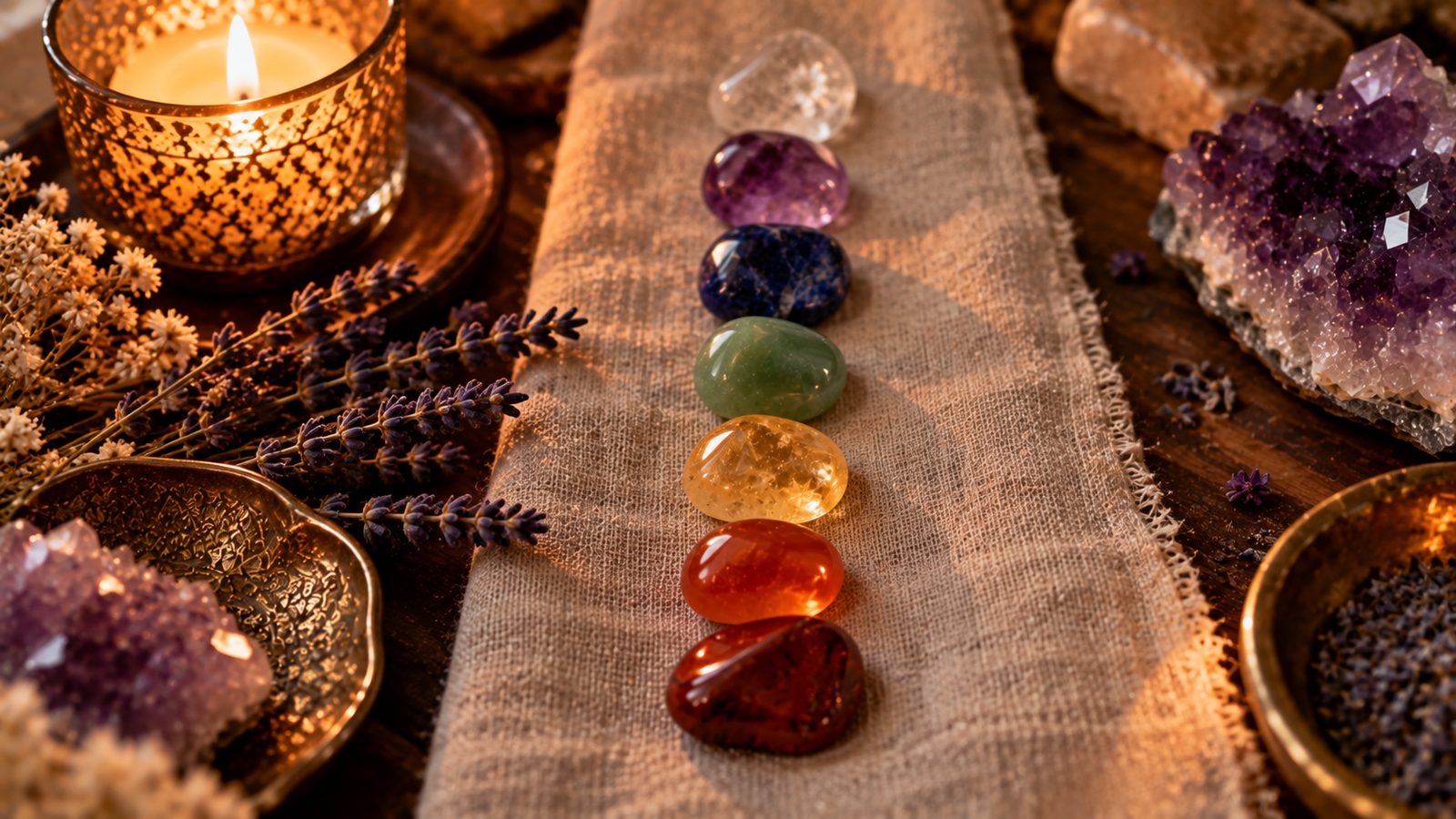
Welcome to our Chakras and Energy guide, the home base on forthefeels for chakra stones, singing bowls, crystals for sleep and gentle energy healing practices.
If you have ever picked up a crystal because it felt calming, or sat in a room while a singing bowl hummed, you have already brushed up against the world of chakras and energy work. These practices come from old spiritual traditions, and today many people fold them into quiet self-care routines like meditation, yoga and bedtime rituals. This guide explains the seven chakras in plain language, shows which chakra stones are traditionally paired with each one, and walks through sound, sleep and other energy practices so you can explore them in a way that feels right for you.
A quick, honest note before we begin: chakras, chakra stones and energy healing are traditions of belief and symbolism. They are not medical treatments and have not been shown to diagnose, treat or cure anything. Think of them as tools for reflection, relaxation and intention, and keep your doctor in the loop for anything health related.
In this guide:
- What are chakras?
- The 7 chakras chart
- Chakra stones by chakra
- Singing bowls and sound
- Crystals for sleep
- Energy healing practices
- How to start
- Chakras and energy FAQ
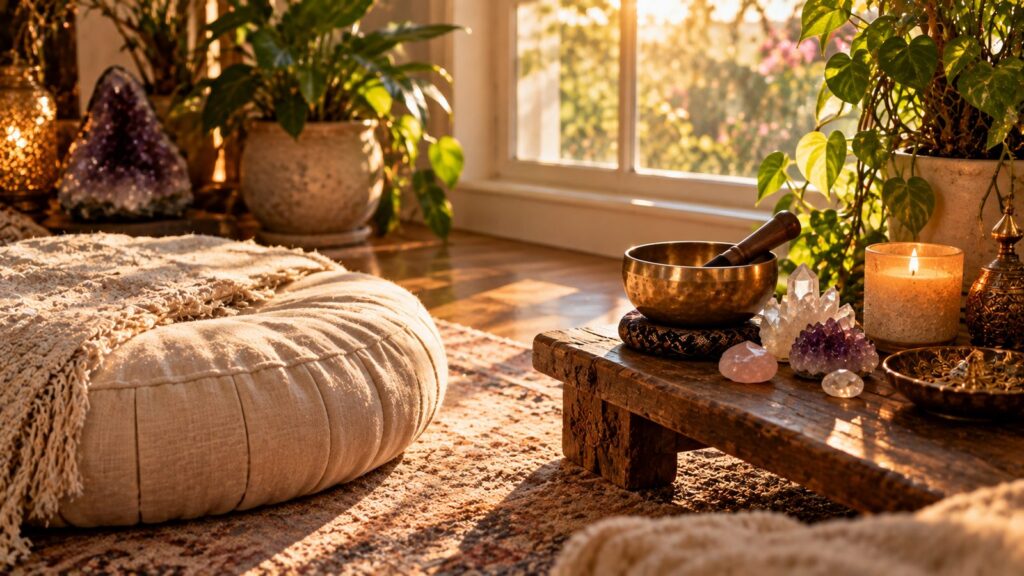
What Are Chakras?
The word chakra comes from Sanskrit and means “wheel” or “disk.” In the yoga and tantric traditions of India, chakras are described as spinning centers of energy along the body, running from the base of the spine to the top of the head. Each one is linked with certain qualities, such as feeling grounded, speaking clearly or trusting your intuition.
The idea is very old, and it has changed a lot over time. Early texts describe different numbers of chakras, and the familiar modern system of seven chakras, each with its own rainbow color, took shape much more recently, partly through Western writers in the 20th century. That is why you will sometimes see two books disagree about a color or a stone. Neither is “wrong.” They are drawing on different versions of the tradition.
In everyday crystal and wellness practice, people use the chakras as a kind of map. If you want to feel more grounded, you might focus on the root chakra. If you want to speak up in a hard conversation, you might focus on the throat chakra. Chakra stones, colors, sounds and meditations are simply ways of giving that intention a physical shape.
The 7 Chakras Chart
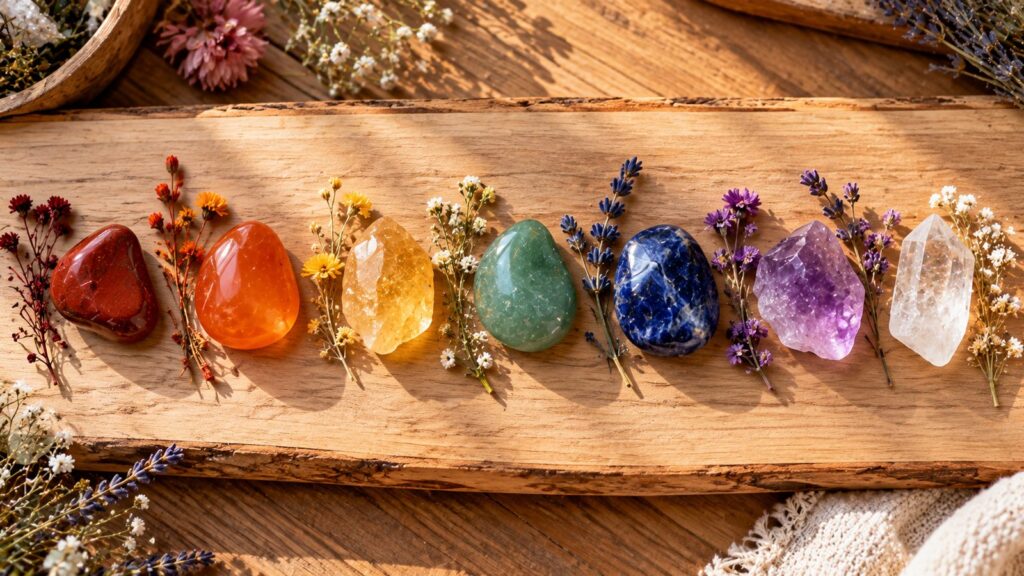
Here are the 7 chakras in order, from the base of the spine up to the crown of the head, with their Sanskrit names, traditional locations and colors, and the chakra stones our crystal guides pair with each one.
| Chakra | Sanskrit | Location | Color | Paired stones |
|---|---|---|---|---|
| Root | Muladhara | Base of the spine | Red | Aragonite, Black Tourmaline, Garnet, Hematite, Red Jasper |
| Sacral | Svadhisthana | Lower belly, below the navel | Orange | Carnelian, Red Jasper |
| Solar Plexus | Manipura | Upper belly, above the navel | Yellow | Citrine |
| Heart | Anahata | Center of the chest | Green (pink in some systems) | Amazonite, Green Aventurine, Jade, Malachite, Moss Agate, Peridot, Rose Quartz |
| Throat | Vishuddha | Throat | Blue | Amazonite, Aqua Aura Quartz, Aquamarine, Labradorite, Lapis Lazuli, Sodalite, Turquoise |
| Third Eye | Ajna | Forehead, between the brows | Indigo | Amethyst, Labradorite, Sodalite |
| Crown | Sahasrara | Top of the head | Violet or white | Amethyst, Aqua Aura Quartz, Clear Quartz, Opal, Selenite |
Notice the pattern? Chakra stones usually match the chakra’s color: red and black stones for the root, orange for the sacral, yellow for the solar plexus, green and pink for the heart, blue for the throat, deep blue and purple for the third eye, and clear, white or violet stones for the crown. If you ever forget a pairing, color is a lovely place to start, and our Crystals Catalog lets you filter stones by color and chakra.
Chakra Stones by Chakra
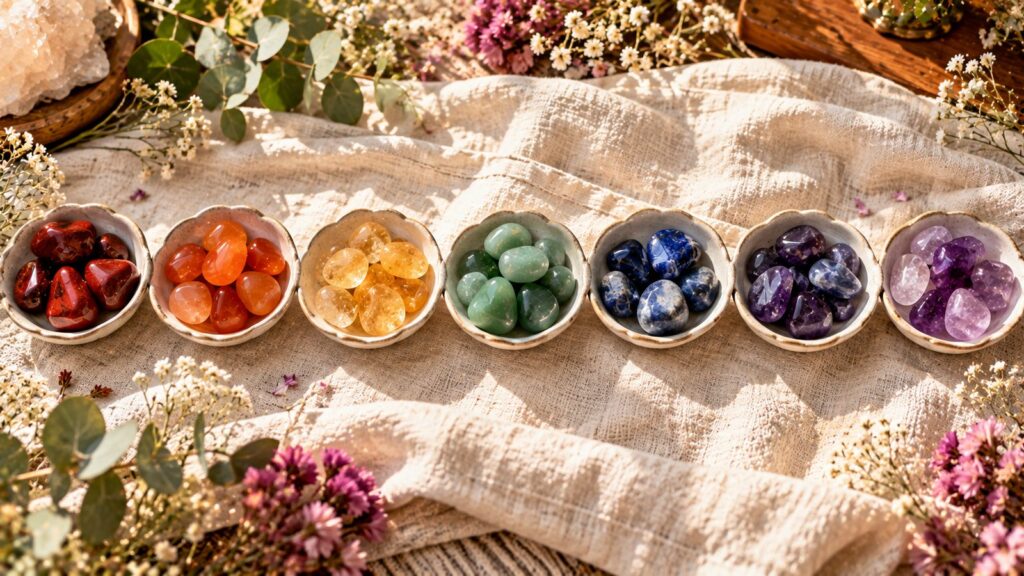
Chakra stones are crystals that tradition links to a particular chakra, usually because of their color or the qualities people give them. Many people use them during meditation, carry a small tumbled stone in a pocket, wear them as jewelry, or set one on the body while lying down. A set of 7 chakra stones, one for each chakra, is a popular first purchase. Below, each chakra lists the stones that our own crystal guides connect with it, so you can read more about any stone that catches your eye.
Root chakra stones (Muladhara)
The root chakra sits at the base of the spine and is traditionally linked with grounding, safety and stability. Dark, earthy and red stones are the classic root chakra stones.
Sacral chakra stones (Svadhisthana)
The sacral chakra is found in the lower belly and is associated with creativity, pleasure and emotion. Sacral chakra stones tend to be warm orange and red-orange.
Solar Plexus chakra stones (Manipura)
The solar plexus chakra sits in the upper belly and is tied to confidence, willpower and drive. Bright yellow and golden stones are the traditional solar plexus chakra stones.
Heart chakra stones (Anahata)
The heart chakra sits at the center of the chest and is linked with love, compassion and connection. Green stones are traditional here, and many people also use soft pink stones.
Throat chakra stones (Vishuddha)
The throat chakra is connected with communication and self-expression. Throat chakra stones are almost always blue, from pale aqua to deep royal blue.
Third Eye chakra stones (Ajna)
The third eye chakra sits on the forehead, between the brows, and is associated with intuition, insight and imagination. Third eye chakra stones are usually indigo, deep blue or purple.
Crown chakra stones (Sahasrara)
The crown chakra sits at the top of the head and is linked with spiritual connection and awareness. Crown chakra stones are often clear, white or violet.
Some stones show up under more than one chakra, such as amethyst, labradorite and sodalite. That is normal, because different traditions and stone colors overlap. For a broader look at what crystal meanings are, how to care for stones and how to spot fakes, visit our Crystal Meanings Guide. You can also browse color groups like green crystals, pink crystals, purple crystals and black crystals.
Singing Bowls and Sound
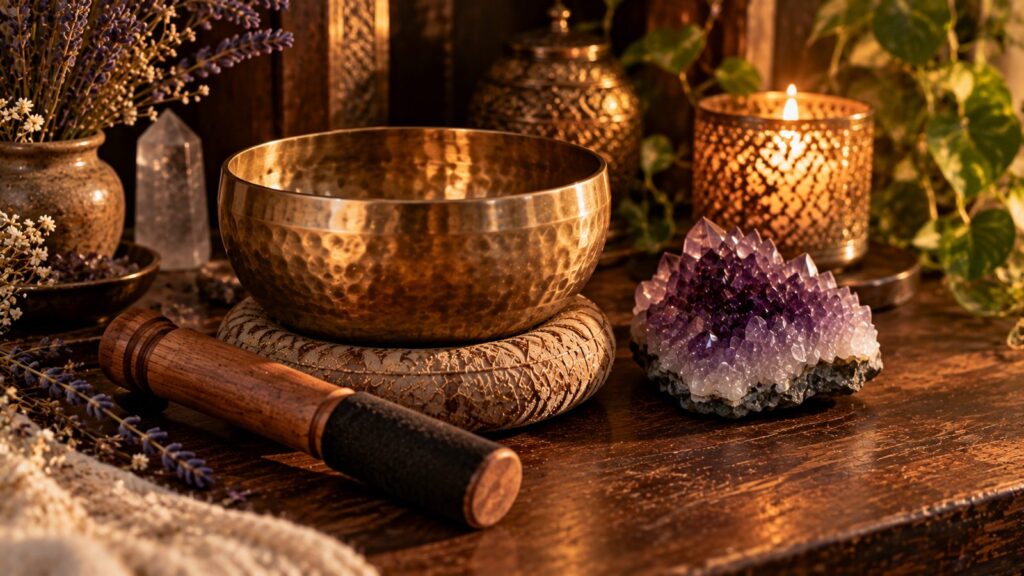
A singing bowl is a bowl that rings with a long, humming tone when you strike it or slowly run a mallet around its rim. The best-known type is the Tibetan singing bowl, a metal bowl associated with the Himalayan region and widely used today in meditation, yoga classes and sound baths. Crystal singing bowls, made from quartz, are a more modern take with a clear, bright tone.
In chakra traditions, sound is another way to focus attention. Some teachers match notes or bowls to individual chakras, and many people simply enjoy the steady tone as a signal to slow down and breathe. Sound is also a favorite way to cleanse crystals, since it involves no water, salt or sun. Our guide on how to cleanse crystals covers sound cleansing with a singing bowl or tuning fork, and our list of crystals that cannot go in water explains why sound is a gentle choice for delicate stones.
How to play a singing bowl
- Rest the bowl on a cushion or on your flat palm, keeping your fingers away from the sides so they do not dampen the sound.
- Strike the outside edge gently with the mallet to start the tone.
- Press the mallet lightly against the outer rim and circle it slowly and evenly. The hum will build as you go.
- Breathe slowly and listen until the sound fades, then begin again if you like.
If you are buying your first singing bowl, listen to it if you can. The size, thickness and material all change the tone, and the right bowl is simply the one whose sound you enjoy.
Crystals for Sleep
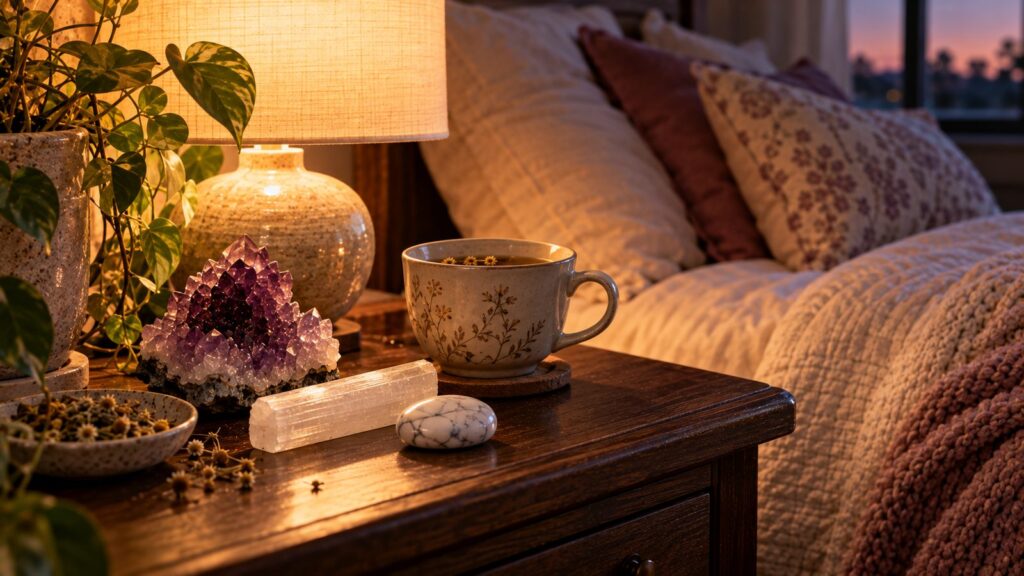
Crystals for sleep are one of the most searched corners of the crystal world, and it makes sense. Bedtime is when many of us finally slow down. People who use crystals for sleep usually make them part of a calming evening ritual, rather than expecting the stone itself to do the work. Crystals are not a treatment for insomnia or any sleep problem, so if poor sleep is affecting your life, please talk with a doctor.
These are some of the best crystals for sleep and dreams in modern crystal traditions, based on what our own guides say about them:
- Amethyst: linked with calm and restful evenings. A common practice is placing a piece on the nightstand as part of a bedtime routine.
- Howlite: a soft white stone that some people keep on the nightstand as a bedtime cue to slow down.
- Selenite: a white crystal that some people keep near the bed as a nightly cue to rest. Keep it dry, since selenite is soft and water can damage it.
- Moonstone: the classic stone of intuition and quiet evenings, with a natural link to the moon.
- Rose Quartz: some people keep a piece on the nightstand and think of three kind things from the day before sleep.
How to use crystals for sleep
- Choose one stone and give it a home on your nightstand, so seeing it becomes a cue to start winding down.
- Hold the stone for a minute while you breathe in for four counts and out for six.
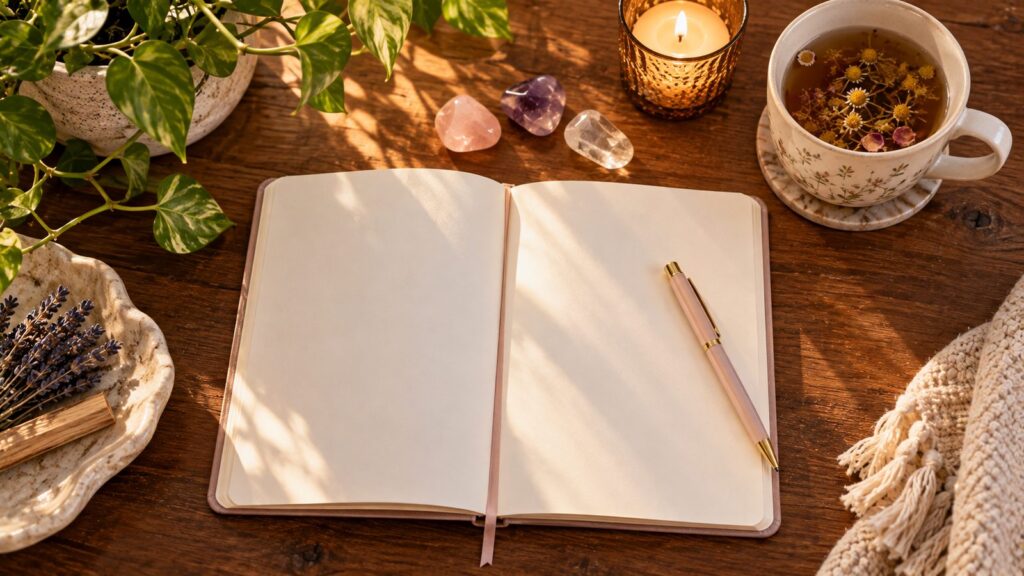
- Write one line in a journal about something that went well today, then set the stone down and turn out the light.
- Keep small or pointed stones off the bed and away from little ones and pets, since tumbled stones can be a choking hazard.
Energy Healing Practices
Energy healing is a broad name for practices built on the belief that the body has a subtle energy, sometimes called life force, prana or qi, that can be balanced or encouraged to flow. These practices are rooted in spiritual traditions and are not a replacement for medical care. Many people enjoy them as a way to relax and feel cared for. Here are some of the most common healing energy tools and techniques you will come across:
- Reiki energy healing: a Japanese practice in which a practitioner rests their hands lightly on or just above the body. Reiki is one of the best-known forms of energy healing.
- Chakra meditation: moving your attention slowly up through each chakra, often while picturing its color.
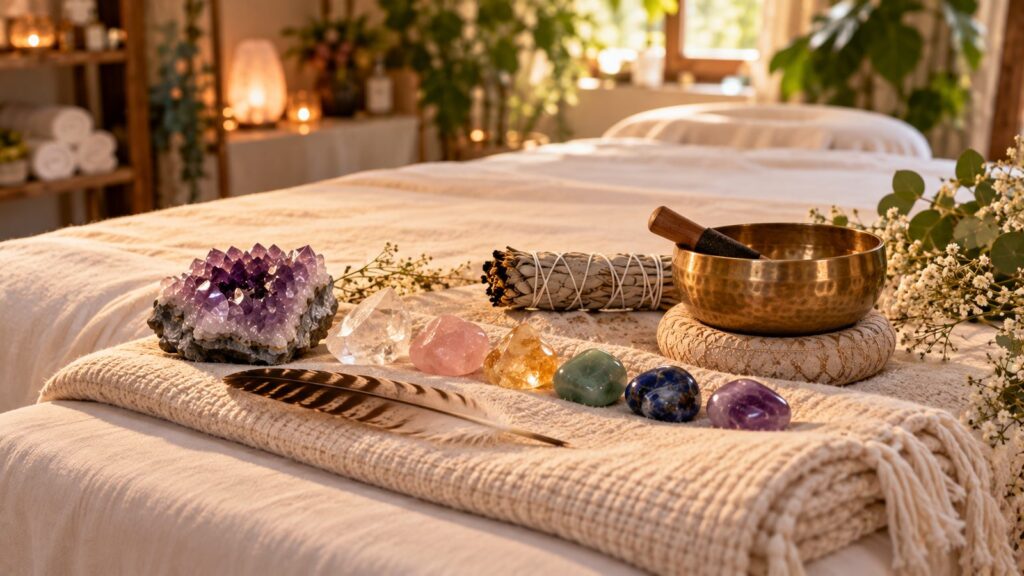
- Crystal layouts: placing chakra stones on or around the body while lying down, usually one stone per chakra. A crystal grid is a related practice that arranges stones in a pattern on a table or cloth.
- Sound baths: lying still while singing bowls, gongs or chimes are played around you.
- Breathwork and yoga: slow breathing and gentle movement, both closely tied to the traditions that chakras come from.
- Aromatherapy: many people pair energy practices with scent. Our Oils and Tinctures guide covers essential oils and how to use them safely.
If you are looking for an energy healing practitioner near you, ask about their training, what a session involves and what it costs before you book. A good practitioner will never tell you to stop seeing your doctor or taking prescribed medicine.
How to Start With Chakras and Energy
You do not need a big collection or any special training to begin. Here is a simple way to start:
- Pick one intention. Maybe you want to feel calmer before bed, more grounded during a busy week or more confident speaking up.
- Find the matching chakra in the chart above, and choose one stone you are drawn to. Our best crystals for beginners guide is a helpful place to look.
- Make a tiny ritual. Hold the stone for a few slow breaths each morning or evening, or play a singing bowl for one minute.
- Learn your stone. Read its guide so you know how to care for it, especially whether it can get wet or sit in the sun.
- Keep it personal. If a color, sound or stone feels good to you, that matters more than any list.
Curious how chakras connect with astrology? Many people pair stones with their sign too. Our Zodiac Signs guide covers all 12 signs and the crystals often matched with each.
Chakras and Energy FAQ
What are the 7 chakras in order?
From the bottom up, the 7 chakras in order are the root, sacral, solar plexus, heart, throat, third eye and crown. Their Sanskrit names are Muladhara, Svadhisthana, Manipura, Anahata, Vishuddha, Ajna and Sahasrara.
What are chakra stones?
Chakra stones are crystals that tradition pairs with a specific chakra, usually by color. Red and black stones go with the root, blue stones with the throat and clear or violet stones with the crown, for example. Chakra stones meaning varies a little from one source to the next.
Which chakra stones should a beginner buy?
A simple set of 7 chakra stones, one for each chakra, is a common start. If you would rather buy just one or two, clear quartz, amethyst and rose quartz are popular, easy-care choices.
Can I cleanse chakra stones with water?
Some stones handle water well, and others, like selenite and malachite, should stay dry. Check our list of which crystals cannot go in water first, or use sound or moonlight instead.
What is a Tibetan singing bowl used for?
Tibetan singing bowls are mostly used today for meditation, yoga, sound baths and as a gentle way to cleanse crystals. Many people simply enjoy the tone as a cue to slow down.
Do crystals help you sleep?
Crystals are not a proven sleep aid. Many people find that keeping a stone like amethyst or howlite by the bed helps as part of a calming routine. If you have ongoing trouble sleeping, talk with a doctor.
Is energy healing the same as reiki?
Reiki is one type of energy healing. Energy healing is the wider term, and it also includes chakra meditation, crystal layouts and sound baths.
The information in our Chakras and Energy guide is for general educational purposes and reflects spiritual traditions and beliefs. It is not medical advice and is not meant to diagnose, treat, cure or prevent any condition.
Ready to explore? Browse every stone in the Crystals Catalog, dig into the Crystal Meanings Guide, or find your sign in the Zodiac Signs guide. We will keep adding chakra and energy guides here as they are written.