| ✨Hey there! This post may contain affiliate links, meaning we earn a commission if you make a purchase through our links, at no cost to you. Please read our disclosures for more info. |
Quick answer: the best cheap self care ideas are free habits: at least 7 hours of sleep a night and 150 minutes of moderate activity a week (CDC guidance), time outdoors and time with people you trust. Add low-cost extras such as a library book, a home spa night or a simple hobby, and skip purchases that add financial stress.
Social media can make self-care look like an expensive hobby: spa days, subscription boxes, new skincare and weekend getaways. Those things can be lovely, but they are not what self-care really is. At its core, self-care means taking care of your physical health, mental health and relationships in ways that help you feel steady and rested. Most of the habits that make the biggest difference cost little or nothing.
This list is part of our guide to self-care and everyday happiness. It is organized by area so you can find ideas that fit your needs, your schedule and your budget.
Sources: Centers for Disease Control and Prevention, sleep and physical activity guidelines for adults; White and colleagues, “Spending at least 120 minutes a week in nature is associated with good health and wellbeing,” Scientific Reports, 2019; 988 Suicide & Crisis Lifeline; Institute of Museum and Library Services, public library services. This article is for general information and is not medical advice. Checked October 2026.

Contents
hide
Why Cheap Self Care Ideas Work
Self-care is most helpful when it is regular. A once-a-year spa day may feel great, but small habits repeated every week usually have more effect on how you feel day to day. Free and low-cost ideas are easier to keep up because they do not depend on extra money or long blocks of free time.
Budget self-care also avoids a common trap: spending money to feel better, then feeling stressed about the spending. Money worries are a major source of stress for many households, so self-care that protects your budget is self-care twice over.
Self-Care for Your Body (Free)
Free self-care for your body starts with the basics: protect your sleep, move every day and take care of simple needs such as water and regular meals. These habits cost nothing and do the most for energy and mood.
- Protect your sleep. The CDC recommends at least 7 hours of sleep a night for adults ages 18 to 60. Keep a consistent bedtime and wake time, even on weekends.
- Take a daily walk. Walking is free and counts toward the CDC’s recommendation of 150 minutes of moderate activity each week for adults.
- Stretch for 10 minutes in the morning or before bed.
- Drink water throughout the day. Keep a refillable bottle within reach.
- Follow a free workout video at home. Many fitness instructors post full classes online.
- Cook a simple, nourishing meal with ingredients you already have.
- Go to bed early once a week without a screen.
- Take a slow shower or bath with the lights dimmed and your phone in another room.
None of these require a gym membership or special equipment. A pair of comfortable shoes and a little planning are enough to start.
Self-Care for Your Mind (Free)
Free self-care for your mind means short, regular breaks from stress and screens. Journaling, slow breathing, reading for pleasure and a social media break cost nothing and take only minutes.
- Write in a journal for five minutes. Try listing three things that went well today.
- Practice slow breathing. Breathe in for a count of four and out for a count of six for a few minutes.
- Read for pleasure. Fiction, poetry or anything that is not work related.
- Do a puzzle or crossword.
- Try a free meditation app or guided recording.
- Learn something new through free online courses or tutorials.
- Take a social media break for an evening or a weekend.
- Make a “done” list each evening instead of only a to-do list.
Small mental habits add up. Our article on ways to seek happiness in life explores more mindset shifts that cost nothing.

Time Outdoors (Free)
Time in nature is one of the simplest forms of self-care. A 2019 study of nearly 20,000 people in England, published in Scientific Reports, found that people who spent at least 120 minutes a week in nature were significantly more likely to report good health and high wellbeing than those who spent no time in nature. The time could be spread across several short visits.
- Visit a local park and sit on a bench for 20 minutes.
- Walk a trail or a tree-lined street.
- Eat lunch outside when the weather allows.
- Watch the sunrise or sunset.
- Garden, even with a few pots on a balcony or windowsill.
- Go stargazing on a clear night away from bright lights.
Self-Care at Home (Low Cost)
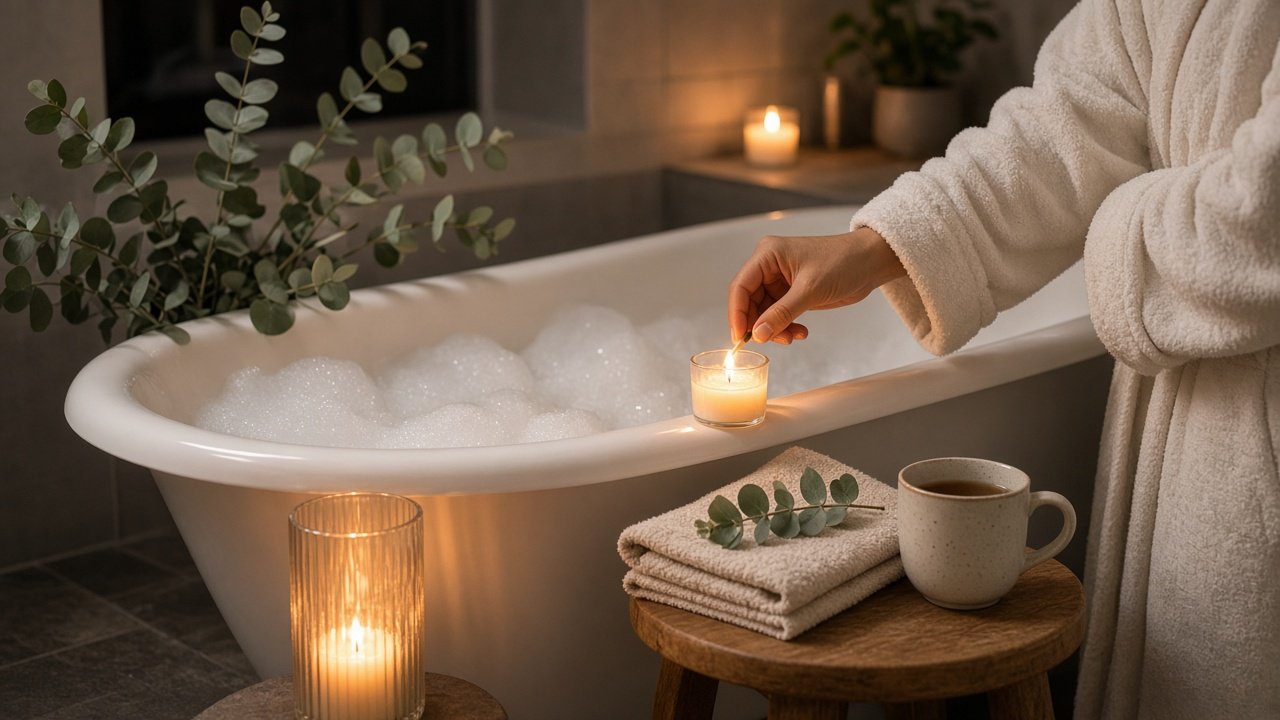
Self-care at home can cost little or nothing when you use what you already have. A home spa night, a calming scent or one decluttered drawer can make your space feel more restful.
- Have a home spa night. Use what you have: a warm bath, a homemade sugar scrub, a face mask and soft music.
- Try dry brushing before a shower. Our guide to dry brushing explains how to do it and what to expect.
- Use a favorite scent. A candle or a few drops of essential oil in a diffuser can make a room feel calmer. Read about lavender essential oil uses and safety before you start, especially if you have pets or young children.
- Declutter one small space, such as a drawer or the nightstand.
- Make your bed with fresh sheets.
- Create a cozy corner with a blanket, a lamp and a book.
- Cook a comfort meal from scratch.
- Put on a favorite playlist and dance in the kitchen.
Self-Care Through Connection (Free)
Time with people you trust is one of the most effective free forms of self-care, because strong relationships are one of the most important parts of well-being. Many connection-based ideas cost nothing:
- Call or video chat with a friend or family member.
- Plan a potluck instead of a restaurant meal.
- Write a letter or card to someone you care about.
- Join a free community group, such as a walking club, book club or faith community.
- Volunteer for a cause you care about.
- Spend phone-free time with your partner, kids or roommates.

Free Community Resources
Libraries, parks and recreation programs, museums and community centers offer free or low-cost self-care that many people overlook:
- Your public library. Beyond books, many libraries lend e-books, audiobooks, movies and museum passes, and host free classes, crafts and events.
- Parks and recreation programs. Cities and towns often run free or low-cost fitness classes, outdoor concerts and community events.
- Free museum days. Many museums offer free admission on certain days or evenings. Check their websites.
- Community centers and faith organizations may offer support groups, classes or social events.
Low-Cost Treats Worth the Money
The low-cost treats worth buying are small items you will use often, such as a journal, fresh flowers, a plant or good tea at home. They bring real joy without straining the budget:
| Treat | Typical cost | Why it helps |
|---|---|---|
| A new notebook or journal | Low | Encourages writing and planning |
| Fresh flowers from a grocery store | Low | Brightens a room for a week |
| Bath salts or a simple face mask | Low | Turns a regular bath into a ritual |
| A plant | Low | Adds green to your space and a small daily routine |
| A good cup of coffee or tea at home | Low | A small daily pleasure |
| A secondhand book | Low | Reading for pleasure at a fraction of the cost |
Set a small monthly amount for treats like these so you can enjoy them without guilt.
Self-Care at Work (Free)
Free self-care at work comes down to real breaks, daylight, movement and clear limits on your workday. Many adults spend a large part of their waking hours at work, so these small habits can make a real difference.
- Take your full lunch break away from your desk when you can.
- Step outside for a few minutes of daylight and fresh air.
- Stand up and stretch every hour, or set a gentle reminder.
- Keep a water bottle and a healthy snack at your workspace.
- Close extra browser tabs and silence notifications during focused work.
- Set a clear end time for work and stick to it as often as possible.
- Tidy your workspace for two minutes before you leave so the next day starts calm.
If you work from home, create a small ritual to mark the start and end of the workday, such as a short walk “to work” in the morning and closing the laptop in a drawer at night. Separating work time from personal time is one of the simplest ways to protect your energy.
Making Self-Care a Habit
To make self-care a habit, start very small, attach it to something you already do and track it. Good intentions fade quickly without a plan, so these tips help self-care stick:
- Start very small. Two minutes of stretching is easier to keep up than a 45-minute routine.
- Attach new habits to existing ones. Stretch after brushing your teeth, or journal while your coffee brews.
- Track it. A simple check mark on a calendar shows progress and builds motivation.
- Be flexible. Missing a day is normal. Pick it back up the next day without guilt.
Build a Simple Weekly Self-Care Plan
A simple weekly self-care plan combines small daily habits, a couple of longer activities each week and a monthly check-in. Writing it down makes it easier to keep up in busy weeks. Try this structure:
- Daily: a short walk, water, a few minutes of quiet and a reasonable bedtime.
- Twice a week: a longer activity you enjoy, such as a workout, a long phone call or a hobby.
- Weekly: one larger self-care moment, such as a home spa night, a park visit or a coffee date with a friend.
- Monthly: a check-in with yourself about what is working and what needs to change.
Write your plan down and keep it where you can see it. Treat self-care time like any other appointment.
Self-Care That Protects Your Finances
Self-care that protects your finances means reducing money stress with small, regular steps, because taking care of money is part of taking care of yourself:
- Review your spending once a month without judgment.
- Cancel subscriptions you do not use.
- Build a small emergency fund, even a little at a time.
- Pause before “treat” purchases and ask whether they will help you feel better tomorrow, not just right now.
Feeling more in control of your money often reduces anxiety more than any purchase could.
Spending Traps That Look Like Self-Care
The biggest spending traps are purchases sold as self-care that leave you with regret, debt or clutter. Watch for these:
- Retail therapy that leads to regret or debt.
- Expensive wellness trends with little evidence behind them.
- Subscription boxes you rarely use.
- Comparison spending based on what others post online.
If something will add stress to your budget, it is probably not self-care.
When Self-Care Is Not Enough
Self-care habits support mental health, but they are not a substitute for professional care. If you feel hopeless, overwhelmed for weeks or unable to manage daily life, talk with a doctor or mental health professional. Many communities have low-cost or sliding-scale counseling options, and some employers offer free counseling through employee assistance programs. If you or someone you know is in crisis, call or text 988 to reach the 988 Suicide & Crisis Lifeline in the U.S., available 24 hours a day.
Self-Care for Different Seasons of Life
The right self-care depends on your season of life: what works for a student differs from what works for a new parent or a caregiver. A few examples:
- Busy parents: short moments matter. Five minutes with a cup of tea before the kids wake up, a walk with a stroller or an early bedtime once a week can help.
- Students: protect sleep during exam weeks, study with friends for connection and use free campus resources such as counseling centers and recreation facilities.
- Caregivers: ask for help, accept offers from friends and look for local respite or caregiver support groups.
- People working long hours: take real breaks during the day, step outside at lunch and set boundaries around evenings.
- Retirees: stay connected through clubs, volunteering and classes, and keep moving with walking groups or gentle exercise classes.
Choose ideas that fit your current life rather than an ideal version of it.
Frequently Asked Questions
What is the cheapest form of self-care?
Sleep, walking, time outdoors and connecting with people you care about are all free and backed by strong evidence for well-being.
How can I practice self-care with no money?
Focus on free habits: a consistent bedtime, daily movement, journaling, time in nature, library resources and phone or in-person time with friends.
How often should I practice self-care?
Small habits work best daily or several times a week. Larger activities can be weekly or monthly.
Is self-care selfish?
No. Taking care of your health and energy helps you show up better for work, family and friends.
What if I don't have time for self-care?
Start with five minutes. Short breaks, a short walk or a few slow breaths still count, and you can build from there.
What are some cheap self care ideas?
Free or nearly free ideas include a daily walk, a consistent bedtime, journaling, a home spa night with what you already have, a library visit, a picnic in a park and a phone call with a friend.

The Bottom Line
The best self-care is often simple and free: rest, movement, time outside, connection and small routines that bring calm. A few low-cost treats can add joy, but they work best on top of these basics, not in place of them. Choose a few ideas from this list, put them on your calendar and adjust as you learn what helps you most. For more ways to feel good about yourself, see ways to improve your self-esteem and our tips to live a good life.