| ✨Hey there! This post may contain affiliate links, meaning we earn a commission if you make a purchase through our links, at no cost to you. Please read our disclosures for more info. |
Quick answer: peppermint essential oil is distilled from the leaves and flowering tops of Mentha x piperita and is roughly 40 percent menthol, the compound behind its cooling feel. People use it in diffuser blends, in diluted rubs for tired muscles and temples, and in small amounts in foot and body products. Keep skin blends around 1 to 2 percent, never apply it to the face of a baby or young child because, as the National Center for Complementary and Integrative Health (NCCIH) warns, inhaled menthol can affect their breathing, and keep it away from the eyes.
Peppermint is one of the most recognizable scents in the world. It flavors toothpaste, gum, tea and candy, and its essential oil is a staple in home collections. A single drop delivers an intense cooling rush that many people find refreshing on a long afternoon or after a workout.
That intensity is also why peppermint needs more care than gentler oils like lavender. Its main constituent, menthol, can irritate skin and mucous membranes and is risky for small children. This article explains what peppermint oil is, how it works, the most common ways to use it, how much to use and what the evidence shows. It is part of our beginner’s guide to essential oils, which covers the safety basics for every oil. Nothing here is medical advice; ask a doctor or pharmacist before using peppermint oil if you are pregnant, nursing, have a health condition or take medication.

What Peppermint Essential Oil Is
Peppermint, Mentha x piperita, is a natural cross between water mint and spearmint, according to NCCIH. It grows throughout Europe, North America and the Mediterranean. The essential oil is made by steam distillation of the leaves and flowering parts of the plant, usually harvested just as it starts to bloom, when oil content is high. You will see the botanical name written as Mentha x piperita or simply Mentha piperita; both refer to the same plant.
A long history in medicine and food
NCCIH notes that mint plants were used for digestive complaints as far back as ancient Greece, Rome and Egypt, and that peppermint oil has been used for centuries for gastrointestinal problems. Today peppermint is promoted for irritable bowel syndrome (IBS), indigestion, digestive support in general, headaches, muscle tension and nausea, with very different levels of evidence for each.
What is in the bottle
Robert Tisserand writes that peppermint oil contains about 40 percent menthol. Menthone is another major component, with smaller amounts of menthyl acetate and 1,8-cineole. These are bioactive secondary metabolites: compounds the plant does not need for basic growth but makes to deter insects and other threats, stored in tiny glands on the surface of each peppermint leaf. The balance between them changes with growing region and harvest time, which is one reason good suppliers publish batch test results.
Peppermint is a mint-family relative
Peppermint belongs to the large mint family, which also includes plants like lavender, rosemary and anise hyssop. Our profile of anise hyssop and its essential oil covers one of its gentler cousins.

How Menthol Works on the Skin
The Tisserand Institute explains that menthol activates a skin receptor called TRPM8, which normally signals cold temperatures. Skin temperature does not actually drop, but the body reacts as if it senses cold, and blood flows to the area to warm it. That is why peppermint feels cooling and then warming at the same time.
Why that matters for pain and itch
The same receptor is involved in menthol’s pain-relieving effect, according to research Tisserand summarizes. He describes peppermint oil as especially useful for muscular pain, nerve pain and most types of itch, and notes that 0.5 to 1 percent menthol, which corresponds to 1 to 2 percent peppermint oil, has been effective for nerve pain in published reports.
Why that matters for safety
Menthol is also an irritant at higher concentrations. The National Association for Holistic Aromatherapy (NAHA) lists peppermint as a mucous membrane irritant, which means it can produce a burning or drying sensation in the eyes, nose, mouth and genital area. Tisserand cites a study that found peppermint and tea tree oils were not drying to skin at 1 percent but had a slightly drying effect at 5 percent.

Everyday Ways to Use Peppermint Oil
Diffuser blends
Peppermint brightens a room quickly. A drop or two mixed with lavender, sweet orange or rosemary in a diffuser is plenty for most rooms. Follow the diffuser’s instructions, ventilate the room and keep sessions short. Do not diffuse peppermint in a room where a baby or young child sleeps. If you only own a humidifier, read our explainer on adding essential oils to a humidifier before trying it.
Temple and neck rubs
Limited evidence suggests topically applied peppermint oil might relieve tension headaches, according to NCCIH. A 1 to 2 percent rollerball applied to the temples, forehead or back of the neck is a common home approach. Keep it well away from the eyes and wash your hands after applying.
Tired muscles and feet
Peppermint is a frequent ingredient in cooling muscle rubs and foot creams. A 2 to 3 percent blend in a carrier oil or unscented lotion can be massaged into calves or feet after a long day.
Inhaler or tissue
A single drop on a tissue or inside a personal inhaler offers a quick sniff without scenting a room. Breathe from a short distance rather than holding it right under the nose.
Not in the bath
Because it is a mucous membrane irritant, peppermint is not a good bath oil. Even small amounts floating on the water can sting sensitive areas.
Dilution: How Much Peppermint to Use
Peppermint needs lower dilutions than many oils because of its menthol content. Based on the Tisserand Institute’s ranges and its notes on menthol:
- Face and near the hairline: 0.5 to 1 percent, about 1 to 3 drops per 10 mL of carrier, and only for adults.
- Temple or neck rollerball: 1 to 2 percent, about 3 to 6 drops per 10 mL.
- Muscle and foot blends: 2 to 3 percent, about 6 to 9 drops per 10 mL.
- Diffuser: follow the manufacturer’s drop guidance; peppermint is strong, so use fewer drops than for gentler oils.
The drop counts assume about 30 drops per milliliter, the average used by the Tisserand Institute. Remember that the percentage covers all essential oils in a blend combined, so if peppermint shares a bottle with lavender, count both.
Patch test first
Apply a little of the diluted blend to the inner forearm and wait 24 hours. NCCIH notes that skin rashes and irritation are possible side effects of applying peppermint oil to the skin, and rare allergic reactions can occur.

What the Research Says
Peppermint has more clinical research than most essential oils, but most of it concerns specific products, not drops of oil from a bottle. NCCIH’s peppermint oil fact sheet, last updated in May 2025, summarizes the evidence.
Irritable bowel syndrome
A small amount of research suggests enteric-coated peppermint oil capsules may improve IBS symptoms in adults. A 2022 review of 10 studies with 1,030 participants found peppermint oil better than placebo for overall IBS symptoms and abdominal pain, with more side effects, mostly mild reflux and indigestion. The American College of Gastroenterology recommended peppermint oil for overall IBS symptoms in a 2021 guideline. Researchers think menthol relaxes the smooth muscle of the gut, easing the muscle spasms behind cramping pain. These findings from clinical trials apply to enteric-coated capsules made for that use, not to bottled essential oil, which should not be swallowed. If you have irritable bowel syndrome or any ongoing digestive disorders, talk to your doctor before adding peppermint capsules, because symptoms like weight loss or bleeding need medical attention first.
Indigestion
Some combination products containing peppermint and caraway oils may help indigestion, according to NCCIH. Peppermint oil taken alone has not been shown to help and may make indigestion worse in some people. Peppermint can relax the muscle at the lower end of the esophagus, and heartburn is a known side effect, so people with GERD (gastroesophageal reflux disease) often find that peppermint makes their reflux worse.
Nausea
A 2024 review of aromatherapy studies found that inhaled peppermint oil was particularly helpful for nausea and vomiting in people receiving chemotherapy, NCCIH reports, based on a small number of studies.
Tension headaches
Limited evidence suggests that peppermint oil applied to the skin might relieve tension headaches.
Alertness and cognitive performance
A 2008 study of 144 adults in the International Journal of Neuroscience found that people who worked in a room scented with peppermint scored better on memory tasks and reported feeling more alert than those in an unscented room. Effects like these are modest and short-lived, but they fit the popular use of peppermint in a diffuser during a long afternoon.
Breathing and respiratory issues
Peppermint is a classic ingredient in chest rubs and inhalers for stuffy noses. Research by Ronald Eccles and colleagues found that inhaled menthol makes breathing through the nose feel easier, even though it does not measurably change nasal airflow. That cooling sensation can feel welcome during a cold, but it does not treat respiratory issues, and NCCIH’s warning about menthol and young children applies here more than anywhere.
Mouth sores during cancer treatment
Oral mucositis, painful mouth sores caused by chemotherapy, has been studied in a few small clinical trials. In a 2016 pilot study in Complementary Therapies in Medicine, patients who used a sage tea, thyme and peppermint hydrosol mouth rinse alongside standard mouth care were less likely to develop mucositis by day 5 than those receiving standard care alone. The authors called the results promising but preliminary; anyone in cancer treatment should only use rinses their care team approves.
Everything else
NCCIH says there is not enough evidence to draw conclusions about peppermint oil for other conditions. Small studies have looked at peppermint for menstrual cramps and stress reduction, but none is strong enough to recommend it for either. Claims that it boosts energy, burns fat or cures colds are not supported by the summaries from public health agencies.
Peppermint Leaf, Tea, Capsules and Oil
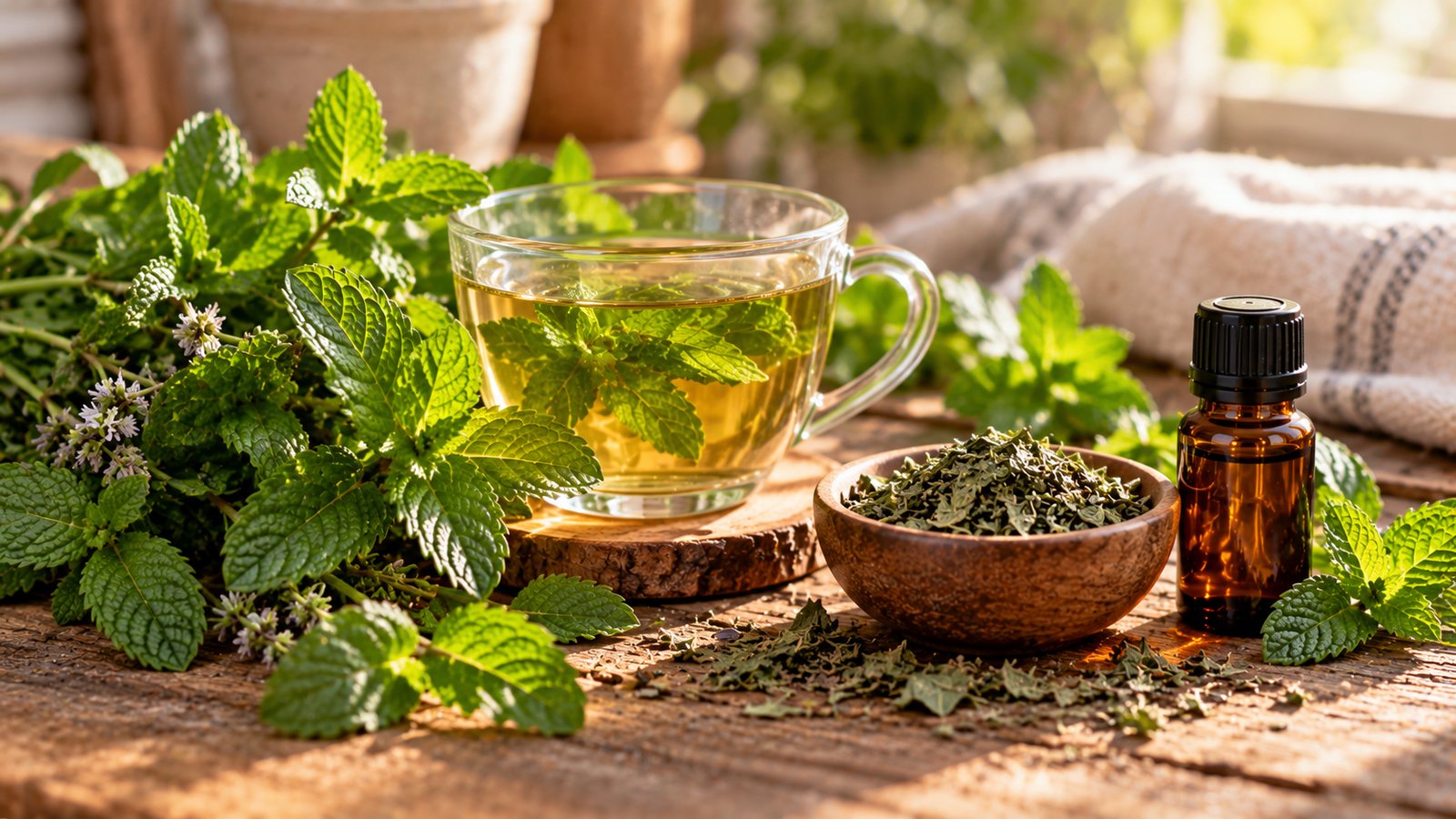
Peppermint comes in several forms, and each has a different strength and safety profile.
Peppermint leaf and tea
Dried peppermint leaf, the kind sold for tea, contains only a small amount of essential oil. Mint leaves also hold water-soluble compounds such as rosmarinic acid, a polyphenol that ends up in tea and leaf extracts but not in the distilled essential oil, because it does not evaporate. NCCIH notes that peppermint in the amounts found in food is likely safe for most people, which makes a cup of tea the gentlest way to enjoy the plant.
Capsules and dietary supplements
Enteric-coated peppermint oil capsules are sold as dietary supplements in the United States. The coating is designed to let the capsule pass through the stomach and release the oil in the intestine, which lowers the chance of heartburn. Keep in mind that the Food and Drug Administration (FDA) does not approve dietary supplements for safety or effectiveness before they are sold, so quality varies from brand to brand. Look for products that carry a third-party testing seal such as USP Verified or NSF Certified, and ask your doctor or pharmacist before starting them, especially if you take antacids or other medications.
Bottled essential oil
Bottled peppermint essential oil is far more concentrated than leaf or tea and is meant for diffusing and diluted skin use only. It is not a substitute for capsules made for swallowing, and a few drops in water can irritate the mouth and throat.

Safety: Children, Eyes, Pets and Pregnancy
Babies and young children
This is the most important rule for peppermint. NCCIH states that menthol should not be inhaled by or applied to the face of an infant or small child because it may affect their breathing, and that serious side effects may occur. NAHA likewise singles out peppermint, along with eucalyptus, birch and wintergreen, for special caution in children. Keep peppermint oil, and products containing it, away from babies and toddlers, and ask a pediatrician before using it on older children.
Eyes and mucous membranes
Never put peppermint oil in or near the eyes, nose or mouth. If a drop gets in the eye, NAHA suggests wiping the closed lid with a cloth soaked in a fatty oil such as olive oil and flushing with cool water; seek medical care if pain continues.
Swallowing and poisoning
Keep bottles locked away. Poison Control warns that misuse of essential oils can cause serious poisoning and that oils inhaled into the lungs during swallowing can cause pneumonia. Call 1-800-222-1222 if anyone swallows an essential oil, and do not induce vomiting.
Pregnancy and breastfeeding
Peppermint in food amounts is likely safe during pregnancy and breastfeeding, according to NCCIH, but little is known about medicinal amounts. NCCIH also notes that peppermint preparations used on the nipple area for cracked skin should be applied only after a feeding and wiped off before the next, because of the menthol risk to infants. Ask a midwife or doctor before using peppermint oil during this time.
Pets
The ASPCA Animal Poison Control Center advises never applying essential oils to pets, keeping oils out of reach and using diffusers only briefly in areas pets cannot enter. Avoid diffusing around birds and animals with breathing problems.
Medications
NCCIH advises talking with a health care provider before using any herbal product if you take medicine, because some herbs and medicines interact.

Peppermint vs Spearmint and Other Mints
Spearmint, Mentha spicata, is one of peppermint’s parents but smells sweeter and softer, because its oil contains much less menthol and more of a compound called carvone. Many people who find peppermint too sharp prefer spearmint in a diffuser. Spearmint still needs dilution on skin and the same storage care, and it is still an essential oil to keep away from small children.
Cornmint, Mentha arvensis, is another menthol-rich mint widely grown for menthol production. Its oil is usually cheaper than peppermint, so buying from suppliers who list the botanical name, Mentha x piperita, and share batch test reports helps make sure the bottle contains the mint you paid for.
Pennyroyal, Mentha pulegium, is a mint relative that is dangerous. NAHA lists it among oils to avoid throughout pregnancy, and Poison Control notes that swallowed pennyroyal oil is highly poisonous to the liver. It has no place in a home blend.
Two wild mints round out the family. Horse mint, Mentha longifolia, grows across Europe, western Asia and Africa and has long been used as a kitchen and tea herb; its oil varies widely in makeup and is rarely sold for home use. Apple mint, Mentha suaveolens, has soft, fuzzy mint leaves and a fruity scent and is grown mostly as a culinary and garden plant. If a recipe calls for “mint oil,” check which species it means before you buy.

Frequently Asked Questions
What is peppermint essential oil used for?
Mostly for its fresh, cooling scent in diffusers and for diluted rubs on tired muscles, feet and temples. NCCIH reports limited evidence for tension headaches when applied to the skin and stronger evidence for enteric-coated capsules in IBS.
Can I put peppermint oil directly on my skin?
Dilute it first. Around 1 to 2 percent suits most uses, and NCCIH notes skin rashes and irritation are possible side effects.
Is peppermint oil safe for babies?
No. NCCIH warns that menthol should not be inhaled by or applied to the faces of infants or small children because it may affect their breathing.
Can I diffuse peppermint oil around my dog or cat?
The ASPCA says brief diffusing in a room the animal cannot enter is unlikely to cause problems, but oils should never be applied to pets and diffusers should be avoided around birds or pets with breathing problems.
Can I add peppermint oil to water and drink it?
No. Bottled essential oil is not meant to be swallowed. The peppermint oil studied for IBS comes in enteric-coated capsules designed for that purpose.
Sources: National Center for Complementary and Integrative Health (Peppermint Oil fact sheet, May 2025); Moss and colleagues, International Journal of Neuroscience 2008 (peppermint and ylang-ylang aromas and cognition); Eccles, Journal of Pharmacy and Pharmacology 1994 (menthol and nasal sensation); Mutluay Yayla and colleagues, Complementary Therapies in Medicine 2016 (sage, thyme and peppermint hydrosol rinse); U.S. Food and Drug Administration (dietary supplements); Tisserand Institute (Dilution for essential oils, menthol and TRPM8, drop size); National Association for Holistic Aromatherapy (safety guidelines, mucous membrane irritants, children, pregnancy table); Poison Control, National Capital Poison Center (essential oils); ASPCA Animal Poison Control Center (essential oils around pets). This article is for general education and is not medical advice.