| ✨Hey there! This post may contain affiliate links, meaning we earn a commission if you make a purchase through our links, at no cost to you. Please read our disclosures for more info. |
Quick answer: citrine is the pale yellow to brownish orange variety of quartz (SiO2, Mohs hardness 7) and the traditional November birthstone. Natural citrine is uncommon. Most of the golden stones and clusters sold today are amethyst or smoky quartz that has been heated, which is a legitimate treatment but should be disclosed. Crystal traditions link citrine with optimism, success and abundance.
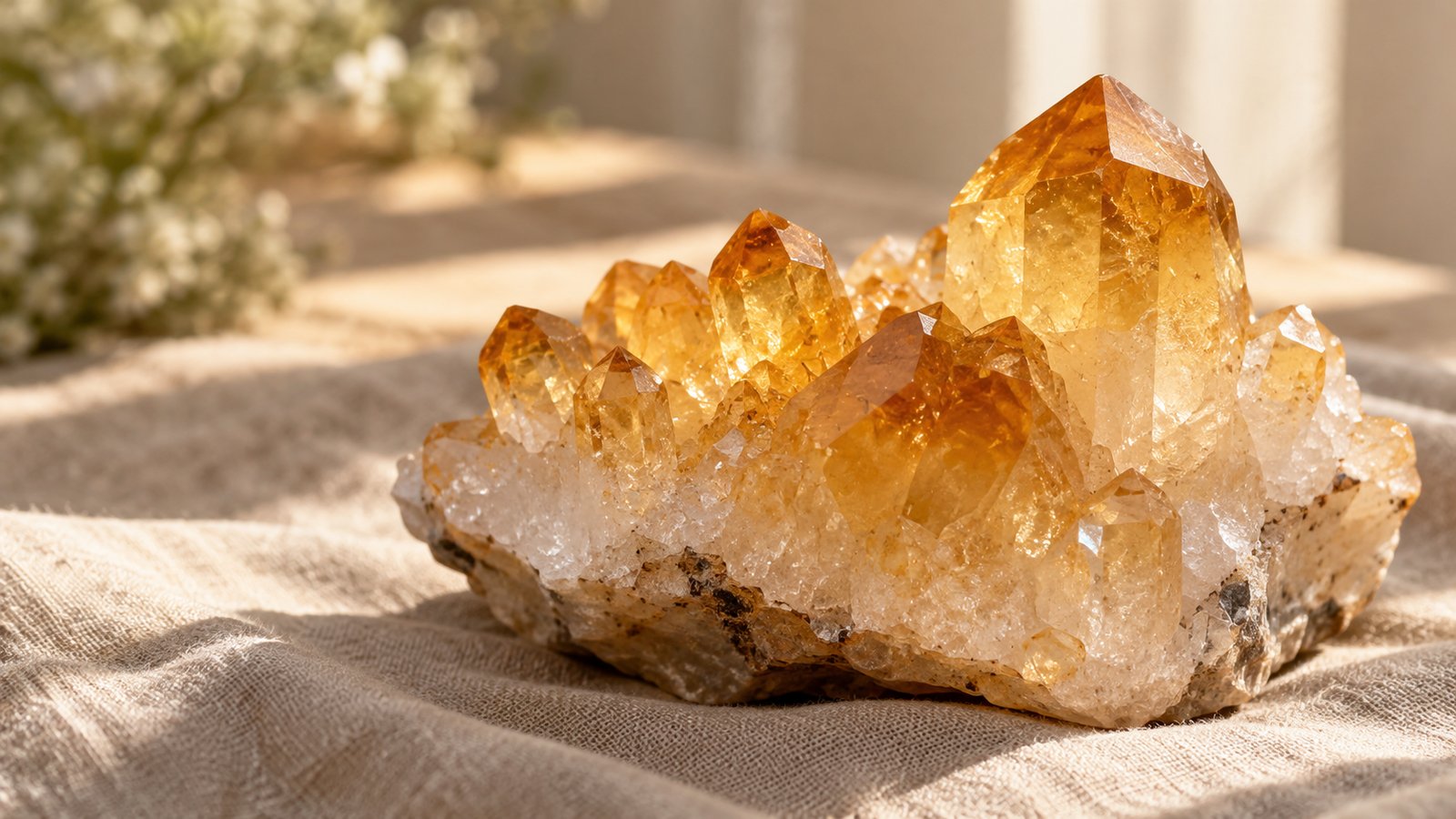
Citrine looks like sunlight caught in stone. The color runs from pale lemon to deep amber, and polished pieces seem to glow even in dim rooms. Perhaps that is why so many traditions turned it into a stone of warmth, confidence and prosperity.
Buying citrine takes a little more care than buying most quartz, because the trade has a long habit of calling heated stones by the name of the natural one. This guide explains the mineral, the heat treatment, where citrine is found and what to ask a seller. Beliefs attached to the stone appear in their own section and are described as traditions.
Contents
hide
What Citrine Is
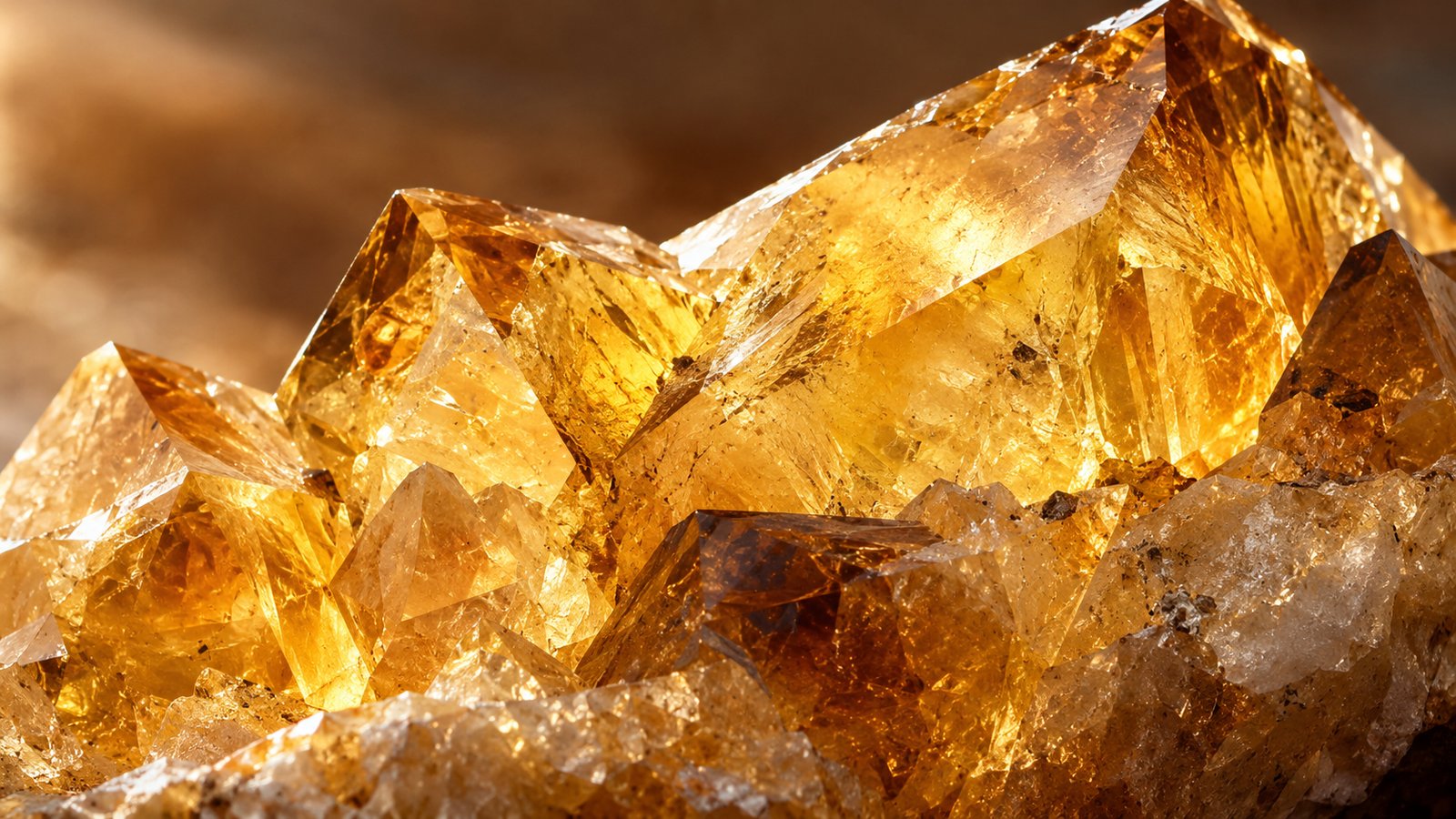
Citrine is quartz, the silicon dioxide mineral with the formula SiO2, and rates 7 on the Mohs hardness scale. GIA describes it as the transparent, pale yellow to brownish orange variety of quartz. Its color comes from traces of iron in the crystal structure, a relative of the iron that colors amethyst, though the iron sits in a different arrangement and produces yellow rather than violet.
The name traces back to the French word citron, meaning lemon, and the Latin citrina, a reference to the yellow color. Names for deeper reddish-orange stones vary, and sellers sometimes use trade names such as Madeira citrine for the darkest shades. Treat those labels as marketing language, since they describe color and not a separate mineral.
Hardness of 7 makes citrine practical for rings, pendants and bracelets. The stone resists scratches from dust, though it can be damaged by harder stones and by sharp blows.
Citrine shares the crystalline framework of all quartz, silicon and oxygen atoms bonded into a repeating, spiraling lattice with the formula SiO2. That ordered structure is why quartz is hard, why it forms six-sided crystals, and why, lacking a center of symmetry, it is piezoelectric, the property used in quartz watches and electronics. The yellow comes from iron within the lattice. Understanding that the golden color is a trace-element effect inside an orderly crystal makes it easier to see why heat can shift the color without changing the mineral.
Natural Citrine vs Heat-Treated Amethyst
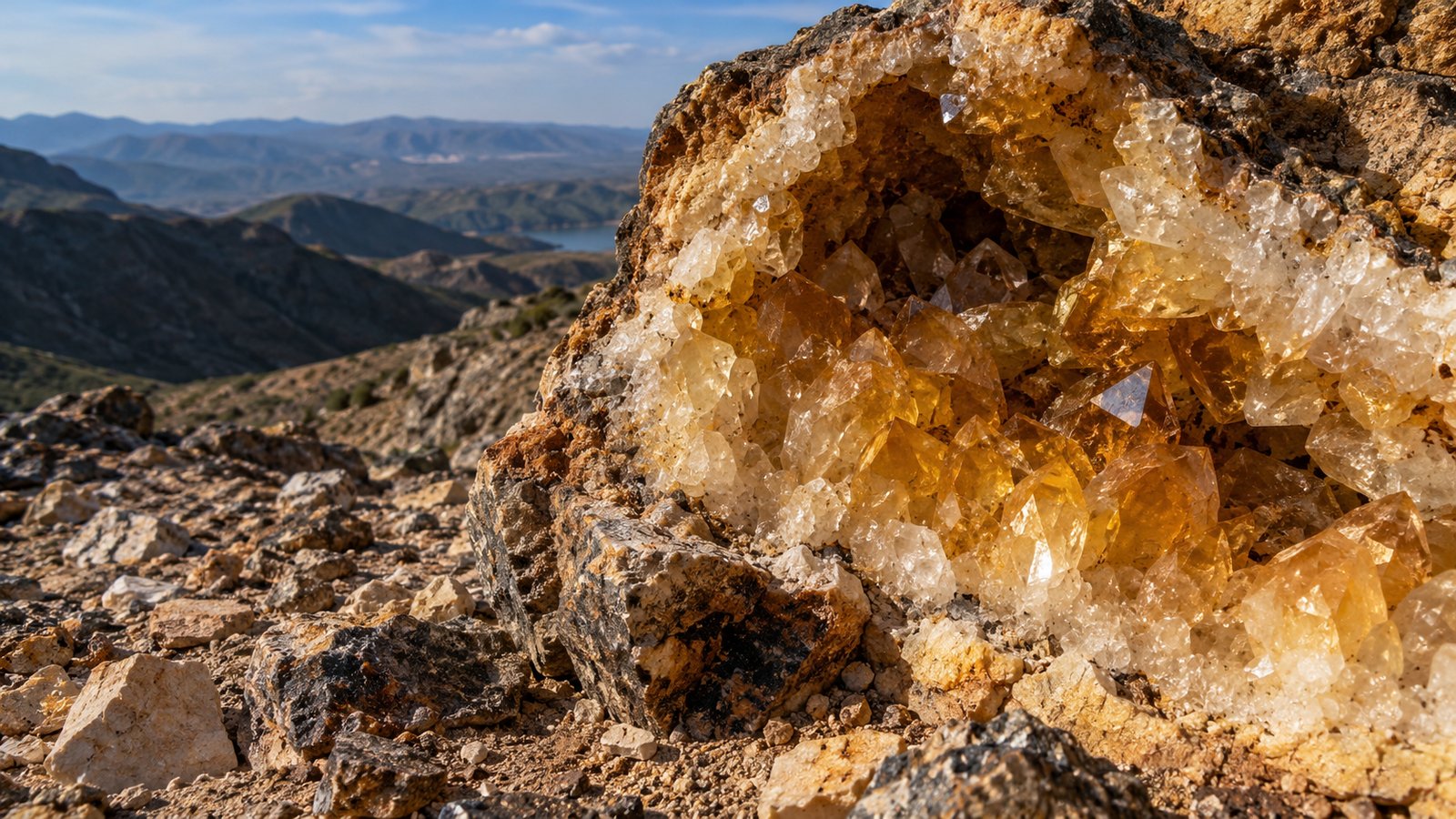
Natural citrine forms when quartz crystallizes with the right iron content and conditions, and it tends to be pale yellow, sometimes with a smoky or brownish tint. Strongly saturated orange stones occur in nature but are the exception.
Heat produces the saturated golden color that buyers expect. Mindat reports that when amethyst is heated above roughly 300 to 400 degrees Celsius, the violet color is lost and the crystal often turns yellow, orange or brown, resembling citrine. Smoky quartz can be treated in a similar way. A laboratory paper on amethyst heat treatment says amethyst can turn to citrine above about 500 degrees Celsius.
The Gem Society makes the definition point clearly: strictly speaking, a gem heated to yellow or red-orange is a citrine, because the color is what defines the variety. Heat treatment is a long-accepted practice in the gem trade, and most jewelry citrine has been treated. Disclosure is what counts. A seller who calls a stone natural when it was heated is misrepresenting it.
Clues That a Stone Has Been Heated
- Color concentrated in the points of a cluster, with a pale or whitish base, because the base often began as less saturated quartz.
- Uniform deep orange or reddish-brown color that is hard to find in natural material.
- Cheap pricing for large geodes or clusters labeled citrine. Natural citrine clusters of that size are rare and costly.
- Telltale remnants: a few pieces keep faint purple patches at the base.
None of these clues is a guarantee. Only a gemological laboratory can say for certain whether a stone has been treated, and that matters mainly for expensive jewelry. For a decorative cluster, a fair approach is to ask plainly, buy from sellers who answer honestly, and enjoy the stone for what it is: attractive quartz.
Where Citrine Comes From
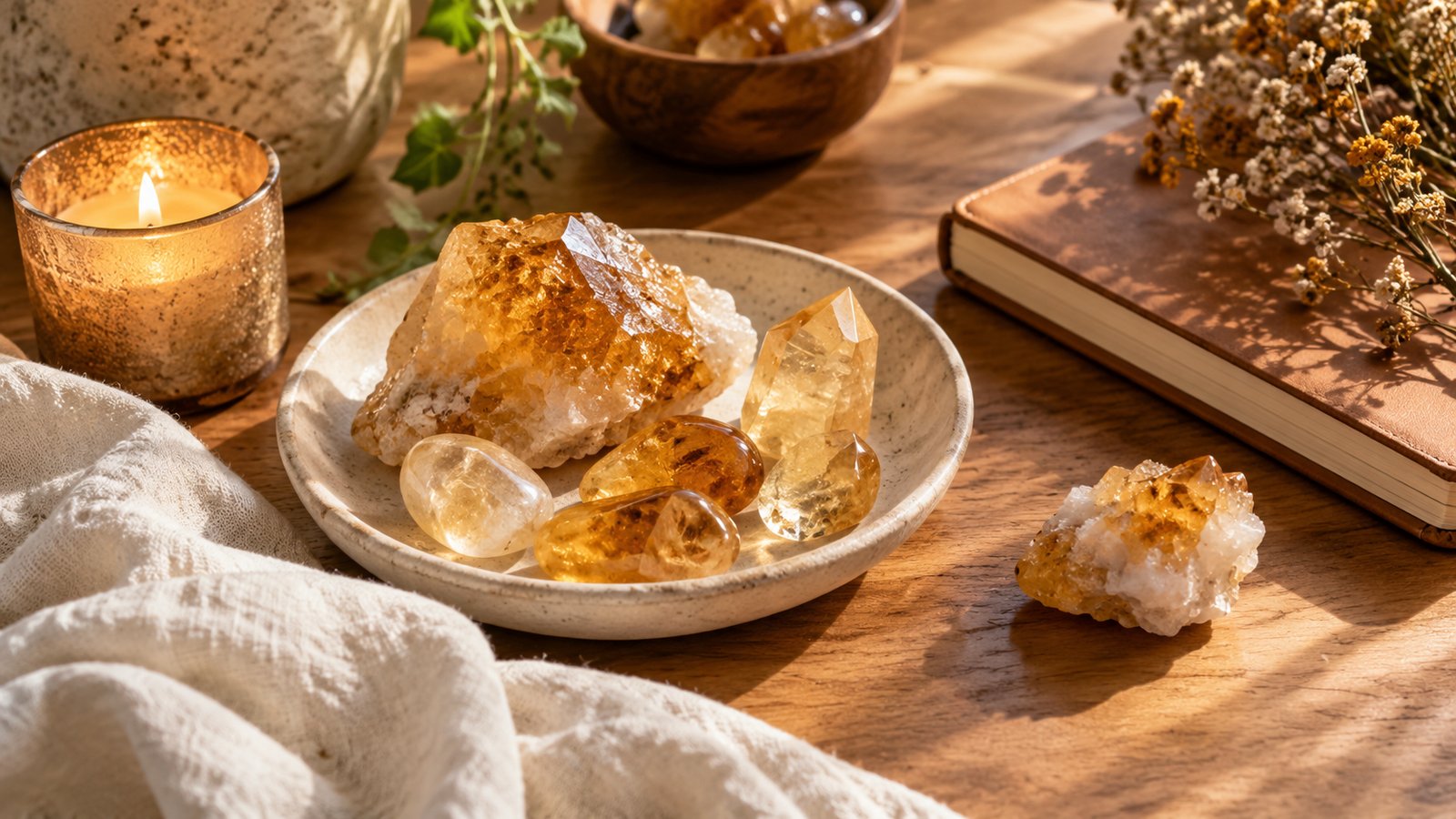
Brazil is the largest source of citrine and of the amethyst that is heated into it, and most commercial citrine is traced to Brazilian material. Spain, Madagascar, Zambia, Bolivia and parts of the United States also yield citrine. Bolivia is notable for ametrine, the bicolored crystals in which amethyst and citrine grow together, as GIA describes.
Large crystals form in the same environment as amethyst geodes, where silica-rich water fills volcanic cavities. The heated material usually begins as amethyst geodes mined in places such as Brazil and Uruguay, and the sorting happens afterward. Some dealers cut and heat the stone, while others sell crystal clusters as they emerge from the oven.

What Citrine Means in Crystal Traditions
Crystal practice links citrine with the sun, and with the qualities people associate with sunlight. As with any stone, these meanings come from tradition and personal practice.
- Optimism. Many people keep a piece on a desk as a daily reminder to approach tasks with energy.
- Abundance and success. Citrine is nicknamed the merchant’s stone in crystal lore, and some shop owners keep a piece near the register as a symbol of good fortune.
- Confidence. The golden color is associated with the solar plexus chakra, the center in many chakra systems that governs personal power and self-esteem.
- Creativity. Writers and artists sometimes keep citrine on their workspace for inspiration.
- Cheerfulness. Because yellow is a cheerful color, a stone in the window can lift the mood of a room simply through its look.
If you like pairing stones, citrine appears in many suggested combinations. Clear quartz makes a natural partner, as described in the guide to clear quartz, and with amethyst, which shares its mineral family. Traditional astrology lists often pair citrine with Gemini, Leo and Libra, and you can compare these with other lists in our zodiac crystals guide.
Money symbolism is the best-known citrine tradition. Many people pair the stone with practical habits such as a budget or a savings goal, so the golden stone on the desk reminds them to follow through.

Citrine Across Cultures
The American Gem Society’s history of citrine records that the name was first written in English in 1385, and that people long believed the stone could calm tempers and attract prosperity. The society notes that Egyptians used citrine as talismans, the ancient Greeks carved images into it, and Roman priests set it in rings. GIA adds a note of caution, observing that natural citrine is rare and ancient examples are hard to confirm, which makes the lore a matter of tradition as much as record.
Museum of Jewelry’s history describes citrine becoming popular in the Hellenistic period and points to a first-century CE engraved citrine of Bonus Eventus, the Roman personification of success, held by the J. Paul Getty Museum. The same history says seventeenth-century Scottish weapon makers decorated dagger and sword handles with citrine, and that Queen Victoria’s fondness for the stone helped make it fashionable in Scottish brooches and kilt pins. The American Gem Society adds that in the mid-eighteenth century mineralogists realized amethyst and smoky quartz could be heat-treated to produce citrine colors, which made the stone widely available.

Citrine in Jewelry and Home Use
Faceted citrine is one of the most affordable large gems, which makes it popular for statement pendants and cocktail rings. Because quartz is hard and tough, bezel and prong settings both work. The yellow-gold color flatters warm metals such as yellow gold and rose gold, and the lighter lemon shades look crisp in white metals.
Raw citrine points and polished geodes serve as decor. Clusters look best on a shelf where light hits them from the side, and palm stones fit a pocket. Many people give citrine for November birthdays or as a graduation gift, because of its association with new beginnings and confidence.
Heated clusters sold as home decor should carry a note on the label. A short sentence such as “heat-treated amethyst” is all that is needed, and shoppers who see it can decide with full information. If the label is silent, ask.
Citrine and Other Yellow Stones
Yellow gems come from many minerals, and a quick comparison helps when a listing is vague. Yellow sapphire and yellow beryl (heliodor) are harder and costlier. Yellow calcite is soft, at about 3 on the Mohs scale. Amber is a fossil resin, not a mineral, and is light and warm to the touch. At 7, quartz sits in the middle and is the most affordable of the harder yellow gems.
Seasonal rituals suit citrine well. In autumn and winter, when daylight shortens, some people place a piece in a window as a small reminder of brighter months. Others write a list of goals at the start of a quarter and keep the stone beside it. The color does the work psychologically: yellow reads as warm, and warmth tends to make a workspace friendlier.
Gift-giving is another use. A tumbled citrine in a small pouch with a handwritten note about what the recipient means to you carries more weight than the price suggests. Include a card that states what the stone is, whether it is natural or heat-treated, and how to care for it. That small act of honesty reflects well on the giver and teaches the recipient something real about the mineral.

Caring for Citrine
Citrine is stable under normal use, and its care resembles that of other quartz.
- Cleaning: warm water, mild soap and a soft brush. Rinse and dry.
- Heat: avoid steam cleaners and hot windows. Because heat altered these stones in the first place, prolonged high temperatures can shift or fade color.
- Sunlight: some citrine, especially pale natural stones, can fade slightly after long exposure. Keep treasured pieces out of constant direct sun.
- Scratches: store apart from harder gems such as sapphire, ruby and diamond.
- Chemicals: remove jewelry before using bleach, pool chemicals and strong cleaners.
- Energy cleansing: moonlight, sound, smoke and breath are popular choices. See the full list in the guide on how to cleanse crystals.
One myth worth retiring is that citrine never needs cleansing. In crystal traditions, citrine is sometimes described as a stone that does not hold negative energy. Even so, many practitioners cleanse it on a schedule, as they would any other stone, and dust it like any other object.
How to Buy Citrine Honestly
A little vocabulary goes a long way. Natural citrine means the color developed in the ground. Heat-treated citrine means amethyst or smoky quartz that was heated to produce yellow to orange. Both are real quartz. The difference lies in rarity and price.
- Ask if the stone is natural, heat-treated or lab-grown, and ask for the answer in writing for expensive purchases.
- Compare prices. A natural, saturated orange stone of notable size should cost more than common heated material.
- Check the seller’s description. A listing that calls a stone citrine and gives a known mine or country is usually more reliable than a vague one.
- Beware of the word topaz. Historically, dealers sold citrine as “topaz quartz” or “Spanish topaz,” names that confuse it with true topaz, a different and harder mineral that rates 8 on the Mohs scale.
- Watch for glass. Yellow glass can imitate citrine. Look for round bubbles with a loupe and for suspiciously perfect color.
There is no need to avoid heated citrine. Heat treatment is a long-standing, accepted way to produce a beautiful stone. The trouble comes only when sellers hide the process or charge natural-stone prices for it.
Lab-Grown Citrine
Synthetic quartz can be grown in factories and tinted yellow. The result is real quartz with a controlled color. The result looks like citrine and has the same hardness, but it has no geological history and costs less. Gem laboratories identify it by growth features under magnification. When a stone is large, flawless and cheap, ask whether it is synthetic.

Frequently Asked Questions
Is citrine a real crystal?
Both versions are real quartz, whether it formed naturally or was heat-treated amethyst. Both are crystalline quartz with the same hardness and chemistry.
How can you tell if citrine is real?
Look at color distribution and price, ask about treatment, and consider a lab report for costly pieces. Home tests cannot separate natural and heated stones reliably.
Is most citrine heat-treated?
Yes. Most commercial citrine on the market began as amethyst or smoky quartz that was heated, according to gem industry sources such as the Gem Society and mineral references such as Mindat.
Does citrine fade?
Some citrine can fade after long exposure to strong light or heat. Display it in a spot without constant direct sun.
Which month is citrine the birthstone for?
November. Topaz is the other traditional November stone.
Is citrine the same as yellow topaz?
No. Yellow topaz is a different mineral with a Mohs hardness of 8. Citrine is quartz at 7. Old trade names such as Spanish topaz caused years of confusion.
Can citrine go in water?
Yes, quartz handles water well. A rinse and a soft dry cloth keep it clean. Avoid soaking glued clusters.
Does citrine bring money?
That belief belongs to crystal tradition, where citrine is the merchant’s stone. Many people keep one as a symbol of abundance alongside their own planning.