| ✨Hey there! This post may contain affiliate links, meaning we earn a commission if you make a purchase through our links, at no cost to you. Please read our disclosures for more info. |
Quick answer: crystals are minerals valued for color, beauty and the meanings people have attached to them over time. Traditional meanings, such as calm for amethyst or love for rose quartz, are cultural and personal, not proven medical effects. Care for stones by knowing their hardness, keeping soft or water-sensitive ones dry, cleansing them with gentle methods, and buying from sellers who name the real mineral and any treatment.
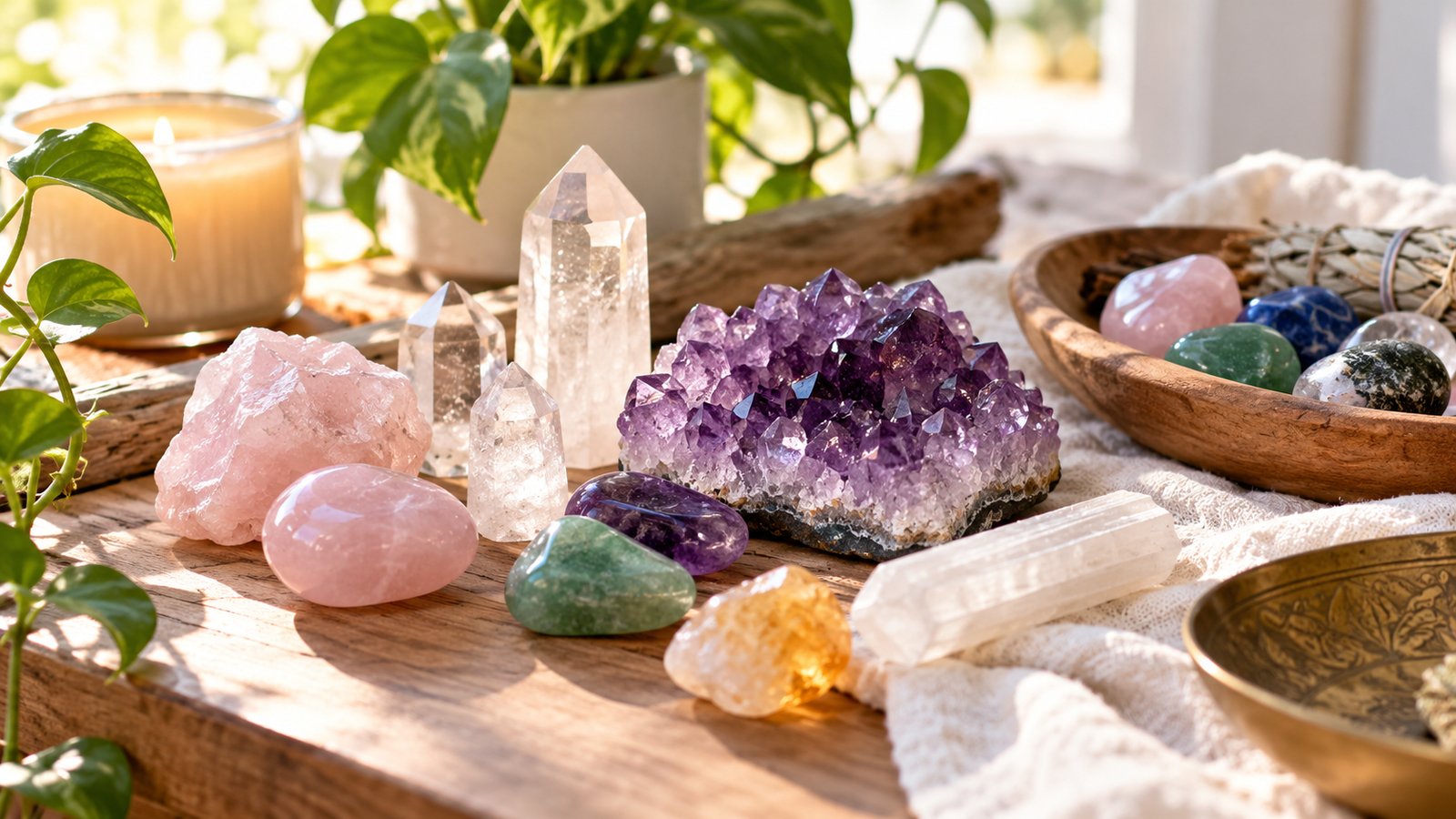
Few hobbies are as easy to start as collecting crystals. A single tumbled stone fits in a pocket, costs a few dollars, and gives you something to look at, hold and think about. Many people see a crystal as a small ritual object, a reminder to slow down, breathe or set an intention. Others just enjoy a pretty mineral with a good story.
This guide covers what beginners most want to know. The guide explains where common meanings come from, how to think about them honestly, how hard or fragile different stones are, how to clean them without ruining them, and how to tell real stones from imitations. Deeper profiles are linked along the way.
One note up front. There is no scientific evidence that crystals treat, cure or prevent any illness, and nothing here is medical advice. If you have a health concern, talk to a qualified professional. Treat crystal meanings as traditions and personal symbols, and enjoy them for that.
Contents
hide
What Crystal Meanings Actually Are
Meanings attach to stones through a mix of folklore, historical use and modern spirituality. Ancient cultures used certain stones as jewelry, seals and amulets. Greek writers, for instance, linked the word amethyst to a belief that it kept people sober, and the name comes from a Greek term meaning not intoxicated. Modern meanings often come from color: pink for affection, green for growth, black for protection, purple for calm.
Most contemporary lists are compiled from books, practitioners and retailers rather than from controlled research. Two sources often disagree about the same stone, which is a clue that these are interpretations, not facts. That does not make them worthless. Many people find that choosing a stone for an intention, such as patience before a hard week, helps focus the mind. Any benefit comes from the person’s attention and intention, not from the mineral itself.
A sensible approach is to pick stones you like to look at, learn the traditional meaning as a piece of culture, and avoid spending large sums based on promises. Be cautious about any seller who claims a stone will cure disease, replace medication or guarantee money or romance. Those claims are not supported.
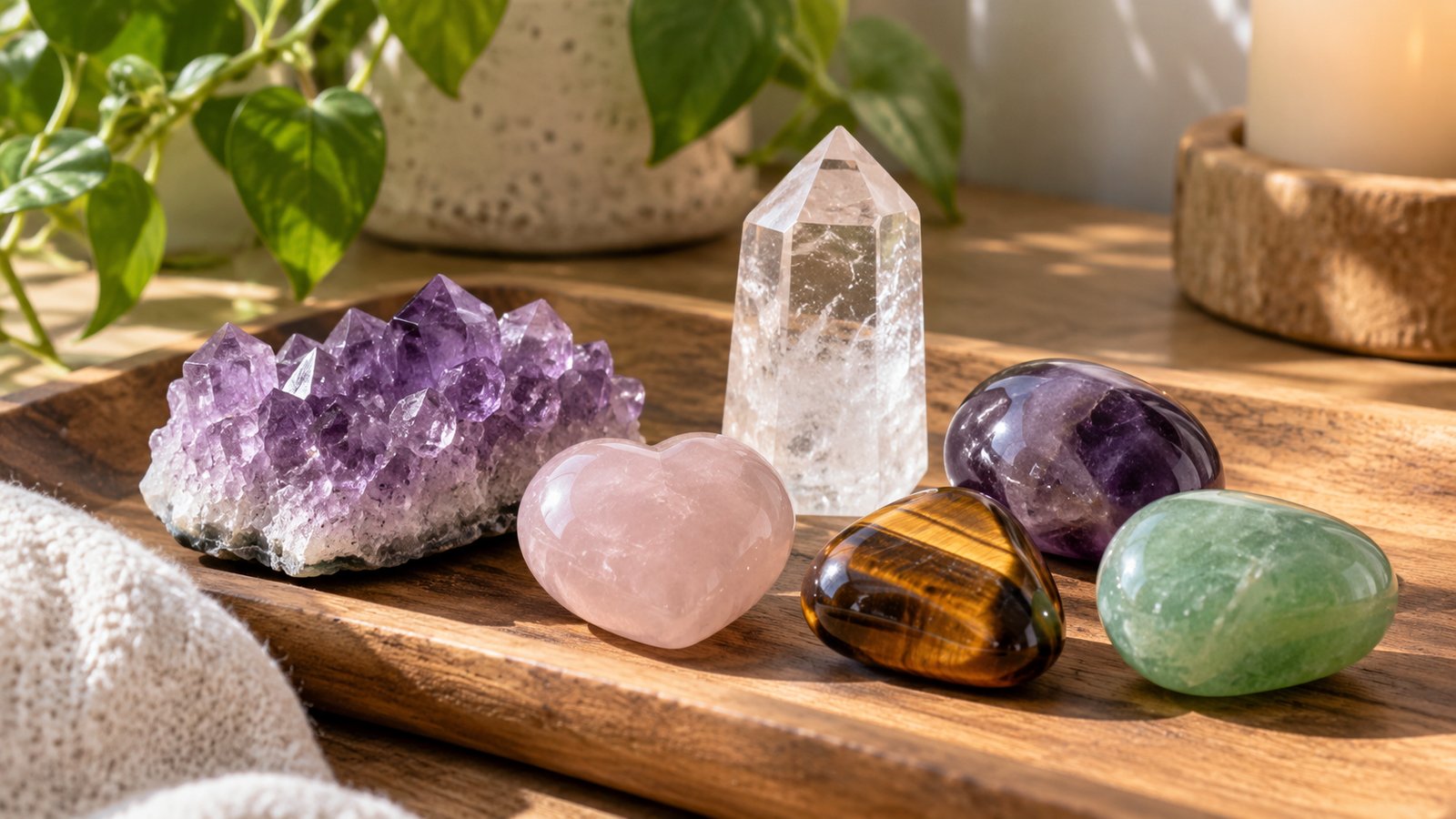
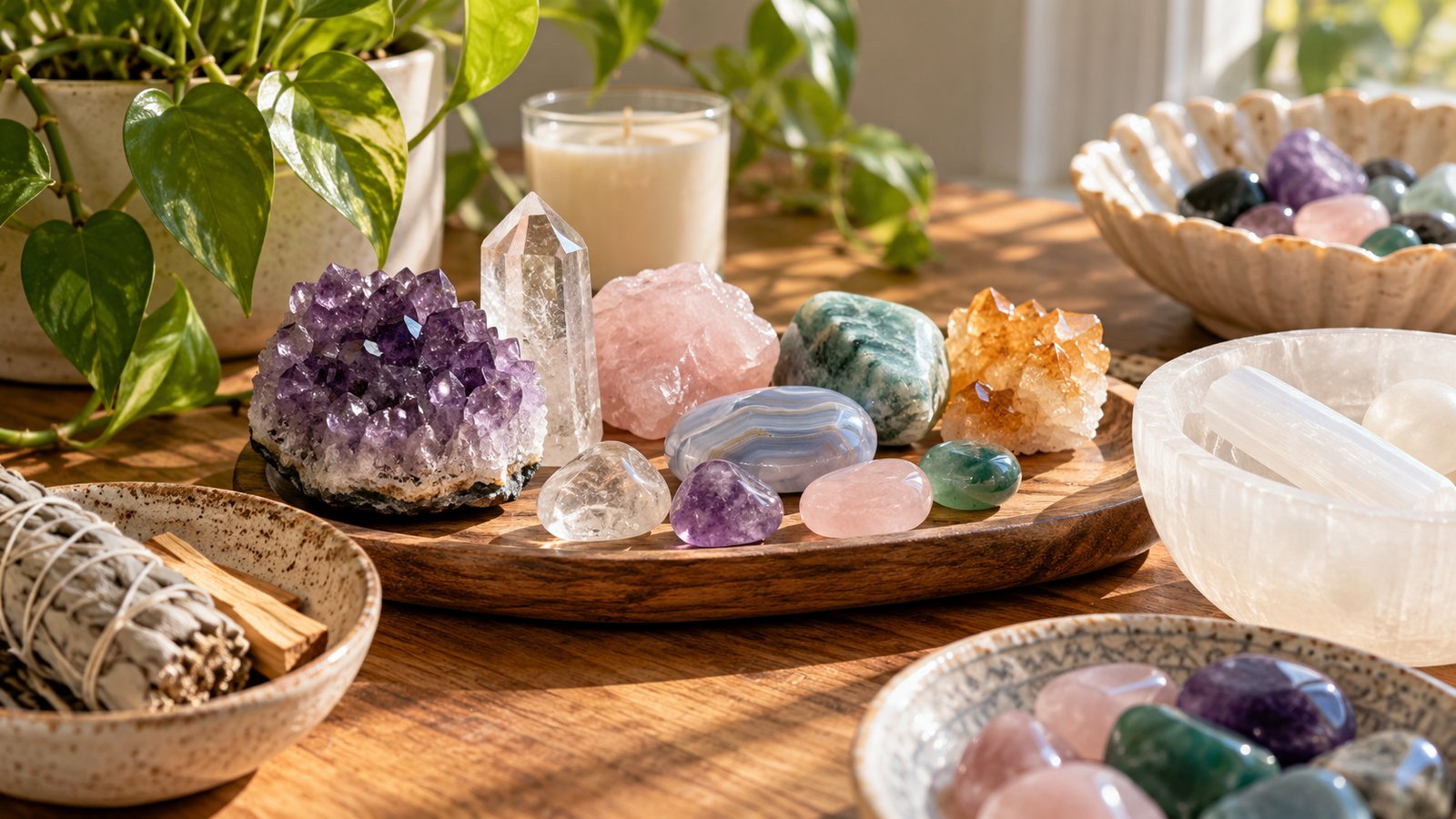
Six Stones Beginners Meet First
Start with a few widely available stones that are also durable.
Clear quartz
The most common mineral on Earth’s surface, and the base for many other quartz varieties. Tradition calls it an amplifier and a general-purpose stone. Clear quartz is a sensible first stone because it is durable and easy to find.
Amethyst
A purple variety of quartz, traditionally linked to calm and clear thinking. At 7 on the Mohs scale, amethyst is tough enough for everyday jewelry, but strong sunlight can fade its color over time. Read the full amethyst guide.
Rose quartz
A pink quartz associated with affection and gentleness. The color is pale and can fade in direct light. See the rose quartz profile for details.
Black tourmaline
Dark, shiny crystals traditionally linked to protection and grounding. As a durable mineral, it is often sold as rough, striated sticks. Learn more in our black tourmaline article.
Citrine
A yellow to orange quartz traditionally tied to optimism. Much of the citrine sold commercially is heat-treated amethyst, which is common and not a scam as long as it is disclosed. Ask sellers whether a stone has been heated.
Selenite
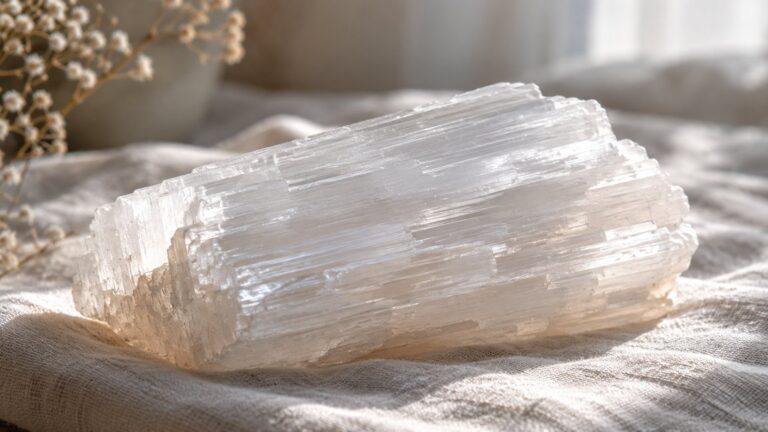
A soft, white, fibrous form of gypsum used for wands and plates, traditionally linked to calm and cleansing other stones. Rated only 2 on the Mohs scale, selenite scratches with a fingernail and should stay dry. Our selenite guide explains handling.
Hardness, Water and Light: How to Care for Stones
The Mohs scale ranks minerals from 1 (talc) to 10 (diamond) by scratch resistance. A mineral can scratch anything softer than itself. Knowing a stone’s hardness tells you whether it can ride loose in a pouch, whether it suits a ring, and whether it needs padding.
Some typical values give a feel for the range:
- Selenite (gypsum): about 2
- Calcite: about 3
- Fluorite: about 4
- Opal: about 5.5 to 6.5
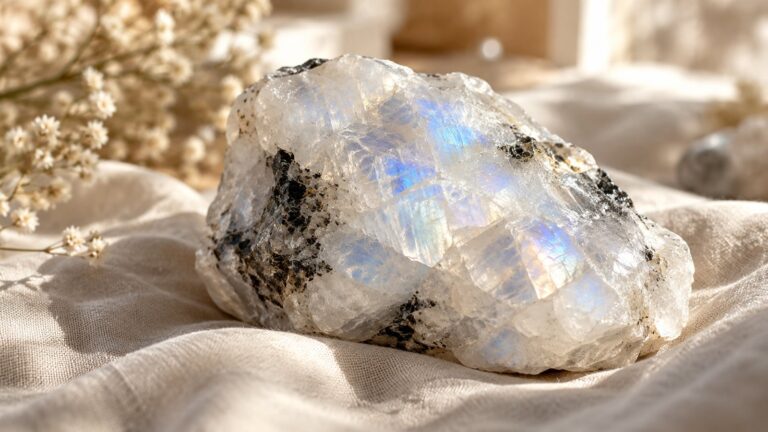
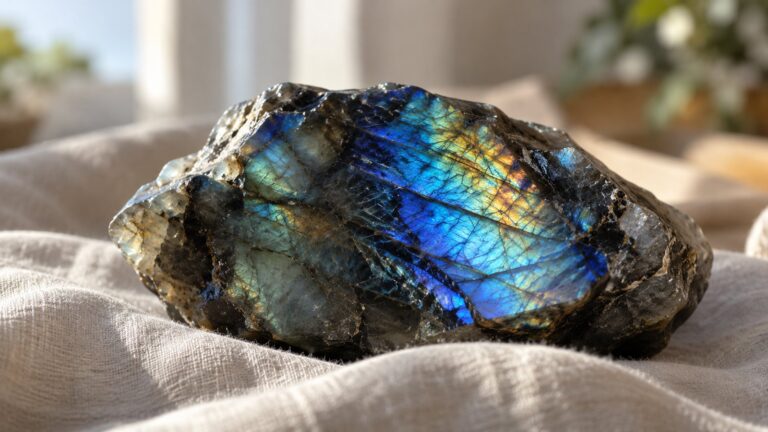
- Labradorite and moonstone: about 6 to 6.5
- Quartz varieties, including amethyst, citrine, rose quartz and tiger’s eye: about 7
- Black tourmaline: about 7 to 7.5
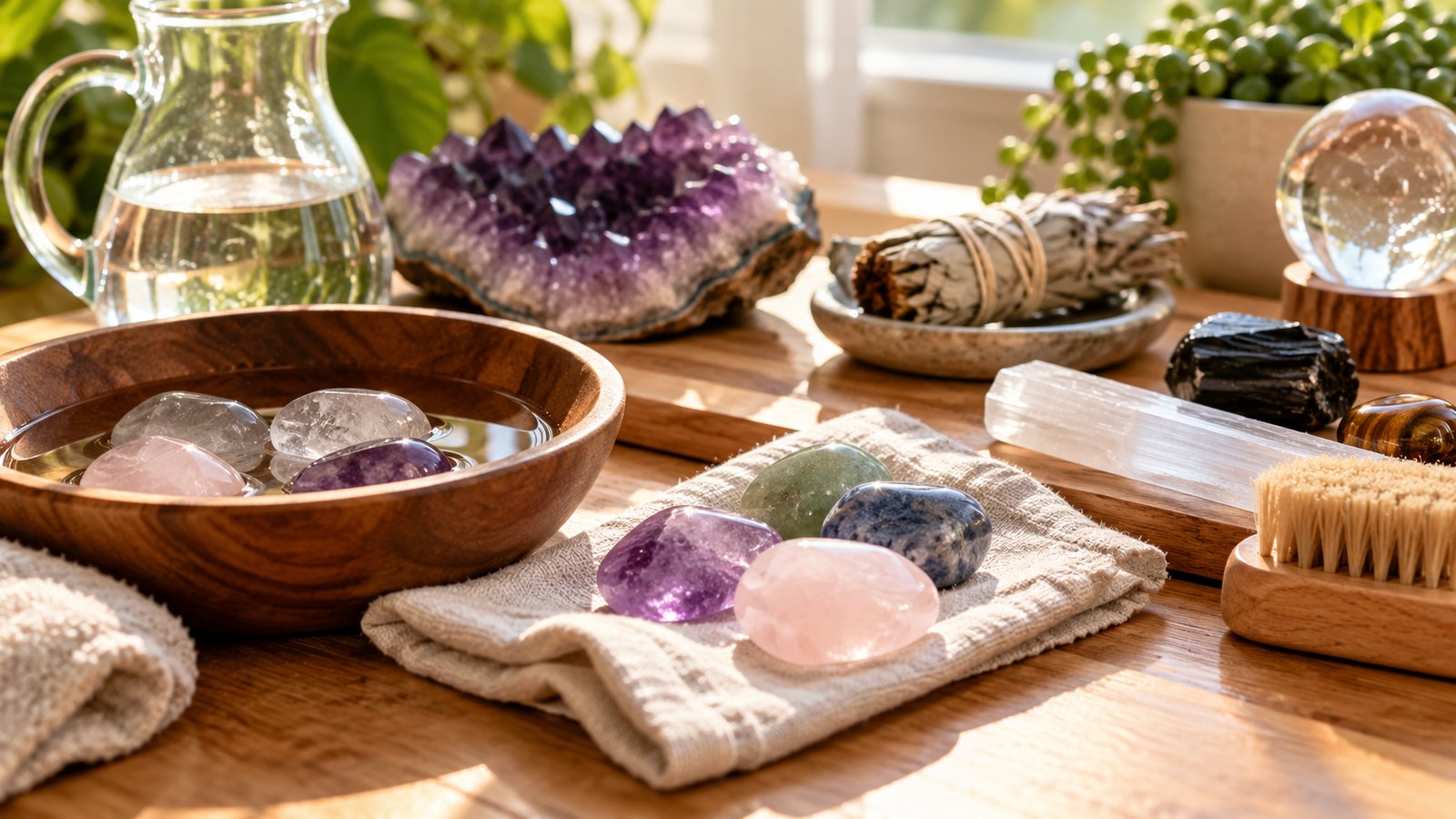
Water is the other risk. Selenite and similar gypsum stones soften and cloud when wet. Halite, or rock salt, dissolves. Some stones, such as malachite and pyrite, are not good candidates for water because of how they react or because of their composition. Porous stones like turquoise and opal can absorb liquids and stain. When in doubt, wipe with a dry or barely damp cloth.
Be careful with dust from some minerals. Malachite and a few others contain copper or other metals, and grinding or cutting them produces dust that is not safe to breathe. Do not make elixirs by soaking stones in drinking water unless you are sure the mineral is safe and insoluble, and note that many common stones are not. The safest choice is to skip the practice and display the stone beside the glass instead.
Light matters as well. Amethyst, rose quartz and some fluorites fade with prolonged sun exposure. Keep display shelves out of direct sunlight, particularly south-facing windows.
Cleansing Crystals Gently
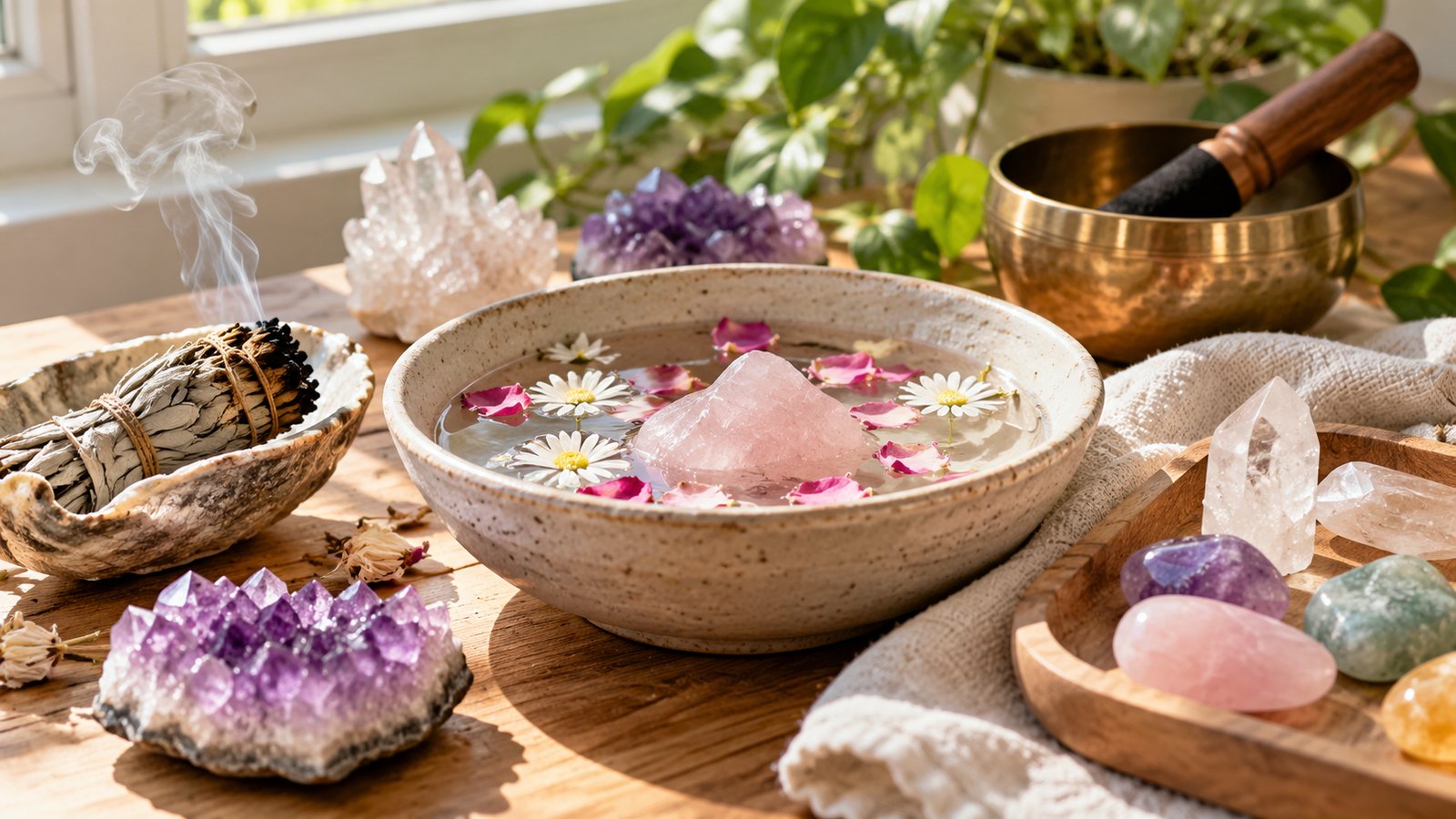
Cleansing in the crystal world means two things. One is physical cleaning, meaning dust, skin oils and fingerprints. The other is energetic or symbolic cleansing, which is a ritual people use to reset a stone or reset their intentions. The first has practical effects. The second is personal.
Physical cleaning calls for a soft brush and lukewarm water with a drop of mild soap, on durable stones only, then dry them with a soft towel. Skip this for soft, porous or water-soluble stones. Dry-brush those instead.
Symbolic cleansing has many forms, including smoke from sage or palo santo, sound from a bell or bowl, moonlight, burying a stone in dry sand or salt, or placing it on a selenite plate. Choose methods that suit the stone. Salt can damage porous stones, and sunlight can fade color. Our article on how to cleanse crystals lists ten methods with notes on what each one suits.
If you burn herbs, do so in a well-ventilated space and keep fire safe. Smoke can irritate people with asthma or allergies. A bell, a quiet moment, or a few slow breaths over the stone is a perfectly good alternative.
How to Spot Fake or Misrepresented Stones
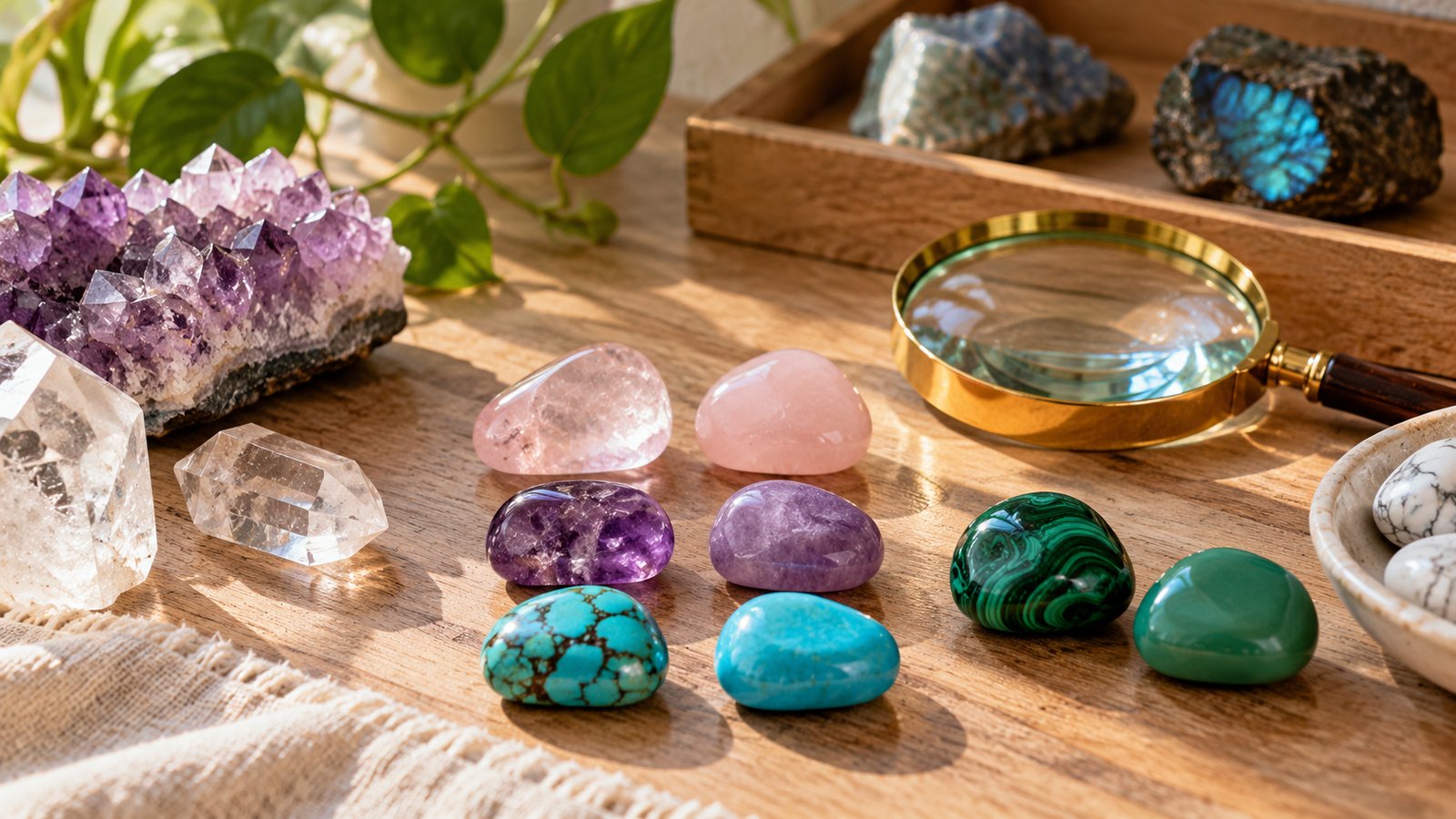
The crystal market includes treated, dyed, synthetic and outright fake stones. Not all of these are dishonest, but you deserve to know what you are buying.
Look for these warning signs:
- Colors that look unnaturally bright or uniform, such as electric blue “sodalite” or neon “agate.” Dyed agate is common and is often sold as such, though sometimes it is not disclosed.
- Glass sold as a gemstone. Glass often shows tiny round bubbles under magnification and feels warmer in the hand than real stone.
- Prices far below the norm for rarer stones. Genuine lapis lazuli, turquoise and moonstone are rarely cheap in large pieces.
- Lack of a name. Sellers who say “healing crystal” without naming the mineral are hiding information.
- Perfect symmetry, such as identical spheres with no internal features.
Reputable sellers name the mineral, the origin when known, and treatments such as heating, dyeing, stabilizing or irradiation. They also have return policies. Ask questions before you buy, and be wary of anyone who dodges them.
A few simple home checks can help, though none is definitive. Real quartz feels cool and heavy for its size. A scratch test with a steel blade tells you about hardness, but do it on an inconspicuous spot, since scratching damages the stone. On anything valuable, a gemologist or a lab report from a recognized gemological lab is the reliable answer.
Choosing Stones by Color, Zodiac or Intention
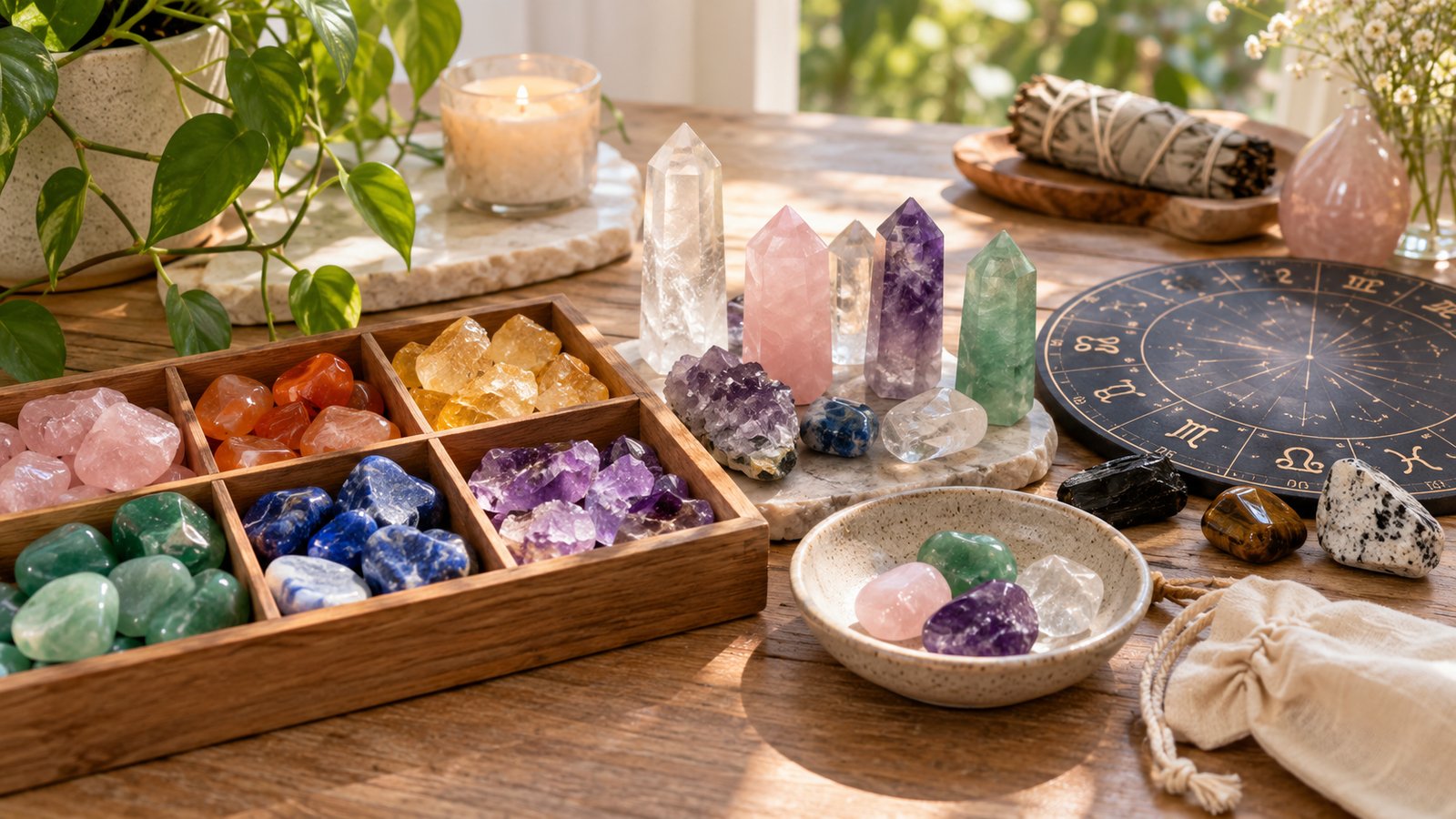
There are many ways to choose. You can choose by color, which is the simplest approach, by intention, by birth month, or by zodiac sign. Our guide to crystals for zodiac signs lists common associations by sign.
Keep a short list of what you want from a stone, such as a reminder to take breaks, a gift for a friend, or an object for a desk. A stone that has personal meaning for you will matter more than one that tops a ranking list.
Start small. Buy two or three stones, handle them regularly, and see which ones you reach for. Many collectors report that their tastes change after a few months, which is a good reason not to buy a full set on day one.
Building and Displaying a Small Collection
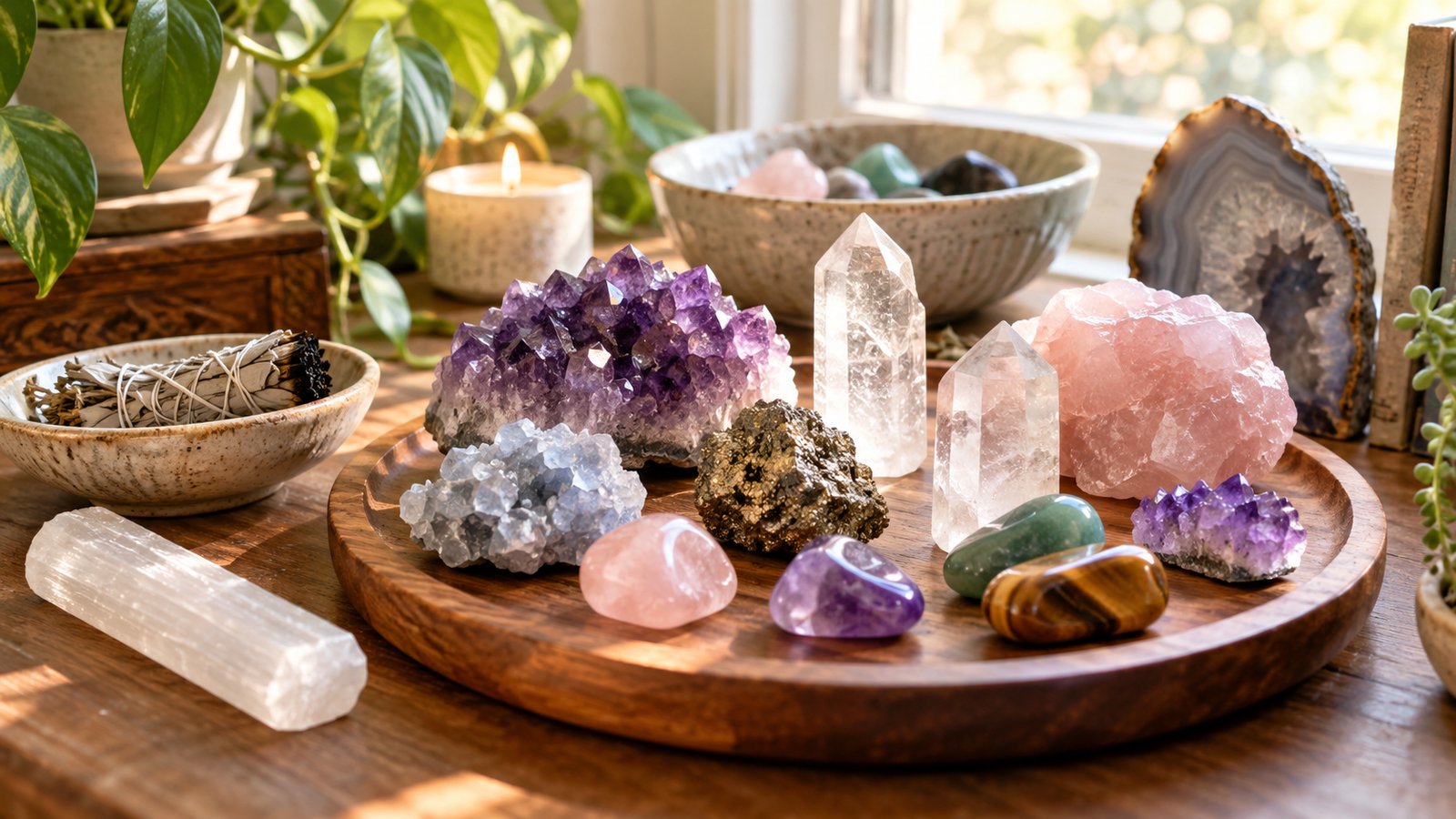
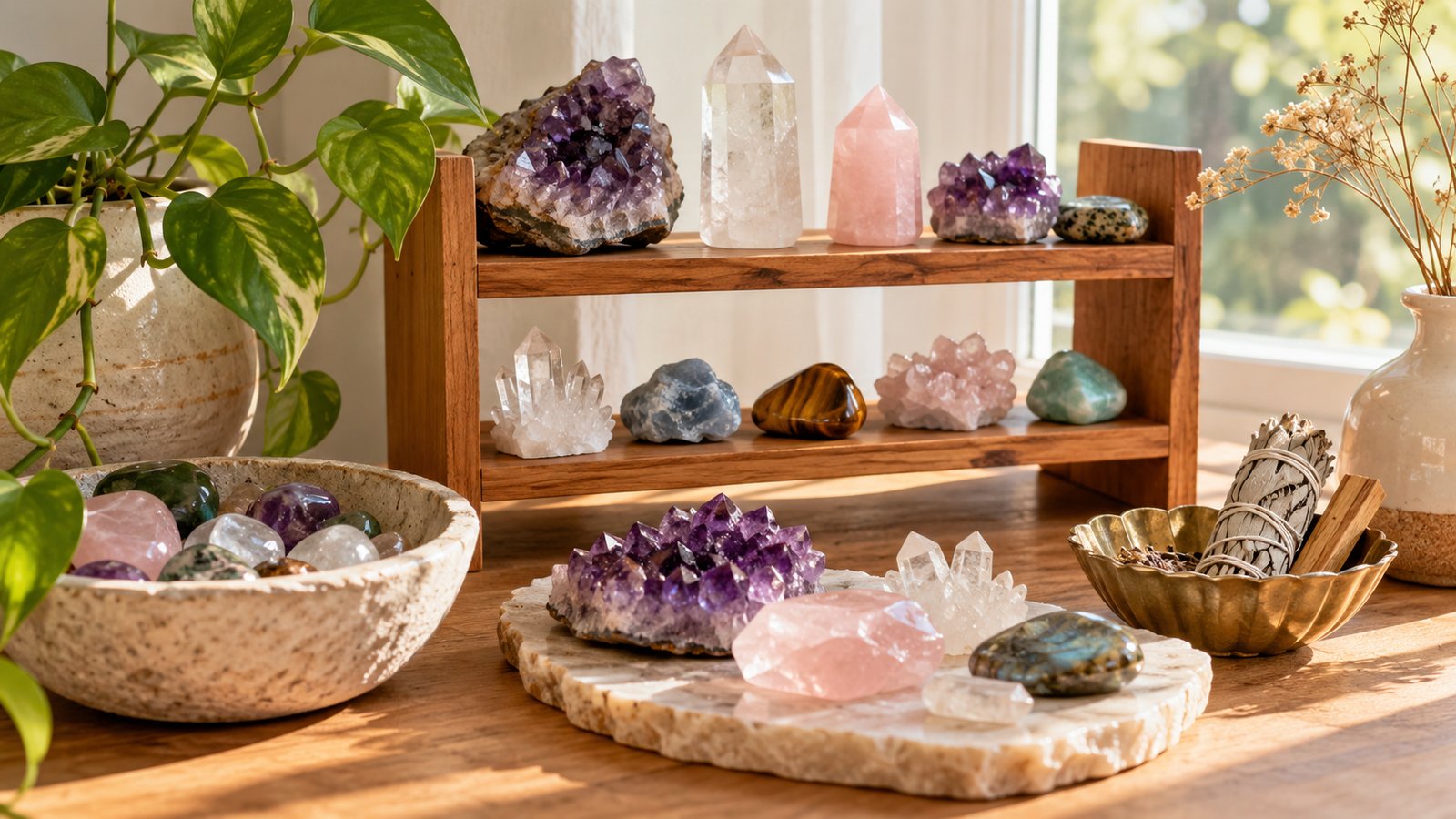
A collection works best when it stays manageable. Choose a shelf, tray or dish where stones can be seen, and keep that spot away from direct sun, steam and heavy foot traffic. A shallow wooden bowl or a shelf lined with felt protects soft stones from scratches. Store stones of different hardness apart from each other, because a quartz point will scratch a calcite sphere sitting beside it in the same pouch.
Think about what each stone is for. A pocket stone lives with you, so pick a tough one such as tiger’s eye or a tumbled quartz. A desk stone can be larger and more delicate. Jewelry needs the hardest stones, since rings and bracelets knock against doors and counters every day.
Gifts deserve the same thought. A small tumbled stone with a note about its traditional meaning makes a thoughtful present, as long as you are honest that the meanings are traditions. Include a card with care instructions when the stone is soft or water-sensitive.
Finally, keep a simple record. Note the stone’s name, where you bought it, what the seller said about treatments, and the date. That small habit makes it easy to answer questions later and to spot sellers whose descriptions do not hold up.
Where to Go From Here
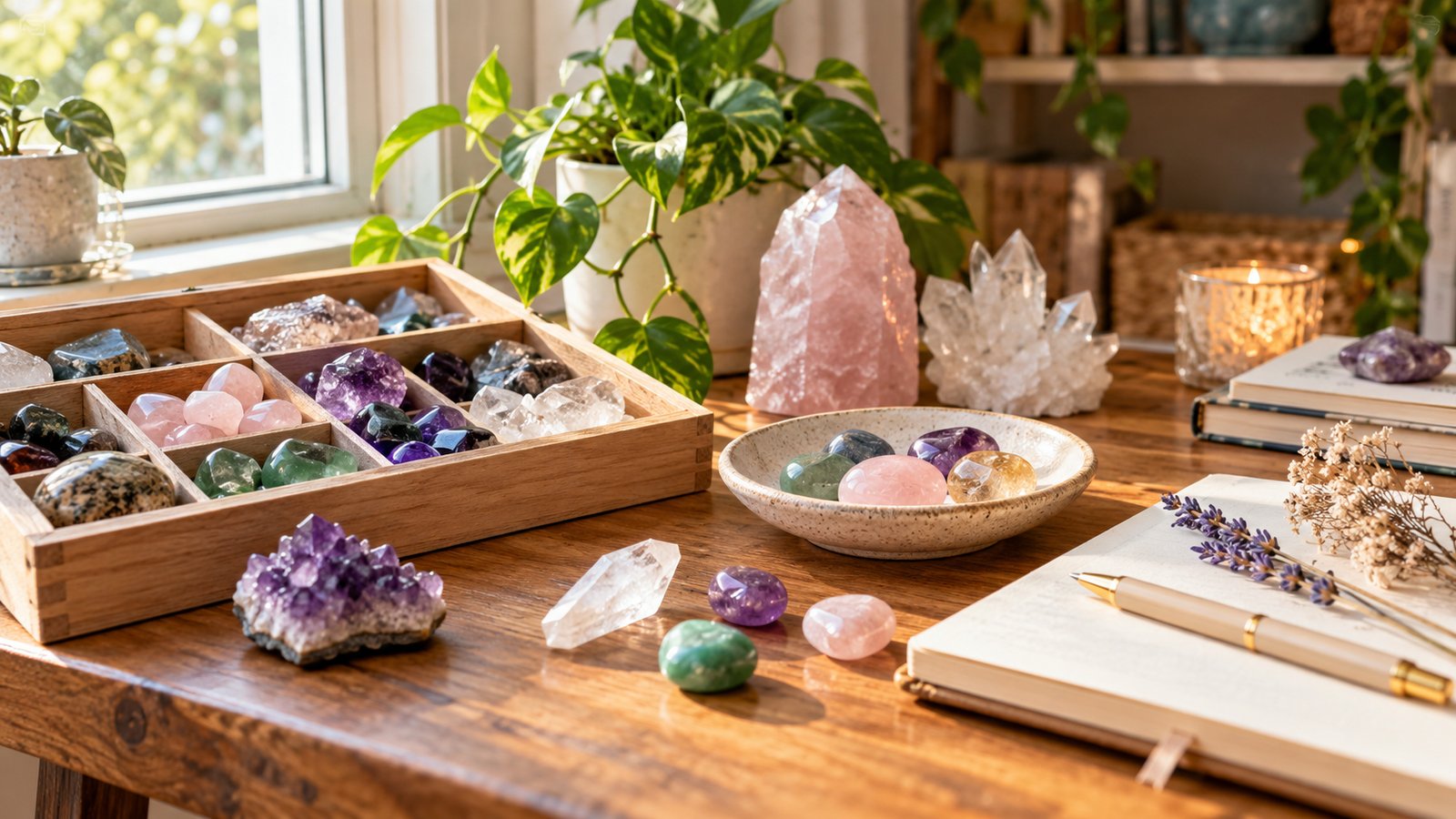
This guide is the start of a series. Upcoming articles will cover beginners’ stones, crystal grids, birthstones, stones that cannot go in water, color-by-color meanings and more. Link back to this page when you want a quick reference.
Care comes down to three rules: know the hardness, keep soft stones dry, and keep stones out of strong sun. When buying, ask for the mineral name and any treatments. On meaning, treat the traditions as culture and the benefit as a personal ritual.
Sources worth checking include the Mohs hardness values published by mineral references such as Mindat and the Smithsonian’s gem and mineral resources, and the Gemological Institute of America’s guidance on gem treatments and synthetic stones.
Frequently Asked Questions
Do crystals really work?
There is no scientific evidence that crystals cure or treat illness. Many people use them as personal symbols or rituals, and that can feel meaningful, but they are not a substitute for medical care.
How do I know if my crystal is real?
Ask the seller for the exact mineral and any treatments, check for unnaturally bright color or tiny round bubbles that suggest glass, and consult a gemologist for valuable pieces.
Which crystals should not get wet?
Selenite and other gypsum stones, halite, and porous or soft stones such as turquoise and opal can be damaged by water. Malachite and pyrite are also better kept dry.
Can crystals fade in the sun?
Yes. Amethyst, rose quartz and some fluorites can lose color with prolonged exposure to strong sunlight.
What is the easiest way to cleanse a crystal?
Durable stones can be cleaned with a soft brush and lukewarm water to remove dirt. Symbolic cleansing can be as simple as a quiet moment, sound, or resting the stone on a selenite plate, and all of these are gentle options.