| ✨Hey there! This post may contain affiliate links, meaning we earn a commission if you make a purchase through our links, at no cost to you. Please read our disclosures for more info. |
Quartz is everywhere. Beach sand, countertops, the sparkle in granite and the tiny crystal that keeps time in a wristwatch all contain it. That is the quick tour. countertops, the sparkle in granite and the tiny crystal that keeps time in a wristwatch. Clear quartz, the colorless and transparent form, is the version people picture when they hear the word crystal, and it is the first stone many collectors buy.
The sections ahead cover what clear quartz is, where it is found, what the crystal community believes about it, and how to care for it. Facts come from mineralogical sources such as GIA, Mindat, the U.S. Geological Survey and the Arkansas Geological Survey. Traditional meanings are presented as beliefs.
Contents
hide
What Clear Quartz Is
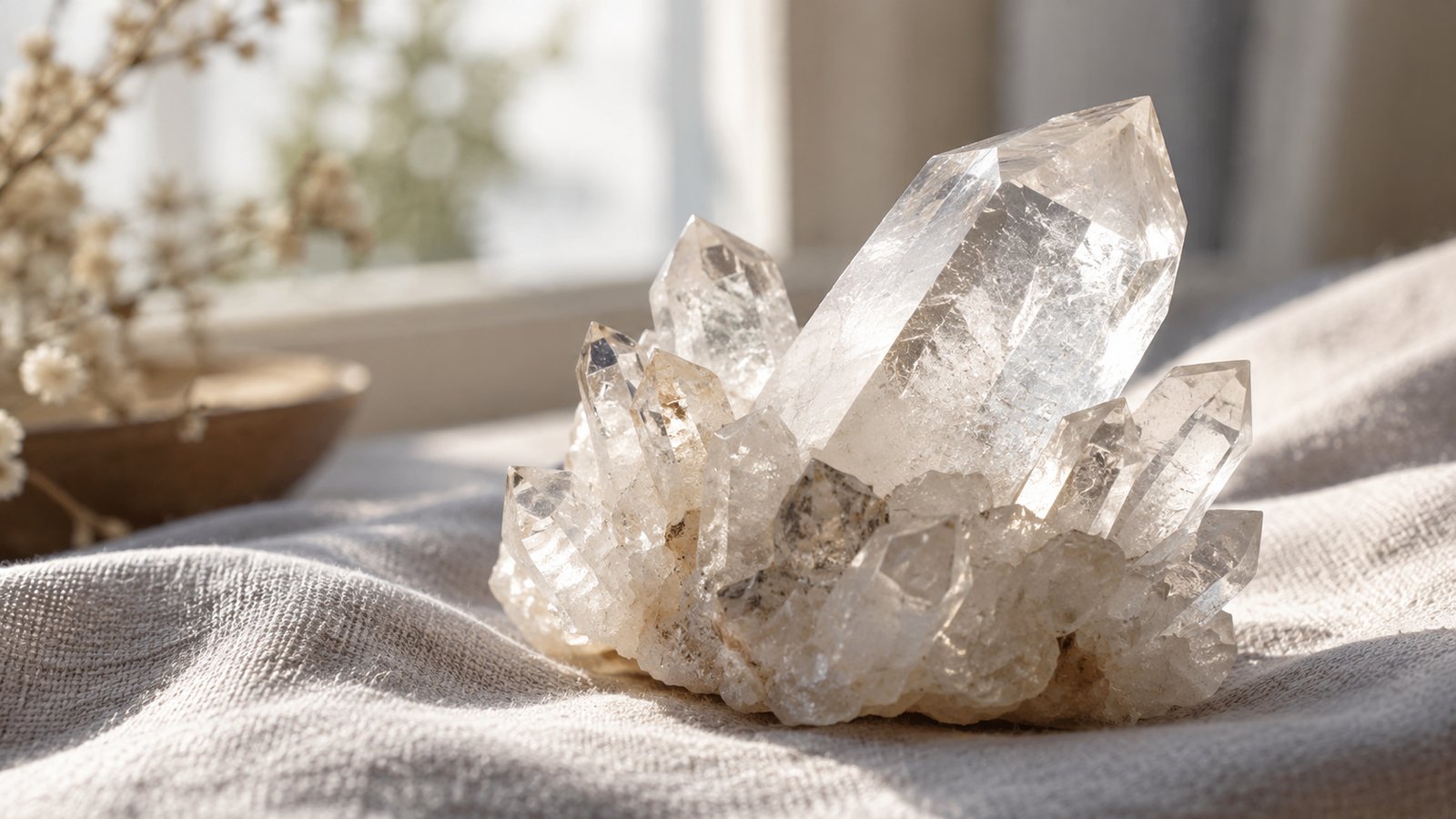
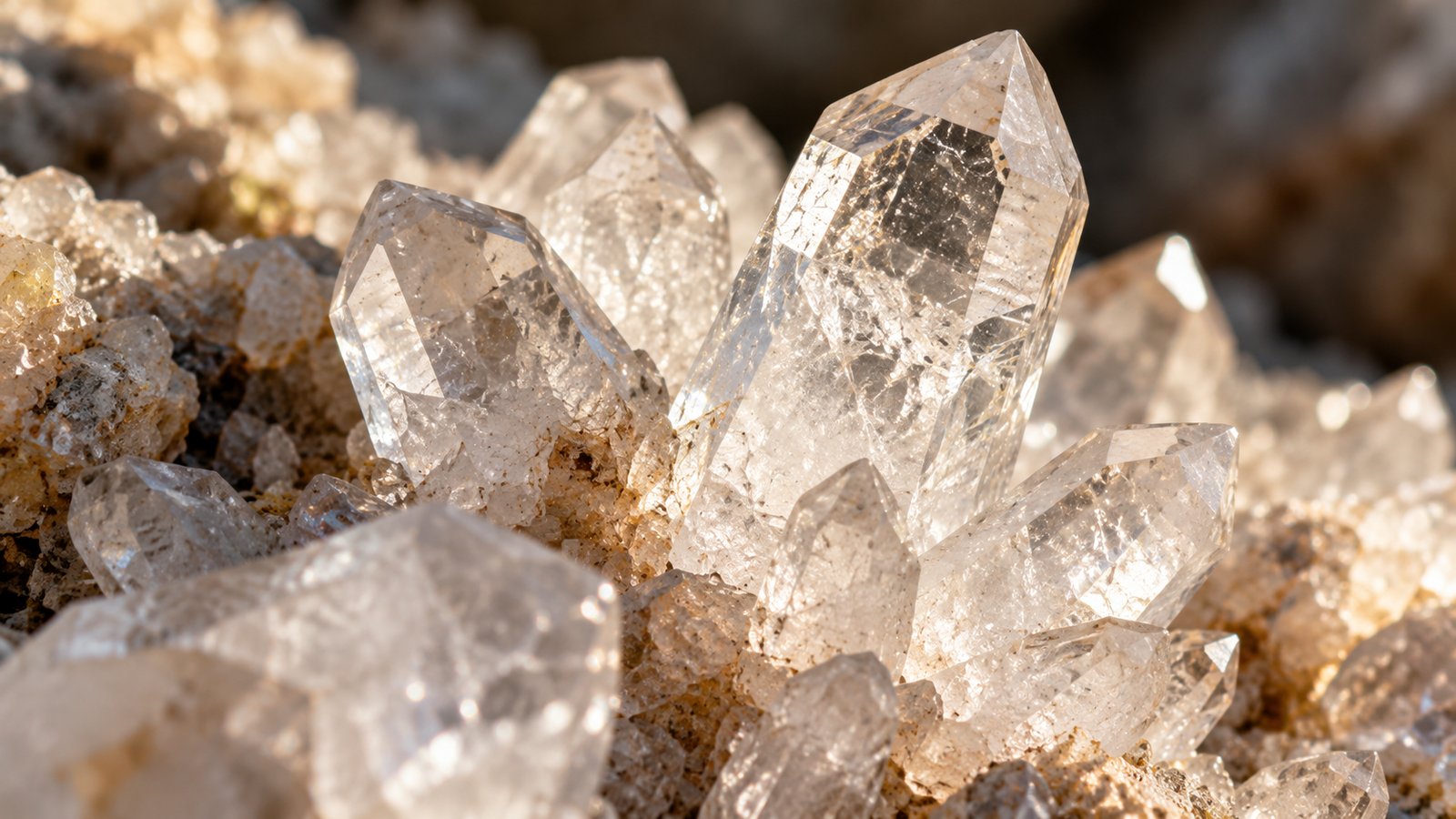
Clear quartz is silicon dioxide, written SiO2, in a crystalline form that is colorless and transparent. The mineral belongs to the trigonal crystal system and typically forms six-sided prisms capped by a pyramid-like point. Its Mohs hardness is 7, which makes it harder than a steel knife and hard enough that dust, which contains tiny quartz grains, can scratch softer stones.
Mineralogists and collectors use the name rock crystal for clear, colorless quartz. The word crystal itself comes from the Greek krystallos, meaning ice, because ancient writers believed rock crystal was water frozen so hard it could never melt. We now know it forms from silica-rich fluids in the earth, but the old idea shows how the stone has fascinated people for centuries.
Quartz comes in many colored varieties, among them amethyst and rose quartz. Clear quartz is the plain base from which those colors branch. Add trace iron and radiation and it becomes amethyst. Add other impurities, and it turns smoky, pink or yellow.
Where Clear Quartz Forms and Where It Is Found
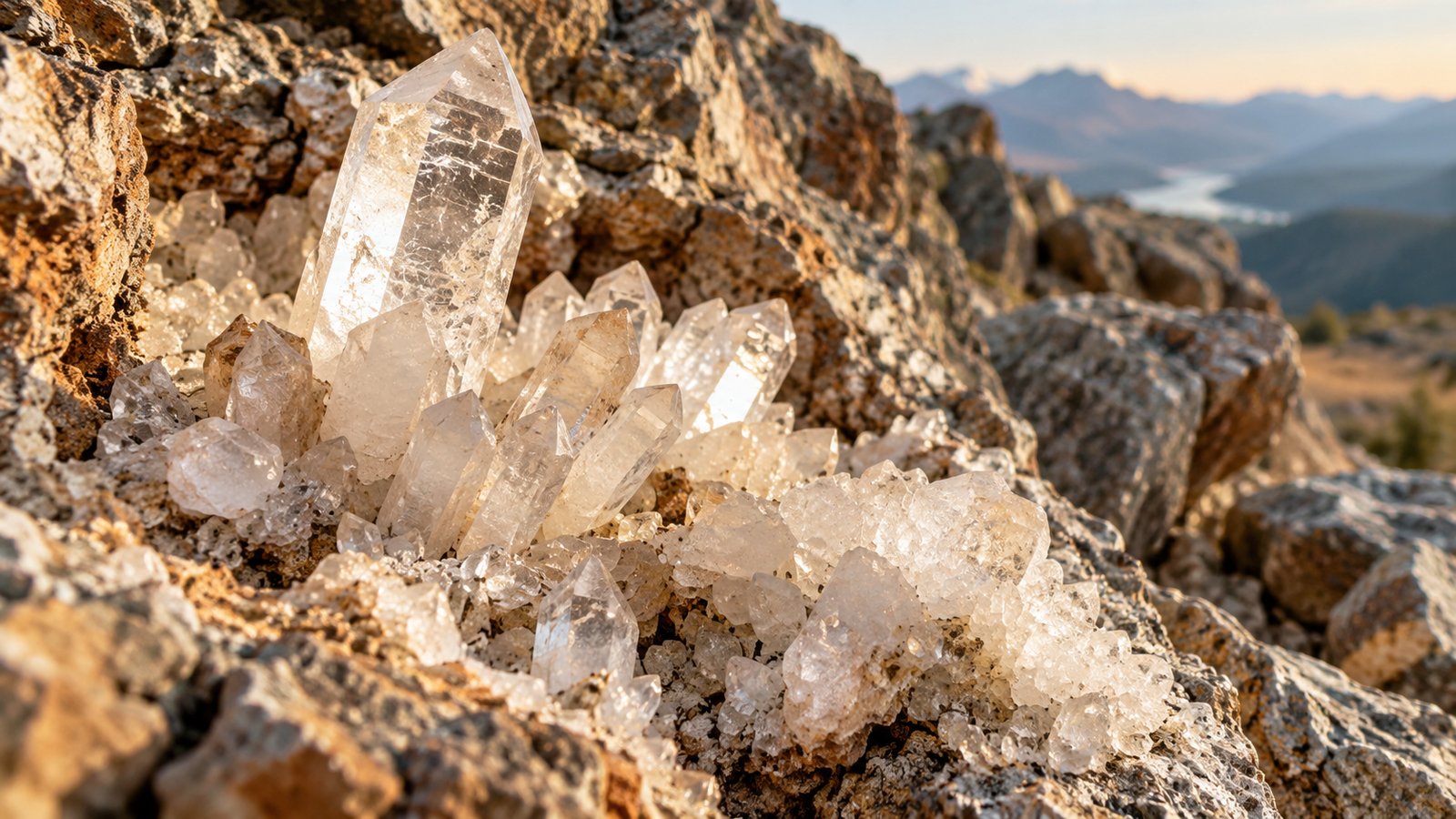
Quartz is one of the most abundant minerals in the Earth’s crust. Clear crystals grow in veins and cavities where hot, silica-rich water cools slowly, giving crystals room to develop faces. They also occur in pegmatites and in geodes.
Brazil is a major source of large, clear crystals. In the United States, the Ouachita Mountains of Arkansas are famous: the Arkansas Geological Survey describes the region around Mount Ida as one of the best-known sources of quartz crystals in the country, and collectors still visit public digging sites there. The USGS has documented that western Arkansas quartz was used during World War II as high-grade material for radio oscillators and optical instruments, because only clear, untwinned crystals without major flaws qualified.
Other well-known sources include Madagascar, the Alps, and Himalayan regions. Locality names appear on many crystal listings, but the label does not change the mineral’s composition.
Quartz and Technology
Quartz is piezoelectric. When the crystal is squeezed, it generates a small electric voltage, and when voltage is applied, it vibrates at a very stable frequency. A tiny slice cut from quartz is the timekeeping heart of a quartz watch, and quartz oscillators appear in clocks, radios and computers. Many people connect this documented electrical behavior with the traditional idea of quartz as an energy stone. The science describes what the crystal does, and the energy-stone idea is a traditional belief.
Today most quartz used in electronics is grown synthetically in factories, since manufacturers can control purity and size. Natural Arkansas crystals are now mostly collector material.
Forms and Varieties of Clear Quartz
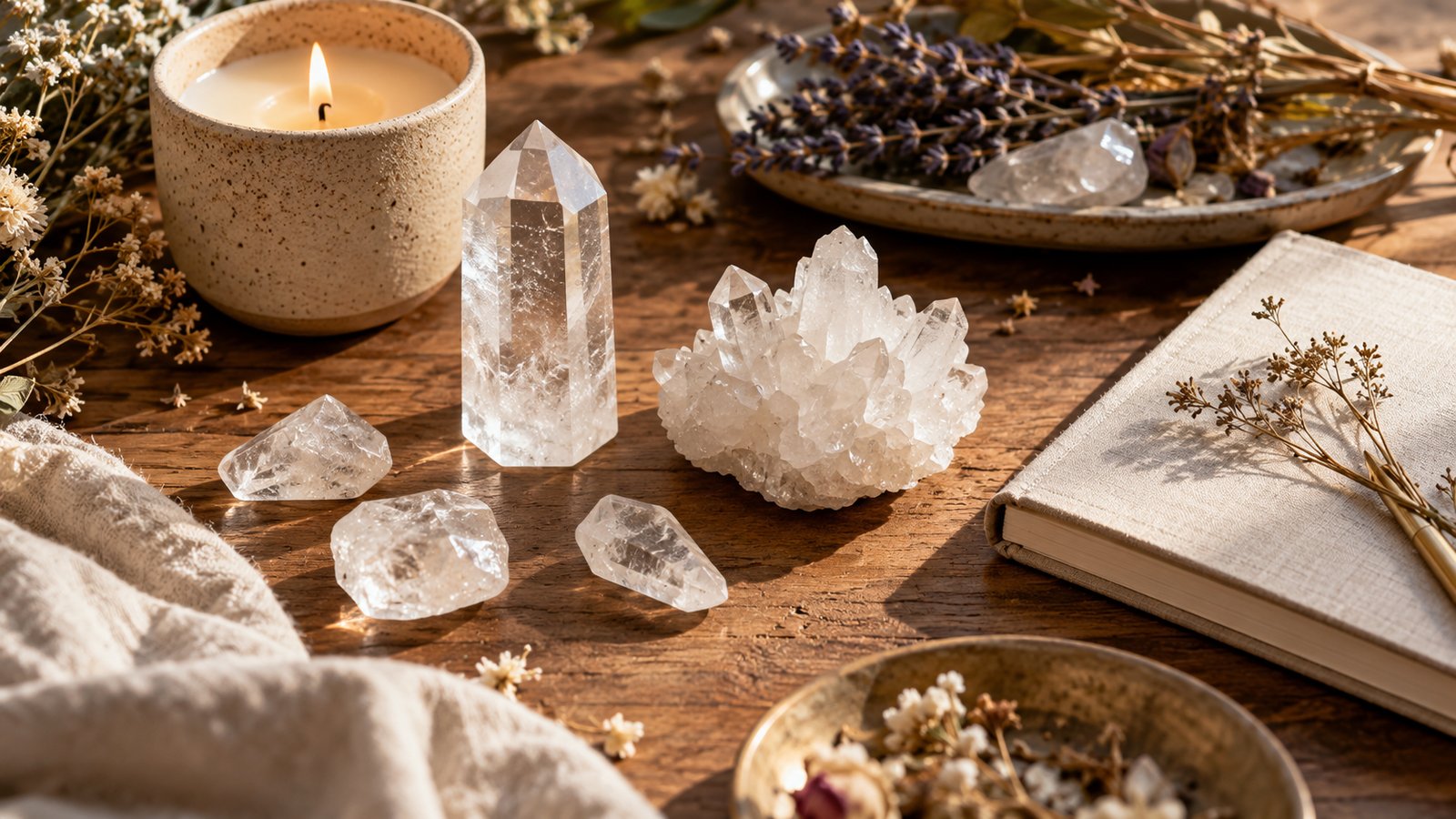
Clear quartz is sold in more shapes than almost any other stone, and the shape affects what the piece costs and how people use it.
- Single points: one terminated crystal, ideal for desks and hand-held rituals.
- Clusters: many crystals growing from one base, favored as shelf displays.
- Spheres and eggs: ground and polished from large pieces of rock crystal, and the most likely to show internal veils.
- Wands: long, shaped points, often with six facets cut in.
- Tumbled stones: small and smooth, inexpensive and easy to carry.
- Herkimer diamonds: short, naturally double-terminated quartz crystals from Herkimer County, New York, which look cut but are not.
Names You Will See in Shops
Trade names help sellers sort their stock but do not always mean a separate mineral. Phantom quartz shows a ghost outline of an earlier growth stage inside the crystal. Rutilated quartz holds golden needles of the mineral rutile. Tourmalinated quartz holds black needles. Each is clear quartz with an inclusion, and the inclusion is the selling point. Names such as Lemurian or Tibetan quartz are marketing labels that usually describe a look or a claimed source and are not scientific categories, so ask for facts when a listing leans on them.
A Note on Grading Quality
Collectors weigh clarity, termination, size and how few flaws a crystal has. A tip free of chips and a body free of cloudiness fetches a higher price than a damaged one. Cloudy or milky quartz is known as milky quartz and is common. It is still real quartz with its own charm, and many people prefer its softer look.

What Clear Quartz Means in Crystal Traditions
In crystal practice, clear quartz is called the master healer or the amplifier. Practitioners believe it magnifies the intentions placed near it and the energy of stones around it. These are traditional beliefs, and many people use them as a framework for focus and ritual.
- Clarity. The transparent look suggests a clear mind, so people hold clear quartz during planning, studying or meditation.
- Amplification. Grids and layouts often place clear quartz at the center or tips to symbolically boost other stones.
- Cleansing. Many believe clear quartz holds less of a “color” and so suits any purpose, which is why it is called universal.
- The crown chakra. Some systems link colorless and white stones with the top of the head and connection to spirit.
- Programming. Practitioners set an intention, such as focus for the week, and hold the stone while thinking it through.
Zodiac lists differ widely about quartz, and some say it suits every sign. If you want to compare sign-by-sign suggestions, see our guide to crystals for zodiac signs. Some people also pair clear quartz with the water-colored stones in our guide to aqua aura quartz, a treated variety of the same mineral.
Clear Quartz and Smoky Quartz Compared
Smoky quartz is the brown to gray variety, colored by natural radiation acting on trace aluminum in the crystal. Citrine is yellow and amethyst purple. Clear quartz has none of these color centers, which is why it appears colorless. Shop descriptions that call a gray stone clear quartz are usually wrong. If color matters to you, ask the seller to name the variety.
Where a stone sits on that spectrum can matter to buyers who follow a particular tradition, since each color carries its own associations. Comparing a clear stone with a colored one side by side is a pleasant way to see how small differences in chemistry change an entire personality.
A final practical tip: keep a small notebook of the stones you own. Record the name, where you bought it and any seller claims, and revisit the notes after you learn more. Collections grow fast, and a short record makes it easier to spot a mislabeled piece later.

Ways to Use Clear Quartz Mindfully
- Set an intention. Write down one goal for the week, hold a point in your hand, and read the goal aloud. The ritual is symbolic, but it can sharpen focus.
- Desk companion. A small point near a laptop acts as a reminder to take breaks.
- Meditation. Rest a sphere in your palms and concentrate on your breath.
- Grid center. Place a point at the center of a layout of stones and use it as the visual anchor.
- Light play. Set a crystal where morning light passes through it and enjoy the small rainbows that form on walls.
Treat clear quartz as an object for reflection and ritual: a clear stone for a clear intention.

Clear Quartz Across Cultures
Rock crystal has a long documented history. A scholarly study of rock crystal in Greek and Roman antiquity traces its use from the Minoan and Mycenaean Bronze Age through the writings of Pliny the Elder, and notes that the ancients believed it was ice frozen so hard it could not melt, the same idea behind the Greek word krystallos. According to that study, rock crystal became fashionable in the early Roman Empire for vessels, ornaments and even statuettes.
The Qantara heritage project, which documents Mediterranean cultural history, describes how rock crystal carving reached a peak in Fatimid Egypt (969 to 1171), where lapidaries produced ewers, lamps and large objects, some inscribed with the names of caliphs. Around two hundred of these works survive, and many reached medieval treasuries in the West.
In the Americas, a study in the Journal of Archaeological Science examined a Mixtec rock crystal goblet and Aztec and Mixtec rock crystal beads from secure contexts and found they were worked with stone and wood tools charged with abrasives, not lapidary wheels. The same study looked at the famous crystal skulls, including the one in the British Museum, and concluded they were carved with rotary wheels, probably in nineteenth-century Europe. The British Museum’s own object record says the quartz is most likely Brazilian, which makes a pre-Hispanic date unlikely. The lesson is a good one for any collector: genuine ancient rock crystal work exists, and checking the evidence is part of the fun.

Caring for and Cleansing Clear Quartz
Before cleaning, check for glued parts. Many clusters and wands have a base attached with adhesive, and long soaking can loosen it.
Hard and chemically stable, quartz is among the easiest stones to care for. Warm water and a drop of mild soap clean a polished piece safely, and a soft cloth restores the shine.
- Avoid sudden temperature shocks, such as pouring boiling water on a cold crystal, which can crack it.
- Keep it separated from harder gems like sapphire, ruby and diamond to avoid scratches.
- Store points wrapped or in separate compartments to protect tips.
- Sunlight does not harm clear quartz, but a crystal sphere in a sunny window can focus light enough to start a fire, so never leave one where it can concentrate sunlight on curtains or papers.
- For energy cleansing, many practices apply, including smoke, sound, moonlight and burying the stone in earth. A full list is in how to cleanse crystals.

How to Spot Fake Clear Quartz
Clear quartz is the stone most often imitated by glass, because glass can be cut into crystal shapes cheaply. Several checks help.
- Bubbles and swirls. Under a magnifying loupe, glass often has round gas bubbles or curved swirl lines. Natural quartz may show cracks, feather-like veils, or small mineral inclusions, but not round bubbles.
- Temperature. Heat moves through quartz faster than through glass, so a crystal tends to feel cooler against the skin and stay cool longer. This is only a hint, because room conditions affect it.
- Weight. Specific gravity for quartz is about 2.65. A glass piece of equal size is often similar, so weight alone is unreliable.
- Perfection. A large ball or point with no flaws at all and a low price deserves suspicion. Natural pieces nearly always show some inclusions.
- Double refraction. Light entering quartz splits into two rays. Looking through a clear sphere at a line of text may show a doubled image along certain directions in prisms and cut stones, while glass does not.
A gemological lab can confirm the material. Also know the term lab-grown: synthetic quartz is real quartz, grown in a factory, and appears in both industry and jewelry. A seller should disclose it.
Other imitation materials include acrylic, which is lighter and scratches easily, and leaded crystal glass, which is much softer than quartz. Hardness testing with a steel needle is best left to experts, because it leaves a mark on the stone.

Frequently Asked Questions
Is clear quartz the same as crystal?
Crystal is a general word for any material with an ordered atomic structure. Clear quartz is the specific mineral most people mean when they say crystal.
What is the Mohs hardness of clear quartz?
It is 7. That makes it durable enough for rings, though hard knocks and hard stones can still damage it.
Why is quartz used in watches?
Because quartz is piezoelectric, a small slice vibrates at a steady rate when driven by a battery. A circuit counts those vibrations to measure time.
Is clear quartz expensive?
Common material is inexpensive, and small tumbled stones cost very little. Prices rise for large, flawless spheres, rare habits such as phantoms, and well-formed collector clusters. Compare similar sizes and forms before deciding that a price is fair.
Is clear quartz rare?
No. Quartz is one of the most common minerals in the Earth’s crust, though large flawless crystals are less common.
Can clear quartz go in the sun?
Yes, it will not fade, but a sphere can focus sunlight into a fire hazard. Keep spheres out of direct sun.
Does clear quartz amplify energy?
That is a core belief in crystal traditions. Science supports quartz’s piezoelectric behavior, but not claims about personal energy.
How do I tell clear quartz from glass?
Look for round bubbles, check whether the stone feels cool, and consider the price. For certainty, use a gem lab.
What stones go well with clear quartz?
People combine it with amethyst, rose quartz and citrine, mostly as a matter of color and taste.