
| ✨Hey there! This post may contain affiliate links, meaning we earn a commission if you make a purchase through our links, at no cost to you. Please read our disclosures for more info. |
Quick answer: palmarosa essential oil is steam distilled from the grass Cymbopogon martinii, a relative of lemongrass and citronella in the Poaceae family. Its aroma is sweet, fresh and rosy because geraniol is typically the major constituent. Tisserand and Young, in Essential Oil Safety (second edition), describe a low risk of skin sensitization and recommend a dermal maximum of 6.5 percent; they also caution that a drug interaction may occur with medicines metabolized by CYP2B6. Palmarosa is a perfume and soap staple and a cheaper rosy accent than true rose oil, but it is not a medical treatment. Dilute it, patch test, keep it off children and pets, and never drink it.
Palmarosa is one of those oils people meet in a “rose-like, but affordable” blend and then struggle to name. The plant is a tropical grass, not a rose shrub, and the oil is much more concentrated than a handful of fresh leaves would ever be. This guide sits in our essential oils guide and is meant to be used with the essential oil dilution chart. If you already love floral oils, you will also want the comparison with geranium essential oil later in this article.
Sources: Robert Tisserand and Rodney Young, Essential Oil Safety, second edition (Churchill Livingstone Elsevier, 2014), palmarosa profile, including constituents cited from B.M. Lawrence, Progress in Essential Oils, Perfumer & Flavorist 27, no. 1 (2002); National Association for Holistic Aromatherapy (NAHA) safety pages; National Center for Complementary and Integrative Health (NCCIH) aromatherapy overview; Tisserand Institute general safety guidelines on dilution, diffusion and children. Essential oils are not approved to diagnose, treat, cure or prevent disease. Talk with a healthcare provider before use if you are pregnant, nursing, have a medical condition or take medications.
What Palmarosa Essential Oil Is
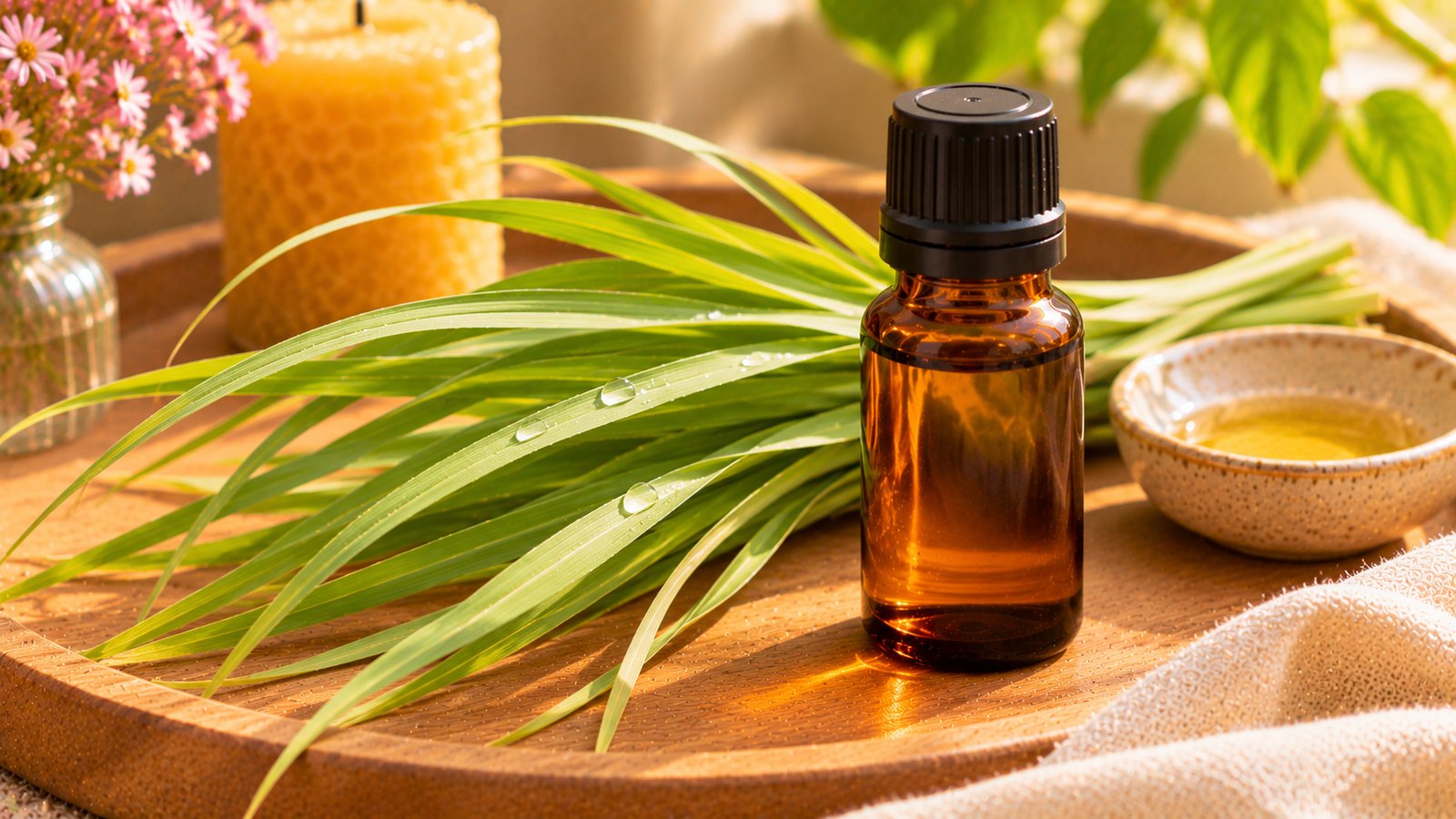
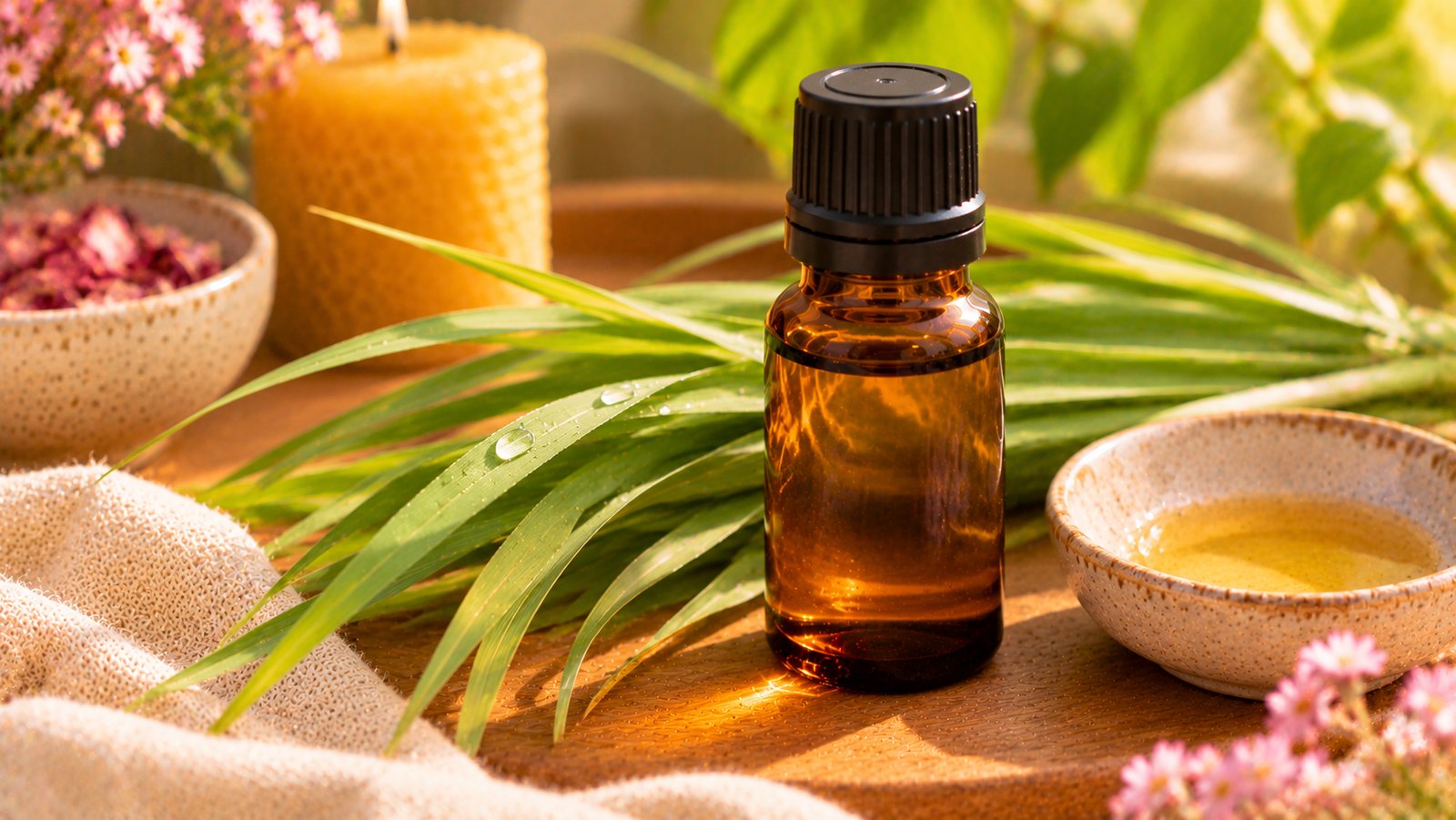
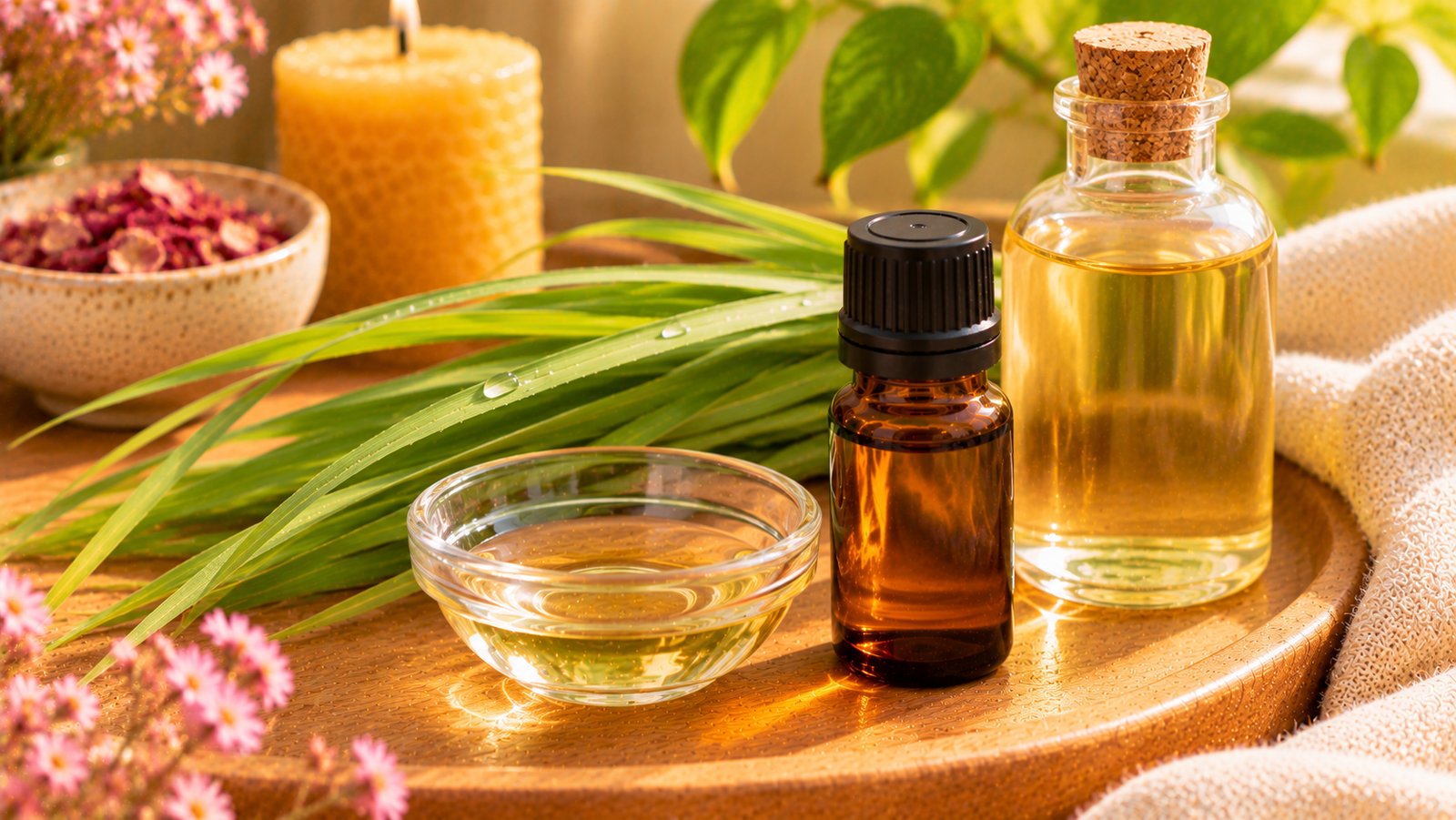
Palmarosa comes from Cymbopogon martinii, sometimes labeled Cymbopogon martini, a perennial grass in the same genus as lemongrass (Cymbopogon citratus or Cymbopogon flexuosus) and citronella (Cymbopogon nardus or Cymbopogon winterianus). Farmers and distillers often talk about palmarosa or rosha grass, and about the motia type used for the finer floral oil. The essential oil is produced by steam distillation of the grass blades, not by pressing a peel and not by solvent extraction of rose petals.
The fresh oil is typically pale yellow and thin. In perfumery it is often a middle note: sweet, leafy-floral, a little lemony, with a rose-adjacent character that reads “pretty” rather than “jammy rose.” That rosy impression comes largely from geraniol, a monoterpene alcohol that also appears in rose, palmarosa’s cousins, and many other plants. Tisserand and Young list major constituents that include geraniol, geranyl acetate, farnesol, linalool, ocimene, beta-caryophyllene and geranial, citing compositional work by B.M. Lawrence. Exact percentages vary by harvest, distillation and chemistry, so a current GC-MS report from the supplier is more useful than a memorized average.
Two related oils are easy to confuse with palmarosa if you only smell a faint floral sweetness:
- Lemongrass and citronella, also Cymbopogon grasses, but typically much higher in aldehydes such as citral or citronellal, and with different safety limits.
- Geranium (Pelargonium species), a floral oil with its own mix of citronellol, geraniol and other constituents.
- Rose (Rosa damascena or Rosa centifolia) otto or absolute, which is far more expensive, floral in a different way, and produced from petals, not grass.
Palmarosa has a long history in soap, cosmetics and fragrance as a rose extender or a soft floral in its own right. Traditional use as a scented grass oil is not the same thing as evidence that a modern essential-oil bottle treats infection, hormonal problems or anxiety.
| Feature | Palmarosa essential oil |
|---|---|
| Botanical name | Cymbopogon martinii |
| Plant family | Poaceae (grasses) |
| Plant part | Grass blades, steam distilled |
| Aroma | Sweet, fresh, rosy-floral |
| Major constituent (typical) | Geraniol, with geranyl acetate and other terpenes |
| Dermal maximum (Tisserand and Young, 2nd ed.) | 6.5% |
| Sensitization (same source) | Described as low risk, still not zero |
| Extra caution (same source) | Possible interaction with drugs metabolized by CYP2B6 |
How Palmarosa Smells and How to Blend It
Open a bottle and you get a bright, sweet floral with a grassy freshness underneath. Some people think of rose water, others of a clean geranium leaf. It is usually less minty-green than geranium and less honeyed and complex than a genuine rose otto. A little goes a long way in a blend; too much can smell soapy or sharp.
It sits comfortably with:
- Lavender, for a soft herbal-floral pillow or room blend (see lavender essential oil)
- Geranium, if you want to deepen the rosy character without jumping straight to rose
- Light woods and gentle citrus, counting any phototoxicity rules that belong to the citrus oil you choose, not to palmarosa itself
- Other floral materials in a low total percentage
If your goal is “rose on a budget,” palmarosa can supply the geraniol-forward impression. It will not reproduce the full scent of distilled rose, and it should not be sold as rose oil. Honest labeling protects both the buyer and the rose farmer.
How to Use Palmarosa Safely
Tisserand Institute general guidelines still apply: do not put undiluted essential oils on the skin; do not drip oils into a bath without a proper dispersant; do not ingest oils unless a qualified practitioner who is licensed to work that way has directed you to; keep bottles away from children; ventilate when you diffuse.
A practical sequence:
- Confirm the Latin name Cymbopogon martinii on the label. “Rosa grass” or a fantasy blend name is not enough.
- Dilute in a carrier oil, unscented lotion or other suitable base. For everyday adult body scent, many people start far below the 6.5 percent dermal maximum, often around 1 to 2 percent, and lower on the face.
- Patch test on a small area and wait 24 hours.
- Keep palmarosa out of eyes, inner ears and mucous membranes.
- Diffuse intermittently, with fresh air, rather than all day. A drop or two is usually plenty.
- Store the bottle tightly closed, upright, away from heat and light, and out of a child’s reach.
- If you take prescription medicines, especially any your clinician has flagged for CYP interactions, ask that clinician or a pharmacist before regular topical use. Tisserand and Young caution that a drug interaction may occur with drugs metabolized by CYP2B6.
Palmarosa is not a phototoxic cold-pressed citrus peel oil. That does not make unlimited sun-and-skin experiments a good idea. Irritation can still happen, particularly on damaged or already reactive skin.
People who are pregnant, nursing, managing a medical condition, or considering use around children should get personal advice first. NAHA and the Tisserand Institute both emphasize extra caution with children. Pets should not have oils applied to fur or left to sit in a closed room with a strong diffuser; see essential oils and pets.
Dilution Table and Common Scent Uses
These starting points are for healthy adults and sit at or under the Tisserand and Young dermal maximum. They are not medical doses.
| Use | Starting point | Notes |
|---|---|---|
| Reed-free ambient diffusion | 1 drop in a small room, 30 to 60 minutes | Fresh air; do not run continuously |
| Body lotion or oil | 1% to 2% (about 6 to 12 drops per ounce of carrier) | Stay under 6.5% |
| Face oil or serum | 0.5% to 1% | Patch test; keep away from eyes |
| Soap or unscented unsold lotion refresh | Follow soap-making fragrance load and still respect the 6.5% skin max on the finished product | Soapy geraniol notes can dominate |
| Bath | Only if fully dispersed in a solubilizer or suitable emulsifier, at a low dilution | Never drop neat oil on the water |
| Internal use | Do not self-prescribe | Food flavoring GRAS status is not a license for medicinal ingestion |
Diffusing
Palmarosa sweetens a room without the sharpness of lemongrass. Combine one drop with lavender or a soft wood. If anyone in the house is scent-sensitive, skip diffusion and keep the bottle capped.
Diluted skin products for scent or feel
Some aromatherapy texts describe palmarosa in skin-care blends for dry, oily or combination skin. That is a traditional and formulary use, not a dermatology prescription. A low dilution in a bland carrier can smell pleasant. If you have eczema, rosacea, acne under treatment or a broken skin barrier, ask a clinician before adding essential oils. Stinging, redness or itching means wash the area with a carrier oil or mild soap and water and stop.
Home fragrance and cleaning accents
A drop in a properly emulsified linen spray can leave a rosy-green note. Do not spray faces, pets or polished surfaces that might spot. Palmarosa is not a registered disinfectant, and it does not replace soap, heat or EPA-registered products when sanitation matters.
Palmarosa vs Geranium vs Rose vs Other Cymbopogon Oils
Geranium essential oil usually comes from Pelargonium graveolens or related scented geraniums, not from a grass. Its scent is often greener, sometimes minty or citrusy, with citronellol as a frequent major constituent alongside geraniol. Safety limits differ; do not copy palmarosa’s 6.5 percent figure onto geranium.
Rose otto or rose absolute is distilled or extracted from rose petals. The yield is low and the price is high, which is exactly why palmarosa historically filled out rose bases in soap and perfume. If a cheap “rose essential oil” smells mainly like palmarosa or geranium, you may be smelling a stretch or a substitute. That can still be a lovely oil if it is labeled honestly.
Lemongrass and citronella share the genus but not the safety profile. They are typically richer in aldehydes and have stricter dermal limits in Essential Oil Safety because of irritation and sensitization risk. If a blend smells harshly lemony or citronella-like, you are probably not dealing with a typical palmarosa.
Ylang-ylang, ho wood and some lavender chemotypes can also read floral. Compare Latin names and GC-MS data rather than shopping by color of the bottle.
Buying, Storage and Quality
Look for:
- The botanical name Cymbopogon martinii
- The plant part (herb or grass, steam distilled)
- Country of distillation when the seller knows it (India is a long-standing producer; other regions exist)
- A batch-specific GC-MS or at least a typical constituent list that features geraniol
- A dark glass bottle with a tight orifice reducer and a clear date or batch code
Red flags include medical cure claims, “safe to ingest daily” instructions from an unqualified seller, no Latin name, and a price that is far below the going rate without explanation. Palmarosa is not usually as expensive as rose or melissa, so a mid-range price is normal; a rock-bottom mystery oil is not a bargain if you cannot tell what is in it.
Geraniol can oxidize over time, and oxidized oils are more likely to irritate. Buy amounts you will use, cap the bottle, and store it cool and dark. If the scent turns harsh or the oil has been open for years, retire it from skin use.
NCCIH’s public overview of aromatherapy is a useful reset when marketing gets loud: many wellness claims have limited evidence, and essential oils can cause side effects, especially on the skin or when ingested. Palmarosa can still earn a place on a tray of scent oils without pretending to be a medicine.
Frequently Asked Questions
What is palmarosa essential oil good for?
It is used for its sweet, rosy-floral scent in perfumes, soaps, diluted body products and diffusion. Traditional and aromatherapy texts also mention skin-care blends. It is not an approved treatment for any disease.
Is palmarosa the same as rose or geranium?
No. Palmarosa is a distilled grass (Cymbopogon martinii). Geranium comes from Pelargonium. Rose oils come from rose petals. They can share a rosy impression because of overlapping constituents such as geraniol, but they are different products with different prices and safety details.
What dilution should I use?
Tisserand and Young recommend a dermal maximum of 6.5 percent. Everyday adult use is often much lower, such as 1 to 2 percent on the body and about 0.5 to 1 percent on the face, after a patch test.
Can I use palmarosa during pregnancy?
Get personal advice from your prenatal clinician or a qualified practitioner before use. General essential-oil caution during pregnancy still applies, even though palmarosa is not in the highest-risk group of oils.
Does palmarosa interact with medications?
Tisserand and Young caution that a drug interaction may occur with drugs metabolized by CYP2B6. Ask a clinician or pharmacist if you take prescription medicines.
Can I add palmarosa to a bath?
Only if the oil is fully dispersed in a suitable solubilizer. Neat drops floating on water can irritate skin. When in doubt, skip the bath and use a diluted lotion instead.
Is palmarosa safe for dogs or cats?
Do not apply essential oils to pets or diffuse heavily in closed rooms they cannot leave. Follow a veterinarian’s guidance and our essential oils and pets guide.
