| ✨Hey there! This post may contain affiliate links, meaning we earn a commission if you make a purchase through our links, at no cost to you. Please read our disclosures for more info. |
Quick answer: popular blue crystals include lapis lazuli, aquamarine, sodalite, blue lace agate, kyanite, celestite, larimar, turquoise, blue apatite and blue calcite. In crystal traditions, blue stones are commonly associated with calm, communication and clarity, and with the throat chakra, though there is no scientific evidence that crystals have healing powers. Their physical properties differ a lot: aquamarine (a beryl, about 7.5 to 8 on the Mohs scale) is tough, while celestite, blue calcite and larimar are soft and can be damaged by water, sunlight or scratching. Bright, uniform blue at a low price often signals a dyed stone such as dyed howlite or agate.
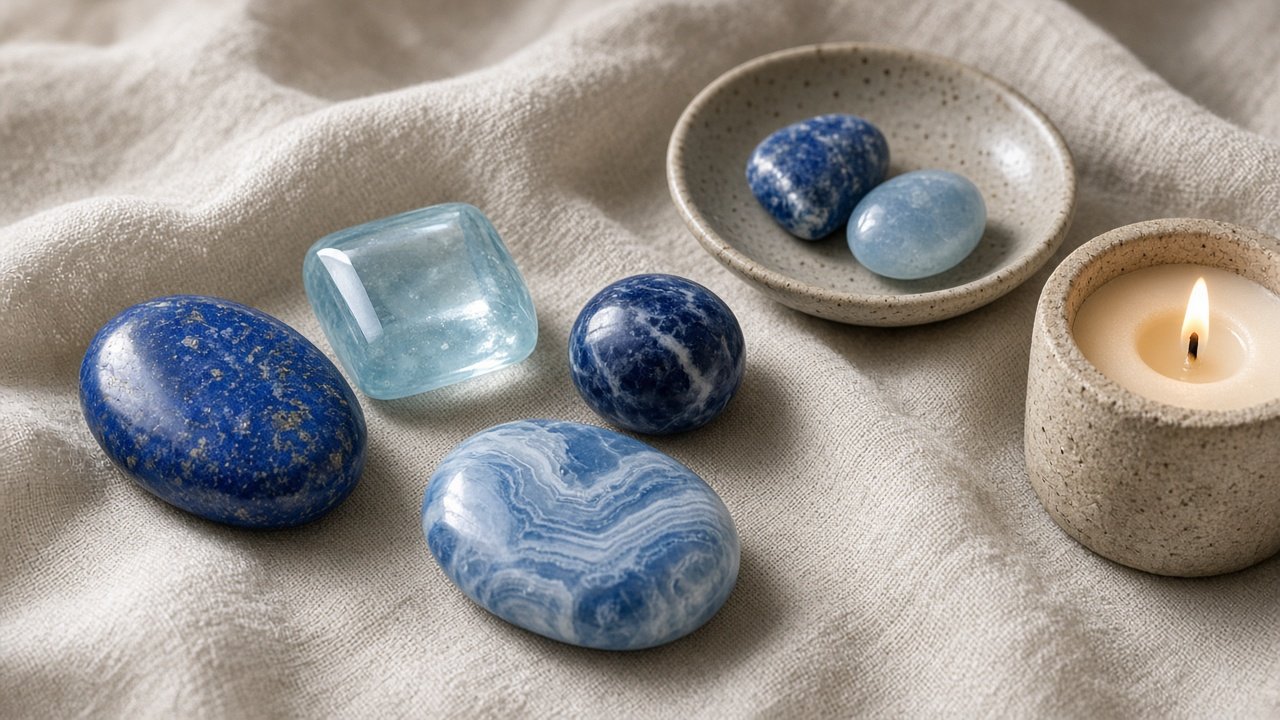
Blue is one of the most loved crystal colors, from the deep, gold-flecked blue of lapis lazuli to the pale sky tones of blue lace agate and celestite. Many people collect blue stones for their soothing look on a desk, nightstand or meditation shelf.
This guide profiles ten blue crystals, explaining what each one is made of, how hard it is, its traditional associations and how to care for it. For an overview of crystal meanings, cleansing methods and how to spot fakes across all colors, see our crystal meanings guide.
Sources: Gemological Institute of America (GIA) gem encyclopedia entries (lapis lazuli, aquamarine, turquoise, topaz); Mindat.org mineral database (sodalite, kyanite, celestine, pectolite, apatite, calcite, chalcedony); Mohs hardness scale; Smithsonian National Museum of Natural History gem and mineral collection notes. Metaphysical associations are described as traditions, not proven effects. Checked October 2026.

What Blue Crystals Are Traditionally Associated With
In modern crystal practice, blue stones are most often linked to calm, honest communication, clear thinking and peaceful sleep. Many practitioners connect them with the throat chakra, the energy center associated with expression in yoga-based traditions.
A note on evidence
These meanings come from cultural and spiritual traditions. Scientific research has not shown that crystals heal illness or change emotions directly. Many people still enjoy blue stones as reminders of an intention, as part of a relaxing ritual or simply as beautiful natural objects.

Blue Crystals at a Glance
| Crystal | What it is | Mohs hardness (approx.) | Water safe? | Sun safe? |
|---|---|---|---|---|
| Lapis lazuli | Rock of lazurite, calcite and pyrite | 5 to 5.5 | Brief rinse only | Yes |
| Aquamarine | Blue beryl | 7.5 to 8 | Yes | Generally yes |
| Sodalite | Sodium aluminum silicate | 5.5 to 6 | Brief rinse only | Yes |
| Blue lace agate | Banded chalcedony (quartz) | 6.5 to 7 | Yes | Yes |
| Kyanite | Aluminum silicate | 4.5 to 7 (varies by direction) | Brief rinse only | Yes |
| Celestite | Strontium sulfate | 3 to 3.5 | No | No; may fade |
| Larimar | Blue pectolite | 4.5 to 5 | Brief rinse only | No; may fade |
| Turquoise | Copper aluminum phosphate | 5 to 6 | No | Limit exposure |
| Blue apatite | Calcium phosphate | 5 | Brief rinse only | Yes |
| Blue calcite | Calcium carbonate | 3 | No | Yes |
Our guide to which crystals cannot go in water explains why soft, porous and water-soluble minerals need dry cleansing.

Lapis Lazuli
Lapis lazuli is a deep blue rock made mainly of the mineral lazurite, often with white calcite and gold-colored pyrite flecks. GIA notes it has been mined in Afghanistan for thousands of years, and ground lapis was once the source of the costly pigment ultramarine used in Renaissance paintings.
Traditional associations
Lapis is associated with wisdom, truth and self-expression in crystal traditions, and it was prized by ancient Egyptians for jewelry and carvings.
Care and fakes
Lapis is relatively soft and can be damaged by acids, harsh cleaners and long soaks. Wipe it with a damp cloth. Common imitations include dyed howlite, dyed jasper (sometimes sold as “Swiss lapis”) and synthetic material. Even, intense blue with no calcite or pyrite, or blue dye on a cotton swab dampened with acetone, are warning signs. For a full profile, see our guide to lapis lazuli meaning and care.

Aquamarine
Aquamarine is the blue to blue-green variety of the mineral beryl, the same species as emerald. GIA explains that its color comes from iron and that many aquamarines are heat treated to remove greenish tones. It is the traditional birthstone for March.
Traditional associations
The name means “seawater” in Latin, and aquamarine has long been linked with the sea, travel and calm in folklore.
Care
Aquamarine is hard and durable, making it suitable for everyday jewelry. Warm, soapy water and a soft brush are safe for most stones. Read our aquamarine guide for more on its traditions.

Sodalite
Sodalite is a royal blue mineral, often streaked with white calcite, named for its sodium content. It is often mistaken for lapis lazuli.
Telling sodalite from lapis
Sodalite usually has white veins and a slightly purplish blue, while lapis tends to be a more even, deeper blue with gold pyrite flecks. Sodalite also rarely contains pyrite.
Traditional associations and care
In crystal practice, sodalite is linked with logic, focus and calm communication. It is moderately hard but can chip, so store it separately from harder stones and clean it with a damp cloth.

Blue Lace Agate
Blue lace agate is a pale blue, banded form of chalcedony, a microcrystalline quartz. The best-known sources are in southern Africa, notably Namibia.
Traditional associations
Its gentle, lace-like bands are associated with peaceful expression and soothing energy in crystal traditions.
Care and fakes
Natural blue lace agate is durable and water safe. Be wary of bright, saturated blue agate with unnaturally even color; agate is commonly dyed.

Kyanite
Kyanite is an aluminum silicate mineral that forms long, bladed crystals in shades of blue. Mindat notes a rare property: its hardness changes with direction, measuring roughly 4.5 to 5 along the length of a crystal and about 6.5 to 7 across it.
Traditional associations and care
In crystal practice, kyanite is often described as a stone that never needs cleansing, a belief rather than a measurable property. Physically, its blades split easily, so handle and store kyanite carefully and avoid dropping it.

Celestite
Celestite (also called celestine) is strontium sulfate, best known for pale blue crystals inside geodes, many from Madagascar.
Care
Celestite is soft and fragile. It can fade in prolonged sunlight and should be kept out of water. Dust it gently with a soft brush and display it out of direct sun.
Traditional associations
Its soft sky color is linked with peace, dreams and spiritual connection in crystal traditions.

Larimar
Larimar is a blue variety of the mineral pectolite found in the Dominican Republic, where it was popularized in the 1970s. Its swirling, sea-like patterns of blue and white make it popular in jewelry.
Care
Larimar is relatively soft and can fade with heavy sun exposure and heat. Store it away from light and avoid harsh cleaners.

Turquoise
Turquoise is a blue to green mineral, a hydrated phosphate of copper and aluminum, prized for thousands of years in Persian, Egyptian and Native American cultures. GIA notes that much turquoise on the market is stabilized with resin, and imitations are common.
Care and fakes
Turquoise is porous, so oils, lotions, perfume and water can discolor it. Wipe it with a dry cloth. Dyed howlite and magnesite are common imitations; a lab or trusted seller can confirm authenticity.

Blue Apatite
Apatite is a calcium phosphate mineral, and it defines 5 on the Mohs hardness scale. Gem-quality blue apatite often comes from Madagascar and Brazil.
Care and associations
Apatite scratches more easily than quartz, so store it separately. In crystal traditions, blue apatite is associated with motivation and learning.

Blue Calcite
Blue calcite is a pale blue form of calcium carbonate. At Mohs 3, it scratches easily, and acids, including vinegar and lemon juice, can etch it.
Care
Keep blue calcite dry and clean it with a soft, dry cloth. Many people use it as a desk or shelf stone rather than in jewelry.

How to Cleanse and Store Blue Crystals
Because blue crystals range from very hard to very soft, one cleansing method does not suit them all. Choose gentle methods by default.
Gentle cleansing options
- Smoke or sound: passing a stone through incense smoke or near a singing bowl or bell is a common practice that involves no water or sun.
- Moonlight: many people set stones on a windowsill overnight; remove sun-sensitive stones such as celestite and larimar before morning sun reaches them.
- Resting on a larger stone: some practitioners place small stones on a clear quartz cluster or selenite plate. Keep selenite itself dry, since it is also soft and water sensitive.
- Intention: holding a stone and setting a simple intention is another water-free option.
Physical cleaning
For dust and fingerprints, use a soft, dry cloth or a soft brush. Use mild soap and water only on hard, non-porous stones such as aquamarine and blue lace agate, then dry them thoroughly.
Storage
Store blue crystals separately in soft pouches or a divided box so harder stones like aquamarine do not scratch softer ones like calcite or celestite. Keep sun-sensitive stones away from bright windows, and keep porous stones away from perfumes, lotions and cleaning sprays.

Choosing a Blue Crystal
If you are starting a collection, think about how you will use the stone.
- For jewelry you wear daily: aquamarine or blue lace agate, which resist scratches.
- For a desk or shelf display: celestite geodes, kyanite blades or lapis carvings, kept out of direct sun where needed.
- For a pocket stone: tumbled sodalite or blue lace agate, which are inexpensive and sturdy.
- For a budget: sodalite and blue lace agate are widely available and usually affordable.

How to Spot Fake Blue Crystals
Blue is one of the most commonly dyed crystal colors. These checks help:
- Color too bright or too even: natural stones usually show variation.
- Dye in cracks: concentrated color along fractures suggests dye.
- Acetone swab test: a cotton swab with acetone on an inconspicuous spot may pick up dye on some treated stones; avoid this on porous or delicate stones.
- Price too good: large, vivid pieces at very low prices deserve skepticism.
- Seller transparency: reputable sellers disclose treatments such as dyeing, stabilizing and heat treatment.
Blue topaz, for example, is almost always colorless topaz that has been irradiated and heated, according to GIA. That is an accepted treatment, but it should be disclosed.

How to Use Blue Crystals
People often use blue stones in simple, everyday ways:
- Keep one on your desk as a reminder to pause and breathe during busy workdays.
- Place a blue stone on your nightstand as part of a bedtime routine.
- Hold a smooth tumbled stone during a short mindfulness or breathing practice.
- Combine blue stones with purple ones for a calm-themed display; see our guide to purple crystals.
- Wear durable blue stones like aquamarine and blue lace agate as jewelry.

Blue Birthstones
Several blue gems appear on modern birthstone lists: aquamarine for March, sapphire for September and blue topaz, turquoise and zircon among December’s options. Our guide to birthstones by month lists them all.

Frequently Asked Questions
What are the most common blue crystals?
Popular blue crystals include lapis lazuli, aquamarine, sodalite, blue lace agate, kyanite, celestite, larimar, turquoise, blue apatite and blue calcite.
What do blue crystals mean?
In crystal traditions, blue stones are associated with calm, communication, clarity and the throat chakra. These meanings are cultural and spiritual beliefs rather than proven effects.
Which blue crystals cannot go in water?
Celestite, blue calcite and turquoise should be kept out of water, and lapis lazuli, sodalite, kyanite, larimar and blue apatite should only be rinsed briefly and dried right away.
How can you tell real lapis lazuli from sodalite?
Lapis is usually deeper blue with gold pyrite flecks, while sodalite often has white calcite veins, a more purplish blue and rarely any pyrite.
Is blue lace agate real or dyed?
Natural blue lace agate has soft, pale blue bands. Very bright, uniform blue agate is often dyed.
Which blue crystal is best for jewelry?
Aquamarine and blue lace agate are durable choices. Softer stones such as larimar, turquoise and lapis need more careful wear.

Sources
- Gemological Institute of America. Gem encyclopedia: lapis lazuli, aquamarine, turquoise, topaz.
- Mindat.org. Mineral data for sodalite, kyanite, celestine, pectolite, apatite, calcite and chalcedony.
- Mohs scale of mineral hardness.
- Smithsonian National Museum of Natural History. Gem and mineral collection.