| ✨Hey there! This post may contain affiliate links, meaning we earn a commission if you make a purchase through our links, at no cost to you. Please read our disclosures for more info. |
Quick answer: the first rule of foraging safety is never eat a wild plant or mushroom unless you have identified it with complete certainty, using more than one reliable field guide and, ideally, confirmation from a local expert. Learn the deadly look-alikes first, including water hemlock and poison hemlock (which resemble wild carrot and parsley) and death cap mushrooms. Forage only where it is legal, avoid roadsides and sprayed areas, take only a small share of any patch, and try new wild foods in small amounts. If anyone may have eaten something toxic, call Poison Control at 1-800-222-1222 in the United States right away.
Foraging connects you with the seasons and the land, and gathering wild blackberries or dandelion greens can be a joyful part of a self-care routine outdoors. It also carries real risks. Some of the most toxic plants in North America grow in ordinary fields and ditches, and several look a lot like edible herbs.
This guide covers identification habits, dangerous look-alikes, legal and environmental rules, and simple beginner practices. It is an introduction, not a field guide, so use it alongside local resources. For a broader overview of culinary herbs, teas and herb safety, see our beginner’s guide to herbs.
Sources: America’s Poison Centers; U.S. Department of Agriculture Agricultural Research Service (USDA ARS) Poisonous Plant Research Laboratory; Centers for Disease Control and Prevention (CDC) on mushroom poisoning; U.S. Food and Drug Administration (FDA) Bad Bug Book on mushroom toxins; National Park Service regulations (36 CFR 2.1) and USDA Forest Service forest product rules; North American Mycological Association (NAMA); United Plant Savers; cooperative extension foraging and poisonous plant guides. Checked October 2026.

The Golden Rule: 100 Percent Identification
Never eat any wild plant, berry or mushroom unless you are completely certain what it is. “Pretty sure” is not good enough, because the difference between an edible herb and a deadly one can come down to a detail such as stem markings, smell or the shape of a seed.
How to identify plants properly
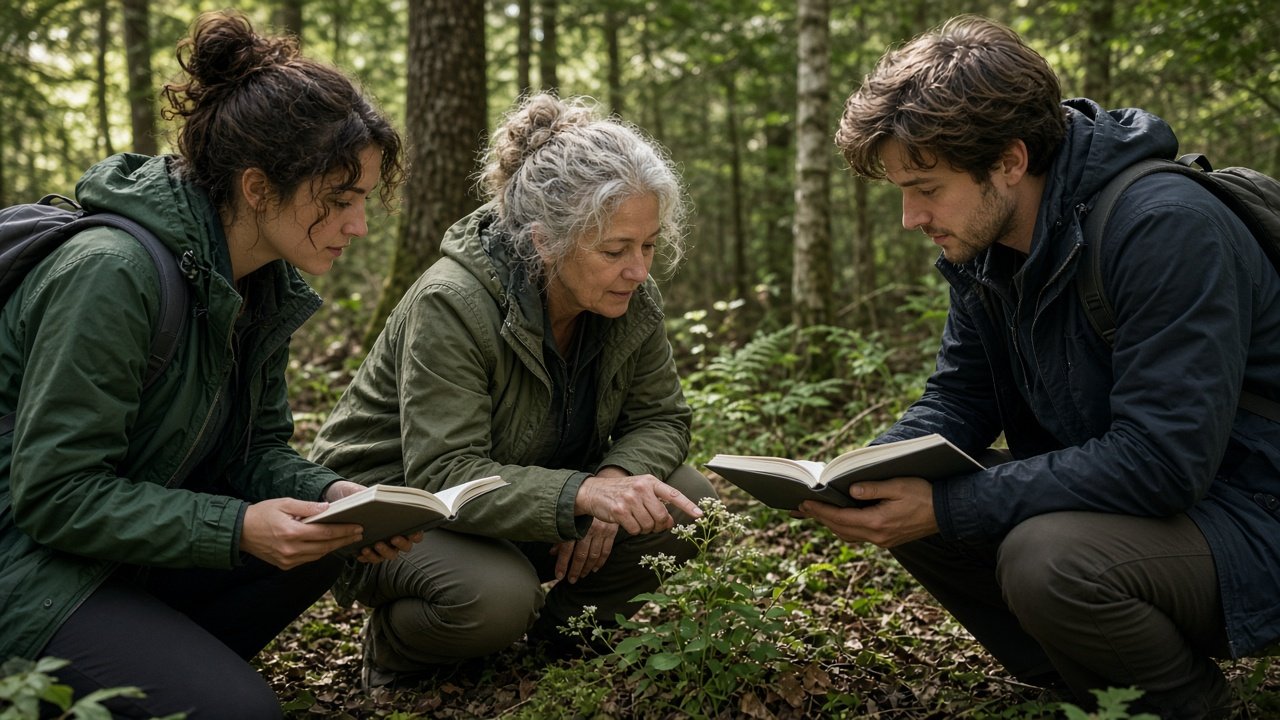
- Use several reliable field guides written for your region, not a single source.
- Check every feature: leaves, stems, flowers, roots, seeds, smell, growth habit, habitat and season.
- Learn the look-alikes for every edible plant before you harvest it.
- Watch plants through a full season, so you can see flowers and seeds as well as leaves.
- Get confirmation from experienced local foragers, extension educators, native plant societies or mycological clubs.
Be careful with apps
Plant identification apps are useful for learning, but they can be wrong, especially with young plants, poor photos and look-alikes. Treat an app result as a starting point to research, never as permission to eat.

Deadly Look-Alikes to Learn First
Some poisonous plants closely resemble common edible herbs. Learning these first is the single most protective step a beginner can take.
Water hemlock
Water hemlock (Cicuta species) grows in wet areas such as ditches, stream banks and marshes. The USDA Agricultural Research Service describes it as one of the most toxic plants in North America. It has umbrella-shaped clusters of small white flowers, similar to wild carrot, and can cause violent seizures. Even small amounts of the root can be fatal.
Poison hemlock
Poison hemlock (Conium maculatum) is a tall plant in the carrot family with fern-like leaves and white flower clusters. It is often confused with wild carrot (Queen Anne’s lace), wild parsley and wild parsnip. Its smooth stems usually have purple blotches, and the plant has an unpleasant, musty smell. All parts are toxic.
Why the carrot family is a beginner’s danger zone
The carrot family (Apiaceae) includes edible plants such as wild carrot, fennel and angelica, as well as water hemlock and poison hemlock. Many experienced foragers advise beginners to avoid wild members of the carrot family entirely.
Death cap and destroying angel mushrooms
The CDC and FDA describe amatoxin-containing mushrooms, including the death cap (Amanita phalloides) and destroying angels, as responsible for most fatal mushroom poisonings. Symptoms may not appear for several hours, and serious liver damage can follow even after people seem to improve.
Other common confusions
| Edible plant | Toxic look-alike | Key point |
|---|---|---|
| Ramps (wild leeks) | Lily of the valley, false hellebore | Ramps smell strongly of onion or garlic; the look-alikes do not |
| Wild carrot | Poison hemlock, water hemlock | Avoid wild carrot-family plants as a beginner |
| Elderberry (ripe, cooked) | Pokeweed berries, water hemlock flowers | Raw elderberries, stems and leaves can cause illness |
| Wild grapes | Canada moonseed | Moonseed fruit has a single crescent-shaped seed |
| Comfrey or borage leaves | Foxglove leaves | Foxglove affects the heart and can be deadly |
| Purslane | Spurge | Spurge has milky sap when broken; purslane does not |
Mushroom Foraging Needs Extra Caution
Wild mushrooms cause many serious poisonings each year, and there is no simple test for safety. Common folk tests, such as checking whether a silver spoon darkens, whether a mushroom peels or whether animals eat it, are myths.
Safer mushroom habits
- Join a local mycological society; NAMA lists clubs across North America.
- Learn a few distinctive species very well before trying others.
- Have finds checked by an experienced identifier before eating.
- Cook wild mushrooms thoroughly, and eat only a small portion the first time.
- Never eat mushrooms raw from the wild, and never serve wild mushrooms to guests who do not know what they are eating.

Is Foraging Legal Where You Are?
Foraging rules depend on who owns or manages the land. Always check before you pick.
Public lands
- National parks: under federal regulations, gathering is generally prohibited, but park superintendents may allow limited gathering of certain fruits, berries, nuts or mushrooms for personal use in specific parks. Check each park’s rules.
- National forests: many allow small amounts for personal use, but some products, such as mushrooms in certain forests, require a permit. Contact the local ranger district.
- BLM land: rules vary by field office; ask locally.
- State and local parks: rules vary widely, and many prohibit removing plants.
Private land
Get permission from the landowner before foraging on private property.
Protected and at-risk plants
Some species are protected or overharvested. United Plant Savers lists at-risk medicinal plants such as American ginseng and goldenseal. Great Smoky Mountains National Park ended ramp harvesting in 2004 because of concerns about overharvesting. Leave rare plants alone.

Avoid Contaminated Sites
Even a correctly identified plant can be unsafe if it grows in a contaminated place.
- Roadsides and parking lots can be exposed to vehicle exhaust, road salt and herbicide spraying.
- Lawns, parks and golf courses may be treated with pesticides or fertilizers.
- Railroad tracks and power line corridors are often sprayed with herbicides.
- Old industrial sites and areas near treated wood may have contaminated soil.
- Polluted water, including ditches and runoff areas, can carry bacteria and chemicals.
- Dog-walking areas may be contaminated with animal waste.
Wash everything you harvest thoroughly before eating.

Forage Sustainably
Ethical foragers protect plants and wildlife for the future. Good habits include:
- Take only a small share of any patch and leave plenty for wildlife and regrowth.
- Harvest leaves, fruit or flowers rather than whole plants or roots when possible.
- Never harvest the only plant you can find.
- Avoid trampling surrounding plants.
- Follow Leave No Trace principles and stay on trails where required.

Beginner-Friendly Wild Foods
Foraging educators often suggest that beginners start with a few common, distinctive plants. Each still needs careful identification.
- Dandelion: leaves, flowers and roots are edible; avoid sprayed lawns. Look-alikes include other yellow-flowered plants, most of which are not dangerous, but confirm identification.
- Blackberries and raspberries: aggregate berries on thorny canes are among the easiest wild fruits to recognize.
- Wild violets: leaves and flowers of common violets are edible; do not confuse them with other heart-shaped leaves.
- Chickweed: a low-growing green with a single line of hairs on the stem; learn the look-alikes before harvesting.
- Mulberries: dark fruit on trees in many towns; only ripe fruit should be eaten.
Many of these plants appear in traditional herbal practice as well; see our list of the most useful herbs in apothecary for background.
Start Small With New Wild Foods
Even safe wild plants can cause stomach upset or allergic reactions in some people. Cooperative extension foraging guides commonly advise:
- Eat only a small amount the first time you try a new wild food.
- Try one new species at a time.
- Keep a sample of what you ate in the refrigerator for a day or two, which can help identification if someone becomes ill.
- Be extra careful with children, pregnant or breastfeeding people, older adults and anyone with health conditions or on medications.
What to Do If Someone Eats a Toxic Plant
Act fast. Do not wait for symptoms.
- Call Poison Control at 1-800-222-1222 in the United States. The line is free, confidential and available 24 hours a day, according to America’s Poison Centers.
- Call 911 if the person has trouble breathing, has a seizure, is unconscious or is very drowsy.
- Do not make the person vomit unless poison control tells you to.
- Keep a sample of the plant or mushroom, or take clear photos, to help with identification.
- Note the time the plant was eaten and how much.
Pets
Many wild plants are toxic to dogs and cats. If a pet eats a plant that may be harmful, call your veterinarian or an animal poison control service right away.

Stay Safe Outdoors While Foraging
Plants are not the only risk on a foraging walk.
- Learn to recognize poison ivy, poison oak and poison sumac; the old saying “leaves of three, let it be” helps for poison ivy and poison oak.
- Check for ticks after time in tall grass and woods.
- Wear gloves and long sleeves when handling thorny or irritating plants.
- Tell someone where you are going and carry water and a phone.
- Watch for wild parsnip and giant hogweed, whose sap can cause severe burns on skin exposed to sunlight.

A Simple Foraging Plan for Beginners
- Buy two regional field guides and study the deadly look-alikes first.
- Join a guided foraging walk, native plant society outing or mycological club event.
- Choose one or two distinctive plants, such as blackberries or dandelion, to learn this season.
- Check land rules before you go.
- Harvest small amounts from clean, legal sites.
- Try a small portion the first time, and keep a sample.
Foraged greens and berries add variety to meals; our tips on how to improve your diet explain why more plant foods help. Time outdoors is also part of good self-care, as our complete self-care guide describes.

Frequently Asked Questions
What is the most important foraging safety rule?
Never eat a wild plant or mushroom unless you have identified it with complete certainty using several reliable sources and, ideally, an experienced local expert.
What are the most dangerous plants for foragers?
Water hemlock and poison hemlock are among the most dangerous plants in North America and resemble edible carrot-family plants. Death cap and destroying angel mushrooms cause most fatal mushroom poisonings.
Is it legal to forage in national parks?
Gathering is generally prohibited in national parks, but some parks allow limited personal gathering of specific fruits, nuts or mushrooms. Check each park’s rules.
Can I trust a plant identification app?
Apps are helpful learning tools but can be wrong. Use them as a starting point and confirm identification with field guides and local experts before eating anything.
Is it safe to forage near roads?
It is best to avoid roadsides, which can be exposed to vehicle exhaust, road salt and herbicide spraying.
What should I do if I eat a wild plant and feel sick?
Call Poison Control at 1-800-222-1222 in the United States, or 911 for severe symptoms such as trouble breathing or seizures. Keep a sample of the plant for identification.

Sources
- America’s Poison Centers. Poison help line and plant safety.
- USDA Agricultural Research Service, Poisonous Plant Research Laboratory. Water hemlock and poison hemlock.
- Centers for Disease Control and Prevention. Mushroom poisoning reports.
- U.S. Food and Drug Administration. Bad Bug Book: mushroom toxins.
- National Park Service. 36 CFR 2.1, preservation of natural resources.
- USDA Forest Service. Forest product permits.
- North American Mycological Association. Mushroom safety and local clubs.
- United Plant Savers. Species at risk list.
- Great Smoky Mountains National Park. Ramp harvesting regulations.