| ✨Hey there! This post may contain affiliate links, meaning we earn a commission if you make a purchase through our links, at no cost to you. Please read our disclosures for more info. |
Quick answer: keep selenite, other gypsum stones, halite (rock salt), calcite, celestite, malachite, pyrite, turquoise, lapis lazuli, opal, pearls and most organic gem materials away from soaking. Water can dissolve, soften, cloud, crack, stain or corrode them. Hard, non-porous stones such as clear quartz, amethyst, citrine, agate, jasper and tiger’s eye usually tolerate a quick rinse, but when you are unsure, wipe with a dry or barely damp cloth.
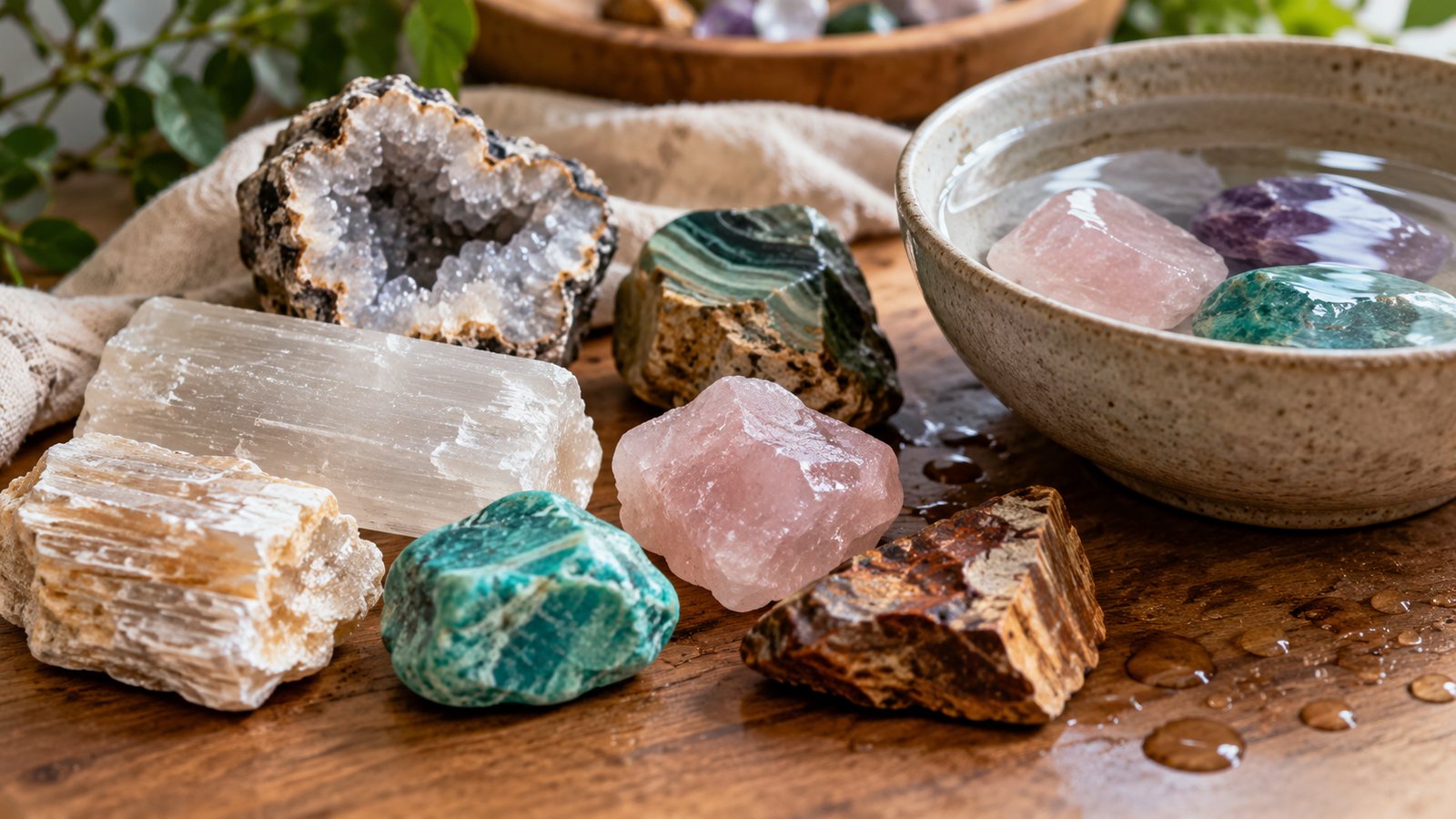
A bowl of water seems like the most natural way to clean a stone, and plenty of online advice recommends it. The trouble is that minerals are not all alike. A rinse that leaves a quartz point sparkling can ruin a selenite wand or slowly eat away at a piece of pyrite. Because many stones are sold without care instructions, mistakes are common.
This guide explains which stones to keep dry and why, using the basics of mineral hardness, solubility and porosity. It also covers safer ways to clean fragile pieces, and it explains why soaking stones to make drinking water is a practice worth skipping. For more on the different cleansing traditions people use, see our guide to how to cleanse crystals.
This article is about caring for minerals as objects. It makes no claims about health effects, and nothing here is medical advice.
Contents
hide
Why Water Harms Some Stones
Three properties explain almost every case: solubility, hardness and porosity.
Solubility is how readily a mineral dissolves. Halite, which is table salt in crystal form, dissolves in water. Gypsum, the mineral behind selenite, is only slightly soluble, but over time and with repeated soaking its surface dulls and softens. Some other soft minerals behave similarly in humid conditions.
Hardness tells you how easily a stone scratches. Soft stones suffer more from water because wet surfaces and rubbing wear them down faster, and because they often have a layered or fibrous structure that lets moisture seep in. Selenite rates about 2 on the Mohs scale, so even a fingernail can mark it.
Porosity describes tiny spaces in the stone. Porous stones absorb water, oils and cleaning products. That can cause staining, color change, swelling or cracking as the stone dries. Many porous stones are also treated with dyes, resins or waxes that water and cleaners can damage.
Chemistry matters too. Some minerals react with water or air. A few contain metals that can leach or corrode, and a few produce harmful dust. Knowing which category a stone belongs to takes only a short list.
Stones to Keep Dry
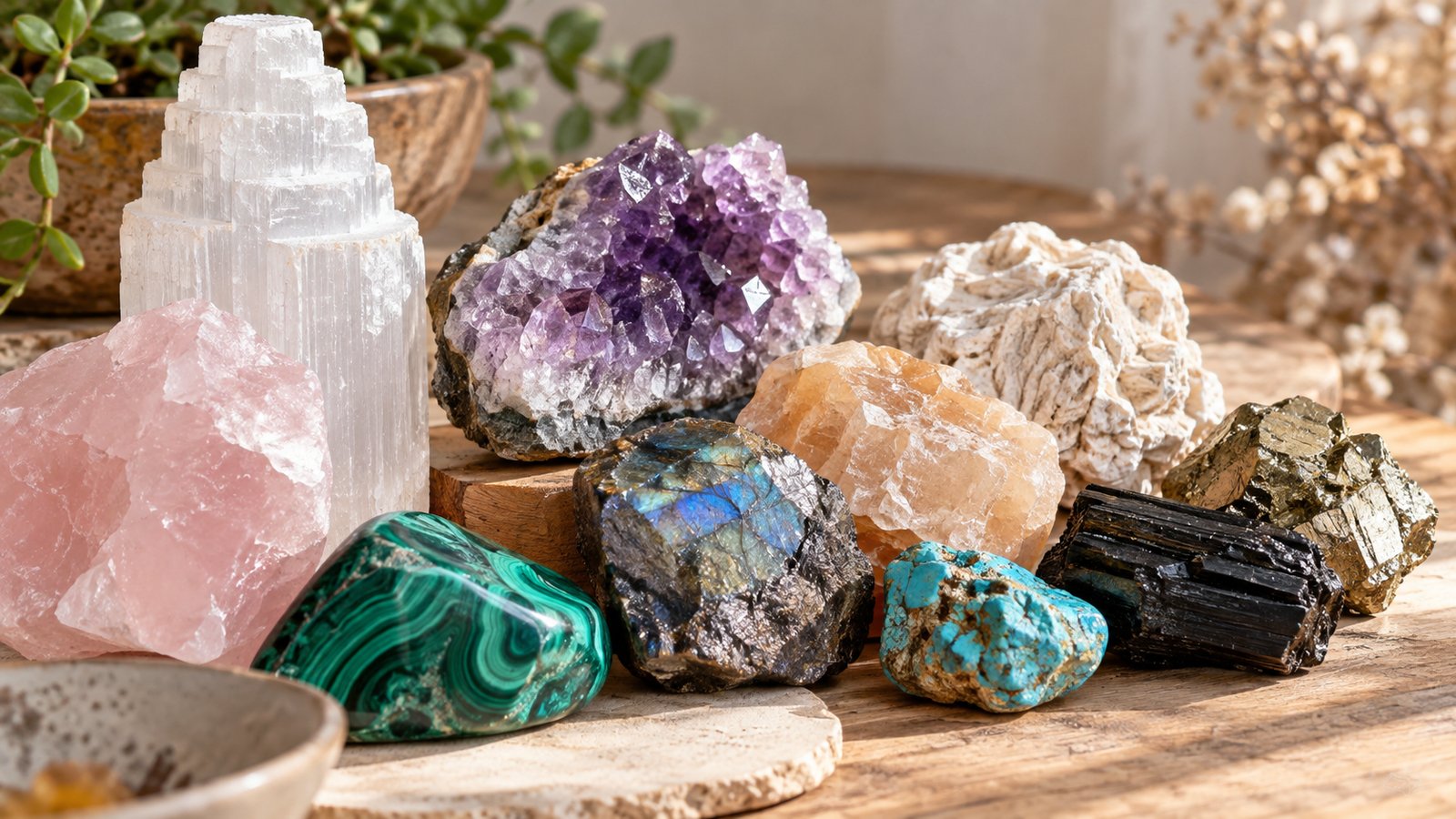
Selenite and other gypsum stones
Selenite wands, towers and plates are among the most popular crystals. They are also among the most delicate. Water clouds the surface, removes the sheen and can leave the stone rough or flaky. Our guide to selenite explains how to spot fakes and care for real pieces. Clean it with a soft, dry cloth or a soft brush. Gypsum also goes by satin spar and desert rose, and the same rule applies.
Halite
Himalayan and rock salt lamps and crystals are halite or similar salt rock. They draw moisture from humid air, and water dissolves them. Display them in dry rooms, away from bathrooms and kitchens.
Calcite, celestite and angelite
These are soft minerals in the range of about 3 to 3.5 on the Mohs scale, and some are slightly soluble or sensitive to acids. A brief wipe is fine, but soaking and soaps can dull them. Calcite also reacts with acids such as vinegar and lemon juice, which fizz and etch it.
Malachite
Malachite is a copper carbonate mineral that ranks about 3.5 to 4 on the Mohs scale. Water can darken or dull it, acids dissolve it, and the dust created by cutting or sanding is not safe to breathe. Handle it as an object to look at, wash your hands after handling raw pieces, and do not use it in water that anyone will drink.
Pyrite
Pyrite, or fool’s gold, is iron sulfide. In damp conditions it can oxidize, forming a powdery coating and, in extreme cases, a corrosive residue that can damage nearby objects and its own display case. Museums store specimens in low-humidity conditions for this reason. Keep pyrite dry and away from other stones.
Turquoise and lapis lazuli
Both are porous and often treated. Turquoise absorbs oils, soaps and water, and can change color. Many pieces are stabilized with resin or dyed. Lapis lazuli is a rock containing lazurite, calcite and often flecks of pyrite, which makes it vulnerable to acids and moisture. Wipe both with a soft dry cloth.
Opal
Opal contains water within its structure, and it can crack, craze or lose its play of color if it dries out or is exposed to sudden temperature changes. Brief contact with water is usually fine for finished jewelry, but soaking is risky, particularly for doublets and triplets, which are layers glued together and can separate.
Pearls, coral, amber and other organic materials
These are not minerals in the strict sense, and they are delicate. Pearls are damaged by acids, perfumes and abrasion, and soaking can weaken the thread of a strand. Coral and amber are soft and can be harmed by solvents and cleaners. Wipe them gently with a soft cloth.
Stones That Generally Tolerate Water
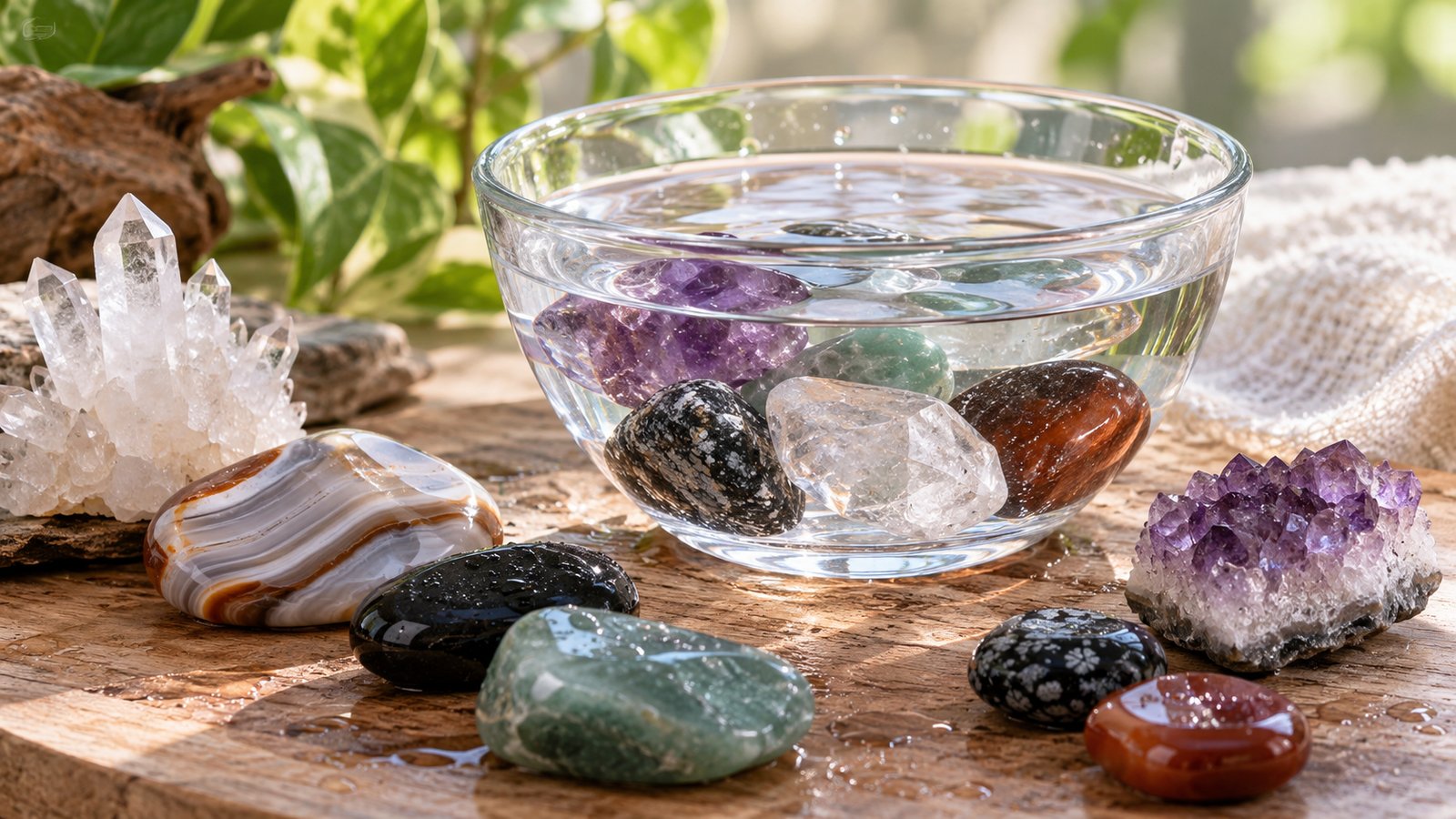
Hard, dense, non-porous stones are usually safe for a quick rinse in plain lukewarm water. These include:
- Clear quartz, amethyst, citrine and rose quartz (about 7 on the Mohs scale)
- Agate, jasper and carnelian, which are varieties of microcrystalline quartz
- Tiger’s eye, though it should be dried promptly
- Black tourmaline, garnet and many other durable stones
Even durable stones have limits. Avoid sudden temperature changes, such as dropping a warm stone into cold water, because thermal shock can crack stones with internal fractures. Do not use boiling water or harsh chemicals. Dyed stones, such as bright blue agate, can bleed color. Stones with a fragile habit, such as clusters with loose crystals, can also lose pieces when rinsed, and rinsing a geode can trap water inside.
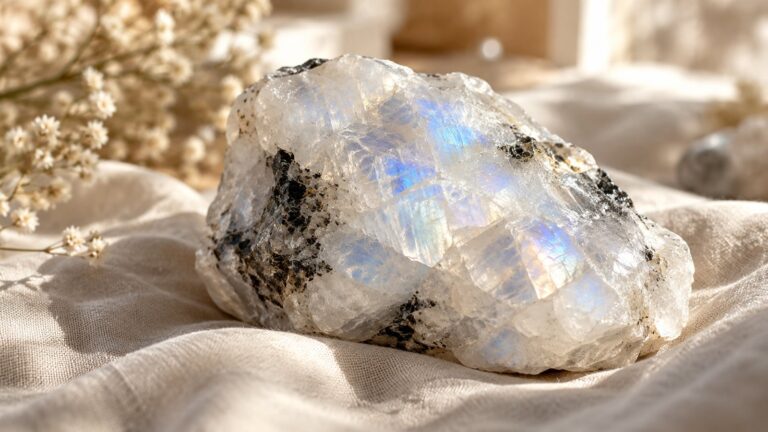
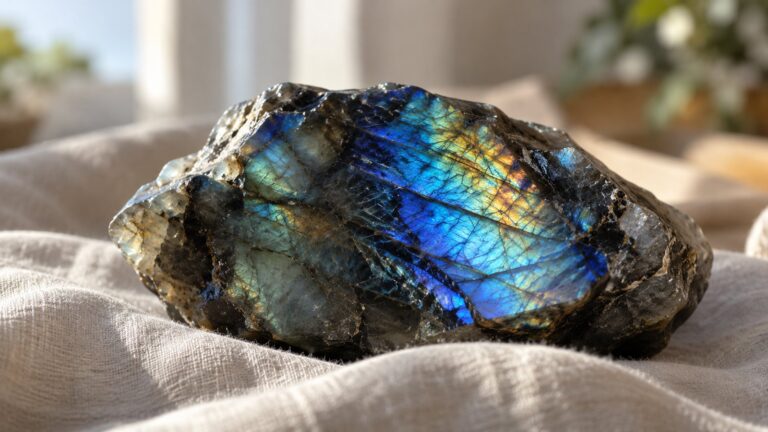
Rose quartz and amethyst can fade in strong sunlight, so dry them in shade. Our profile of amethyst covers its care in more detail, and the entry on moonstone explains why a stone in the feldspar family needs gentle handling despite being fairly hard. Moonstone and labradorite cleave along planes, so a knock can chip them.
What to Do Instead of Soaking
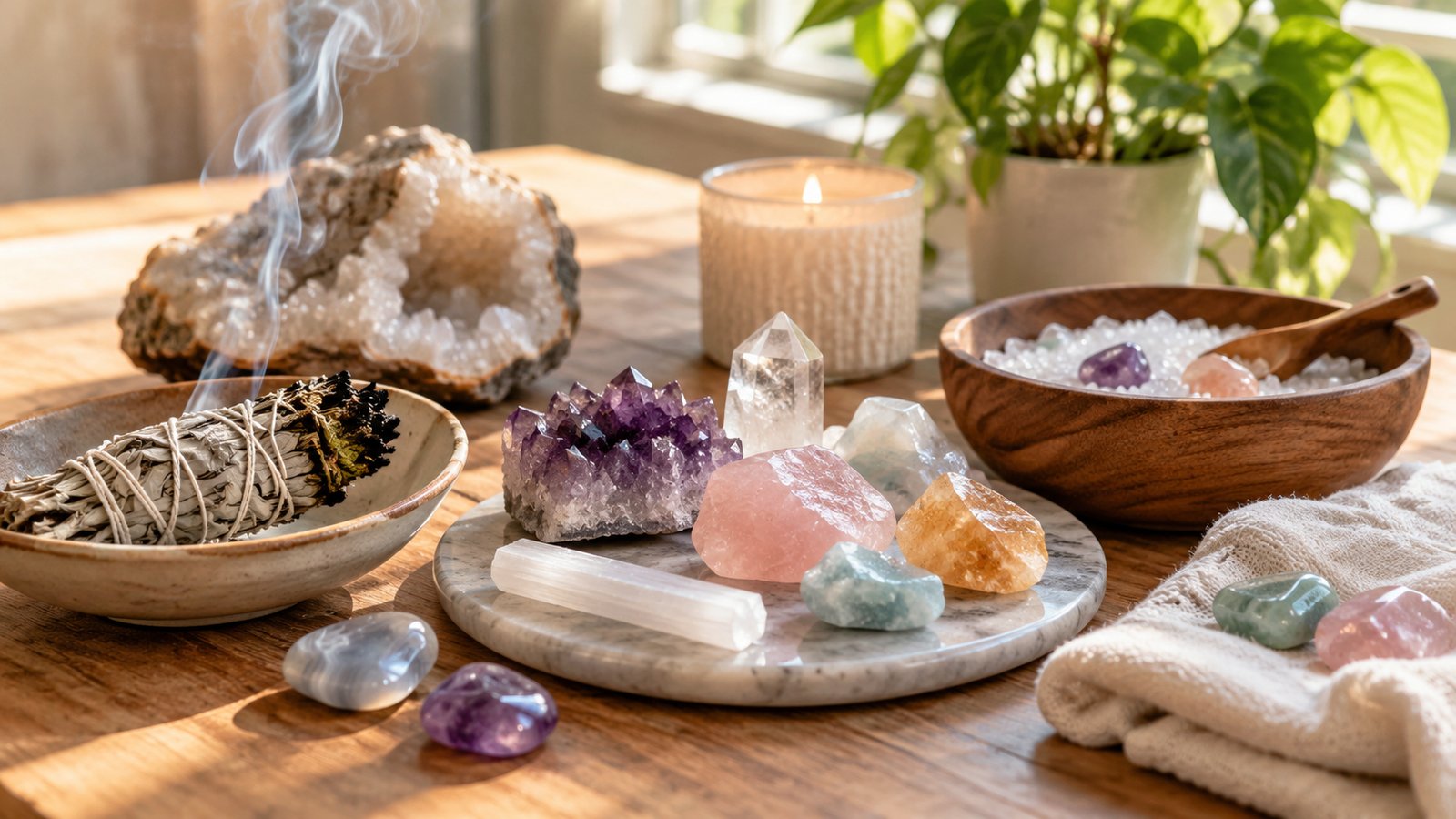
You have several gentle alternatives that work on almost any stone.
- Dry brush with a soft paintbrush or makeup brush to remove dust from crevices.
- Wipe with a clean microfiber cloth. For stuck-on grime, use a barely damp cloth, then dry immediately.
- Use a blower or can of compressed air at a distance for delicate clusters.
- Rest the stone on a selenite plate or in a dry bowl if you like a symbolic cleansing ritual.
- Use sound, such as a singing bowl or bell, or a few moments of quiet handling.
- Put the stone in moonlight on a windowsill, which costs nothing and carries no risk for most stones. Avoid direct sun for stones that fade.
Skip burying stones in salt unless you know they are hard and non-porous, since salt can scratch and, with moisture, corrode some materials. Rice, dry sand and a dry cloth bag are gentler.
When a stone is truly dirty, such as a specimen with dried mud, test a small area first with a damp cotton swab. Stop if the color lifts or the surface feels soft. When a piece is valuable or has a resin treatment, ask a jeweler or lapidary for advice.
Storing Fragile Stones
Storage prevents most damage. Keep soft stones in a dry, padded spot, such as a felt-lined drawer or a small box with a silica gel packet to absorb humidity. Wrap pieces separately in soft cloth, because a harder stone will scratch a softer one that touches it. Selenite and calcite deserve their own compartments, and sharp points should never rub against polished spheres.
Humidity is the hidden enemy. Bathrooms, kitchens and basements invite moisture, which affects salt, gypsum and pyrite most. A bookshelf in a dry room is a better home. Rotate display pieces away from windows and heating vents, since temperature swings can crack opal and stones with internal fractures.
How to Test an Unknown Stone Safely
Many people own stones they cannot name. Start by checking whatever the seller told you and any label on the packaging. Look at the stone: fibrous, white and satiny pieces are often selenite or another gypsum, while a heavy, metallic gold cube suggests pyrite. If you cannot tell, treat it as fragile and skip water.
A dry scratch test on an out-of-sight spot gives a rough hardness clue. A stone that a copper coin or a fingernail marks is soft, and soft stones stay dry. Do not try the test on valuable pieces, because scratching damages them. For a certain answer, a local mineral club, a rock shop, or a gemologist can identify the stone in a few minutes.
Why Crystal Water Is Best Skipped
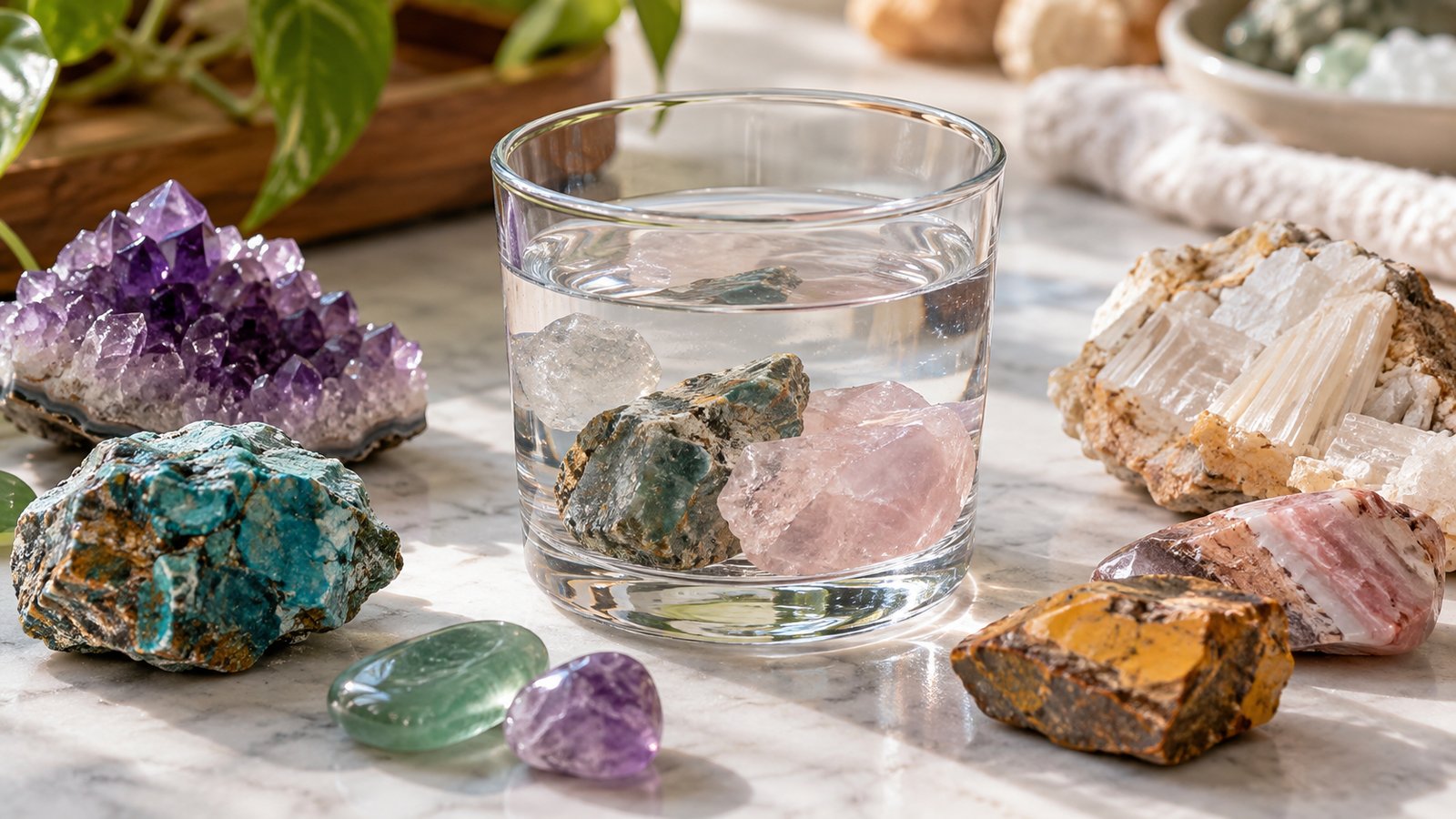
Some people place stones in water to make so-called crystal elixirs. This practice carries real risks. Many stones are not safe to put in drinking water, since they may leach metals or dissolve into minerals you do not want to ingest. Malachite, for example, contains copper. Pyrite and several others can release unsafe residues. Even stones considered safe may carry surface contaminants or tiny fragments.
A common compromise, called the indirect method, places the stone in a separate glass jar or bowl next to the water, without touching it. Many practitioners prefer it for that reason. Whatever you choose, remember that there is no scientific evidence that stones change the properties of water in a meaningful way, and no health benefit should be expected. Treat the practice as a ritual, not a remedy.
Anyone who suspects that a person swallowed a stone or fragment, or breathed in dust from cutting or sanding minerals, should contact a doctor or a poison control center right away.
Buying With Care in Mind
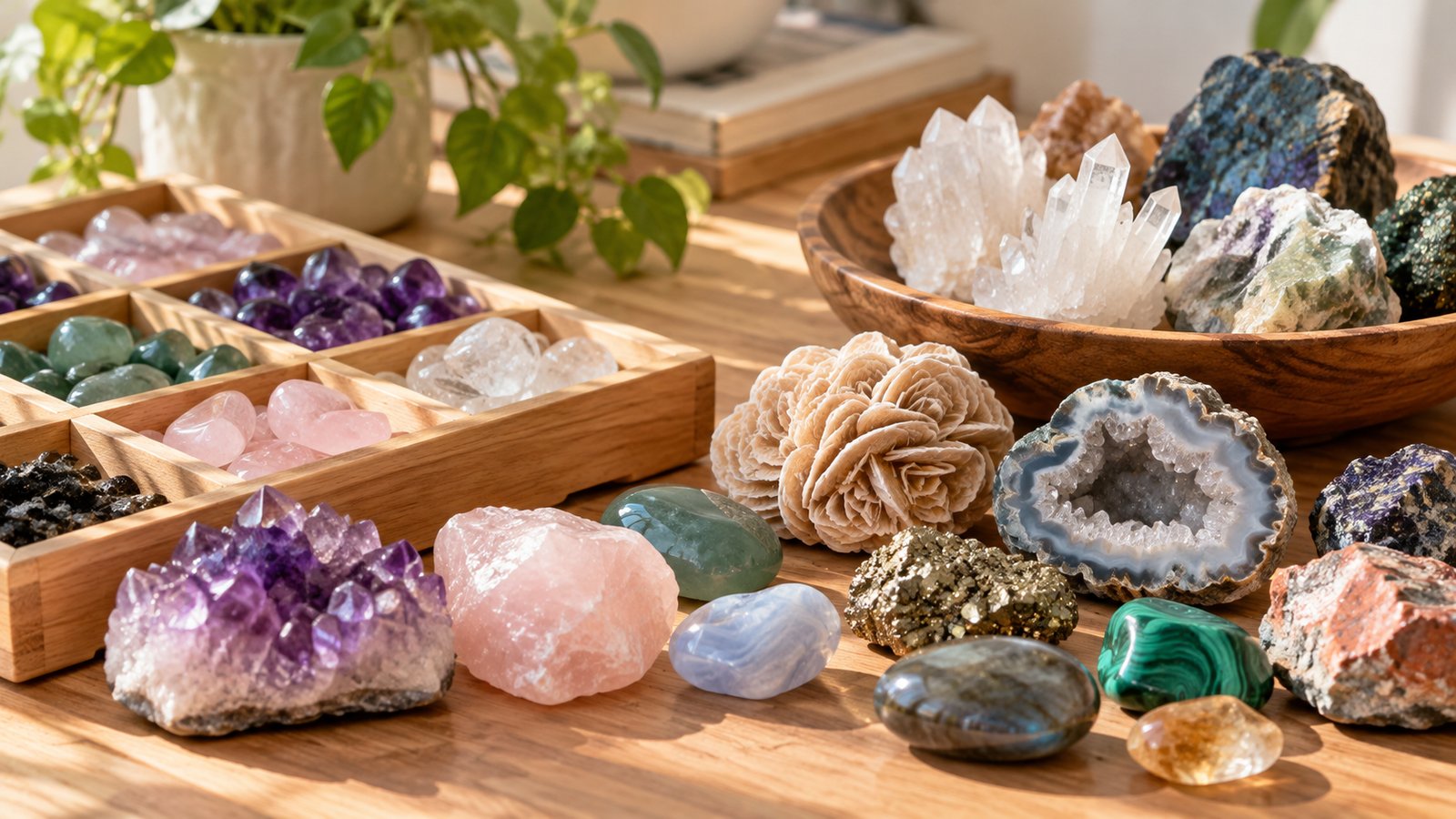
Care needs should shape what you buy. A beginner who likes handling stones every day is better served by tough, tumbled quartz, jasper or agate than by a fragile selenite wand. Reserve soft or porous pieces for display, and ask the seller about hardness and treatments before you pay. Reputable sellers answer those questions plainly, and a seller who cannot tell you what a stone is made of has told you something useful.
Quick Reference: Water-Safe or Not
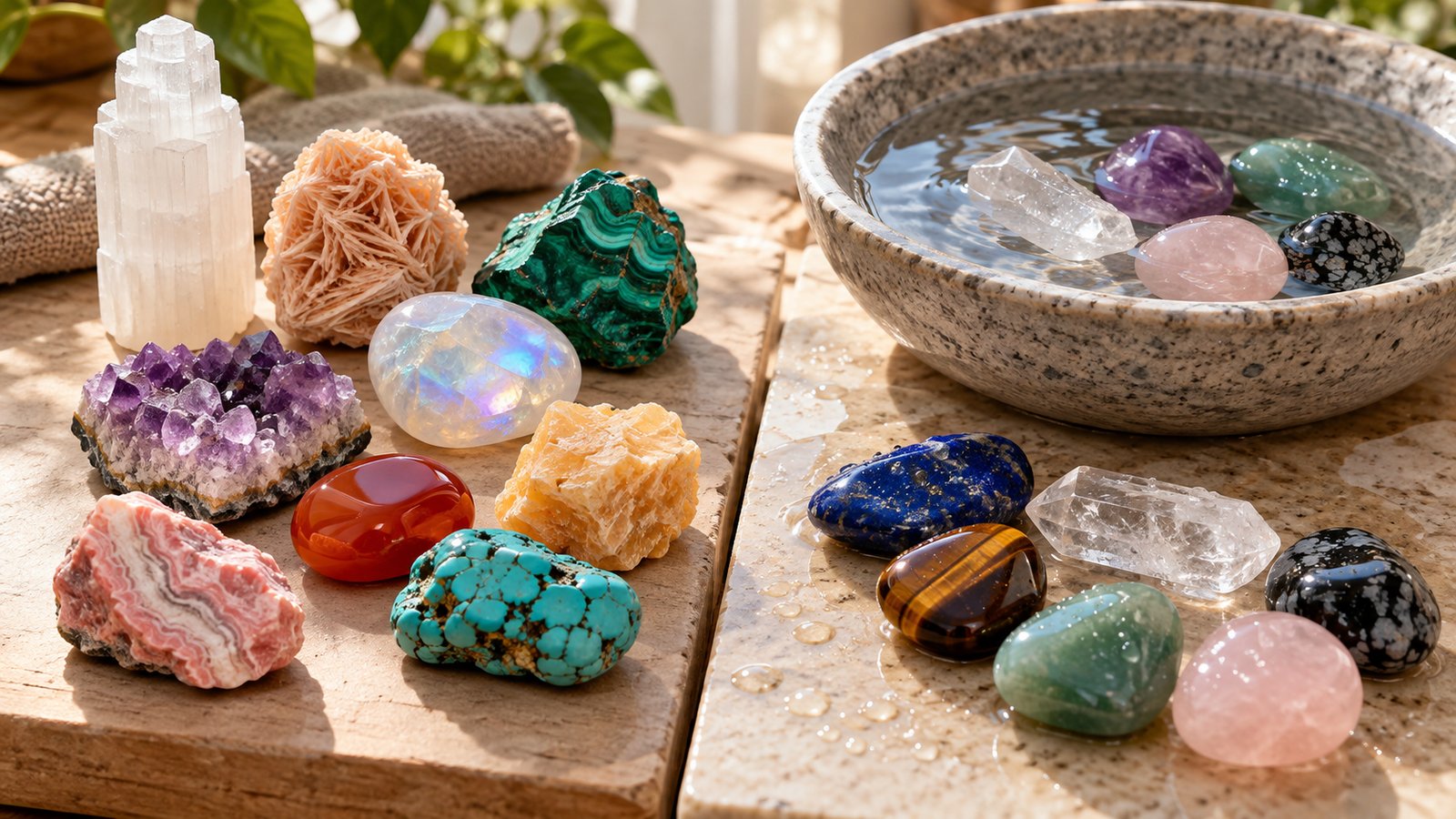
- Do not soak: selenite and gypsum, halite, calcite, celestite, malachite, pyrite, turquoise, lapis lazuli, opal, pearl, coral, amber
- Brief rinse is usually fine: clear quartz, amethyst, citrine, rose quartz, agate, jasper, carnelian, tiger’s eye, black tourmaline, garnet
- Always check: dyed stones, stabilized stones, clusters, geodes, stones with cracks
When you are unsure what you own, treat it as fragile. A dry cloth costs nothing and never causes damage. For identification help, a reputable seller, a local mineral club, or a gemologist can help.
Sources used for this article include mineral hardness and solubility data from references such as Mindat and the Smithsonian’s mineral resources, and care guidance from the Gemological Institute of America on pearls, opal and treated stones.
Frequently Asked Questions
Can I put selenite in water?
No. Selenite is a soft gypsum mineral that clouds, softens and loses its surface when wet. Clean it with a dry cloth or soft brush.
Can you wash amethyst or clear quartz?
Usually, yes. These quartz varieties are hard and non-porous and tolerate a quick rinse in lukewarm water, though amethyst can fade in strong sun, so dry it in the shade.
Why can't pyrite get wet?
Pyrite can oxidize in damp conditions, forming a powdery or acidic residue that damages the stone and nearby items. Keep it dry.
Is it safe to make crystal water?
Many stones are unsafe in drinking water because they contain metals or break down. If you like the ritual, use an indirect method with the stone in a separate container, and do not expect health effects.
What is the safest way to clean any crystal?
A dry soft brush or microfiber cloth is safe for nearly every stone. Use a barely damp cloth only when you know the stone is hard and non-porous.