| ✨Hey there! This post may contain affiliate links, meaning we earn a commission if you make a purchase through our links, at no cost to you. Please read our disclosures for more info. |
Quick answer: tiger’s eye is a golden-brown, silky stone made mostly of quartz (SiO2, Mohs hardness about 6.5 to 7) with fine fibers inside that reflect light as a moving band called chatoyancy. Crystal traditions link it with courage, focus and steady confidence. Mineral sources trace it to Northern Cape, South Africa and other regions, and the main fakes are glass “cat’s eye,” dyed stones and molded resin.
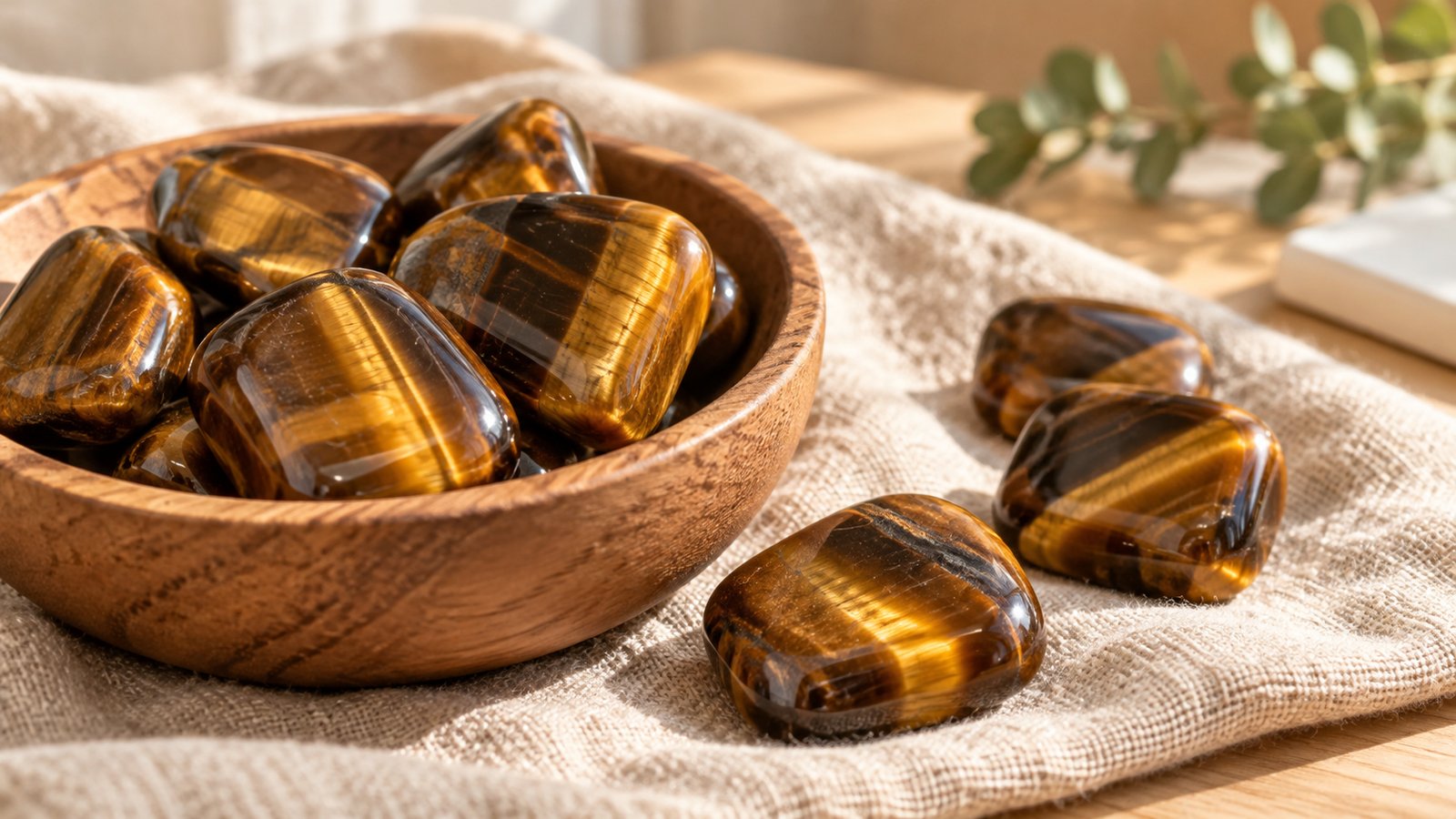
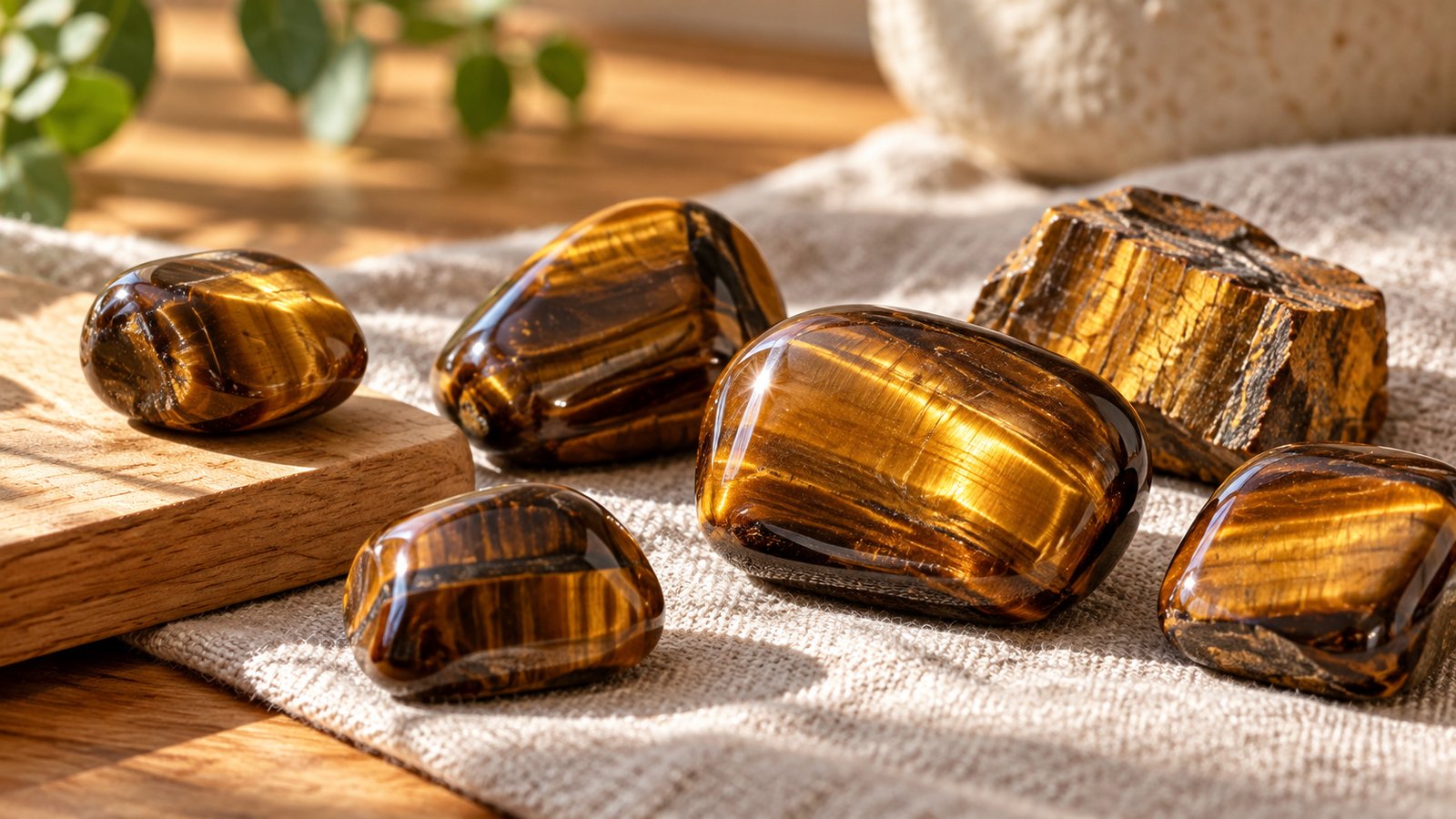
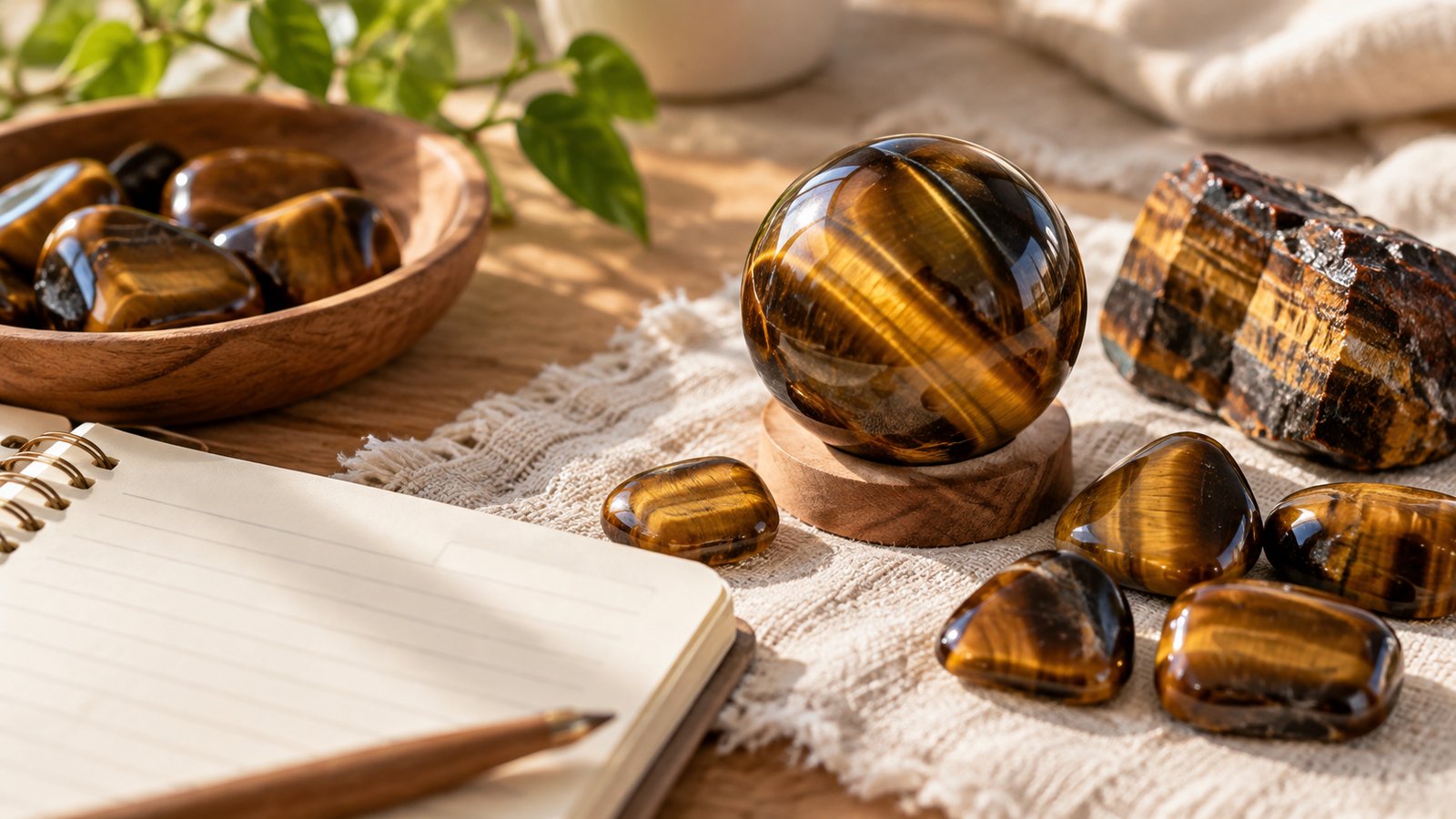
Hold a polished tiger’s eye under a lamp and tilt it slowly. A bright stripe glides across the surface like light moving over a cat’s pupil, and that small trick is a big part of why people pick this stone up in a shop and refuse to put it down. The stone looks warm, feels heavy for its size and is hard enough to survive years in a pocket or on a bracelet.
The goal of this guide is to keep two kinds of information clearly separate. The mineral facts come from sources such as Mindat, the Penn State research team that studied the stone’s structure, and mineral references on gem materials. The meanings come from crystal traditions, and they are shared here as beliefs and customs, never as medical claims. If you are building your collection, the crystal meanings guide shows where tiger’s eye fits among the other stones on this site.
Contents
hide
What Tiger's Eye Is and Why It Glows
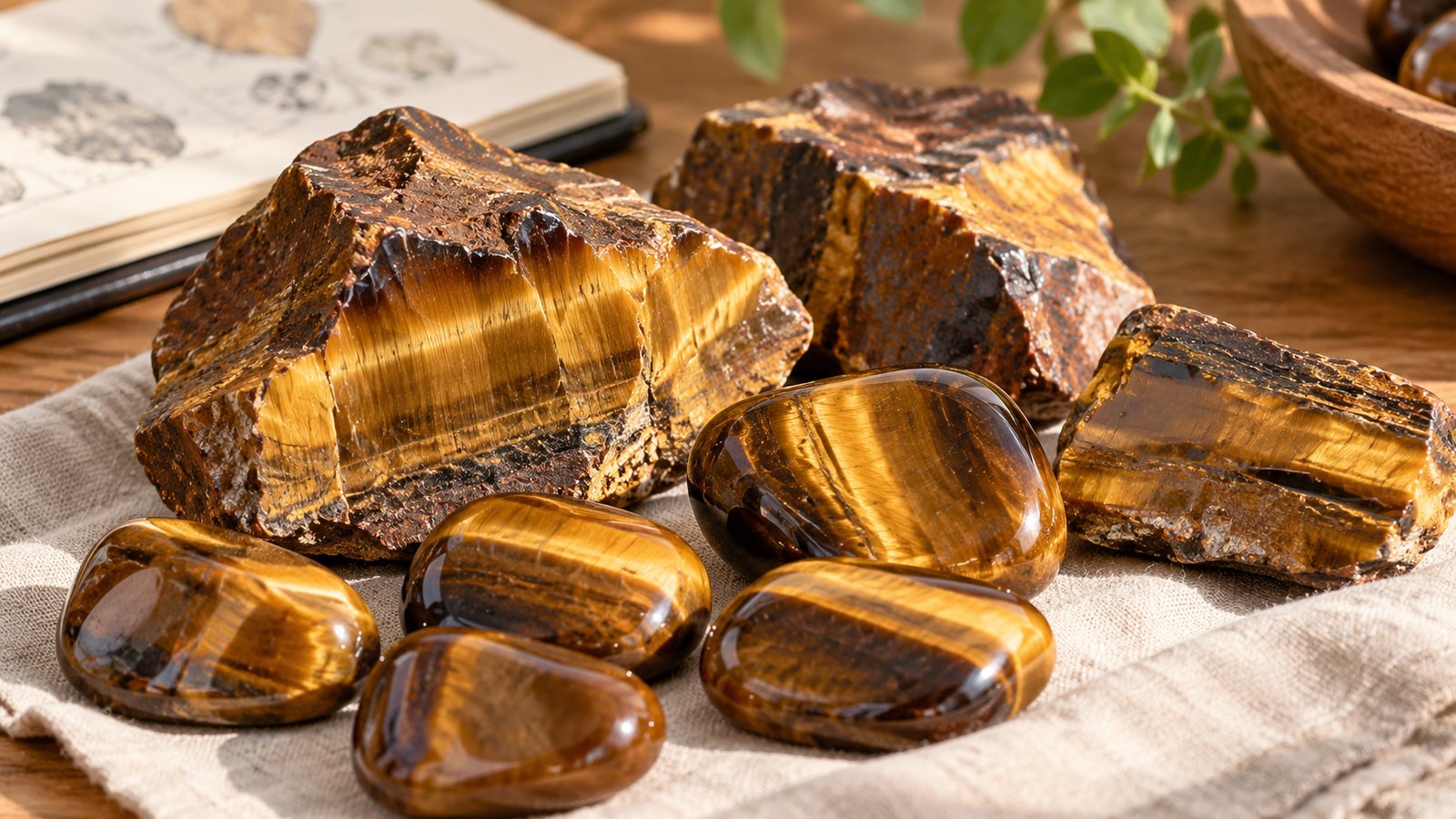
Tiger’s eye is a variety of quartz, which means its main ingredient is silicon dioxide, the same compound as amethyst and clear quartz. Mindat describes it as quartz grown together with fibers that were once an amphibole mineral and have mostly altered into iron oxides. Those fibers run in parallel, and parallel fibers are the secret to its glow.
The effect is called chatoyancy, from the French word for a cat’s eye. When light hits tightly packed parallel fibers, it reflects back as a narrow band that appears to travel as you turn the stone. Penn State researchers Peter Heaney and Donald Fisher, who studied tiger’s eye with microscopes and x-ray diffraction, noted that the fibrous inclusions, and not the quartz itself, are what make the shimmer.
Color comes from iron. Hawk’s eye, the blue-gray relative, keeps the original blue fibers. When some of the iron in those fibers oxidizes, the stone turns the golden and brown shades most people know as tiger’s eye. Stones that look red, often called ox-blood, are usually produced by gentle heating, which oxidizes the iron further. Gray or very pale stones are sometimes acid-treated to lighten them.
Mineralogists still argue about exactly how the fibers formed. The older view says silica slowly replaced blue fibrous crocidolite. Heaney and Fisher proposed that quartz and fibers grew together as cracks opened and sealed in the rock, while later field studies in South Africa point to surface weathering of existing crocidolite veins. For a buyer the useful point is simple: the glow is natural structure, not paint.
Where Tiger's Eye Comes From
Mindat places the classic source in the Griqualand West region of the Northern Cape in South Africa, where banded iron formations hold crocidolite veins near the surface. Tiger’s eye and hawk’s eye appear only in the weathered, silica-rich zone close to the ground, which is part of why the material is limited to certain areas.
Other sources include Western Australia, which is also known for a banded variety called tiger iron, plus India, Namibia, Myanmar, Brazil and the United States. When a seller lists a country, ask for the supplier’s name too, because location claims on tumbled stones are often vague.
Tiger’s eye is usually cut as a cabochon, which is a smooth, domed shape without facets. That cut gives the band of light room to move. Flat slabs and beads also show the effect, though bead holes can break up the pattern.
Because the stone is opaque and affordable, tiger’s eye turns up in everything from polished palm stones to carved animals, and the price difference between a fine piece and a poor one mostly comes down to how crisp and wide the band is.
Tiger's Eye Through History
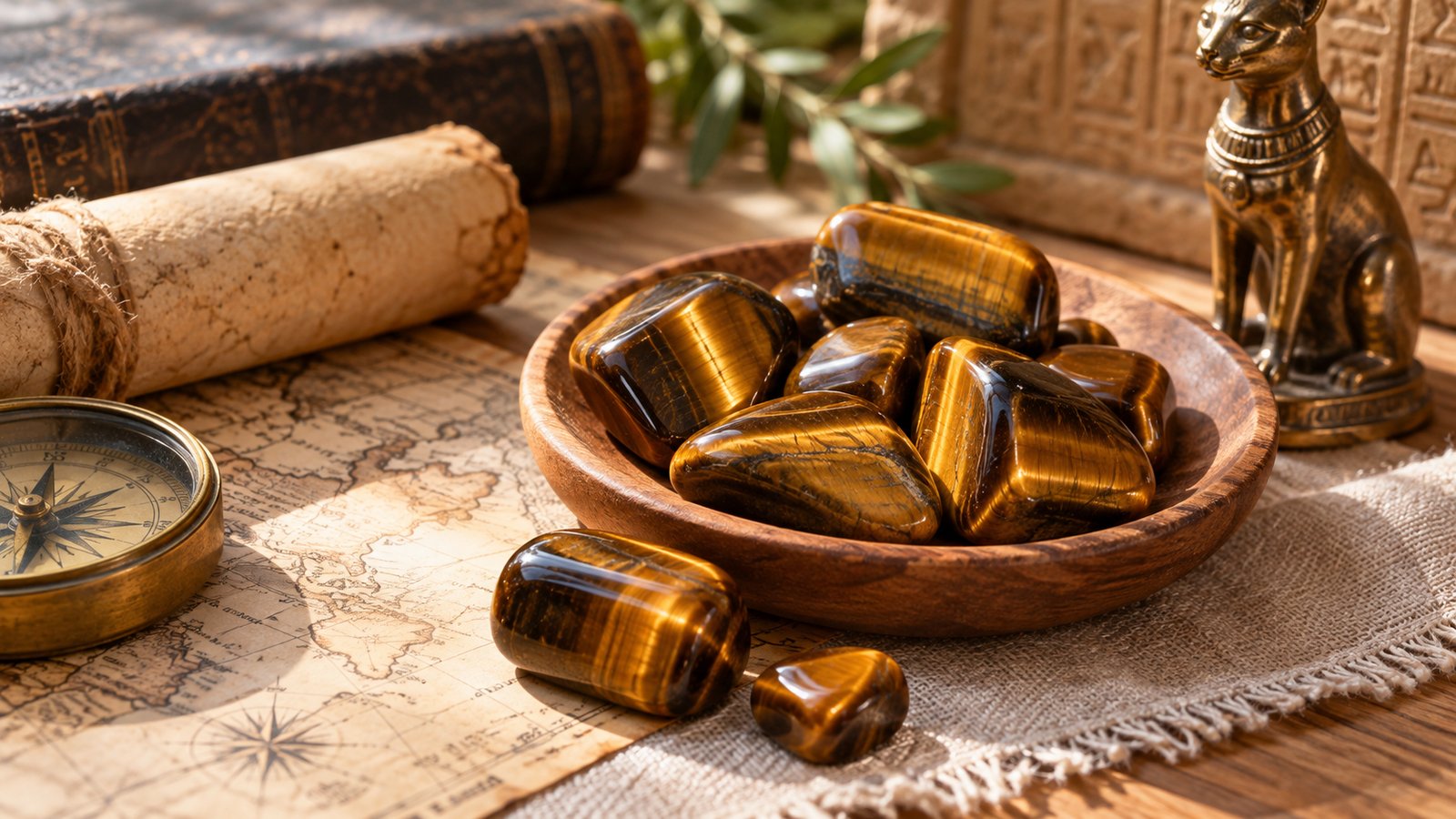
The written record is shorter than many websites suggest. Mindat reports that the French traveler and ornithologist François Levaillant noticed the stone along the Orange River in 1784 and described a pebble “with a gold-coloured belt” that struck fire from steel. The German naturalist Martin Hinrich Lichtenstein collected specimens in 1803, and the chemist Martin Heinrich Klaproth described the fibrous minerals scientifically in 1811.
Popular crystal books often say that Roman soldiers carried tiger’s eye for protection in battle. I could not trace that statement to an ancient source, so I treat it as modern lore rather than documented history. The honest summary is that tiger’s eye was known to European scientists by the late eighteenth century and became a popular ornamental stone in the nineteenth and twentieth centuries.
Eye-shaped stones have a much longer symbolic history. Many cultures have linked eyes with watchfulness and protection, and chatoyant stones such as cat’s eye chrysoberyl were prized in Asia long before tiger’s eye reached Europe. That is why the “watchful eye” idea attached itself so easily to this stone.
What Tiger's Eye Means in Crystal Traditions
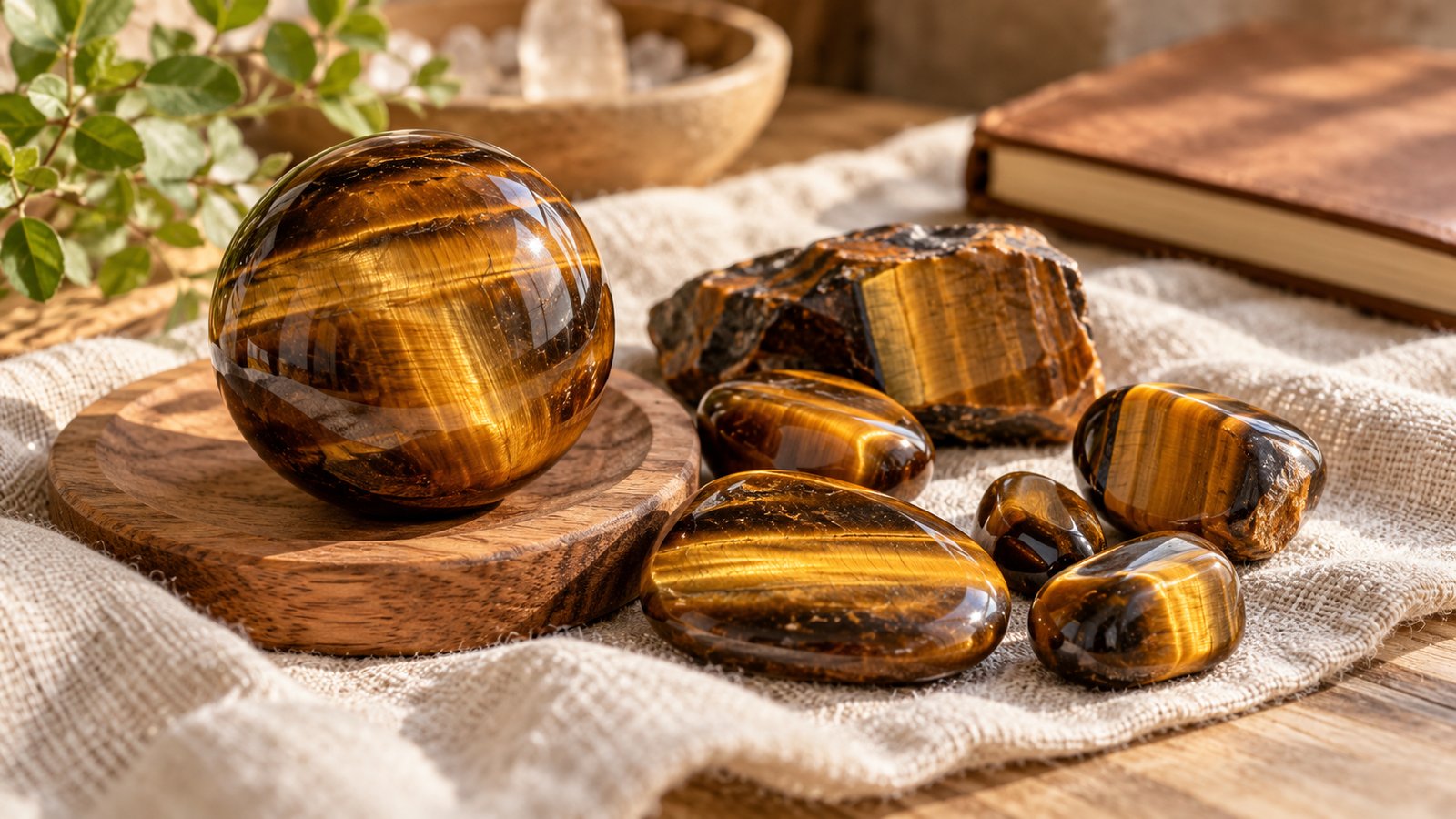
The following ideas come from modern crystal practice, and they are beliefs rather than facts about the mineral. They are still useful, because knowing the tradition helps you decide whether the stone fits your own reasons for wanting it.
- Courage and confidence. Practitioners often describe tiger’s eye as a stone for steadiness when starting something new, and people sometimes carry a small piece to interviews or presentations.
- Focus and grounding. The earthy brown color leads many people to link it with practical, steady energy and with staying on task.
- Protection. The eye-like glow connects it with the old idea of a watchful guardian.
- Prosperity. Golden tones put tiger’s eye into modern money and abundance rituals, though no stone can change a bank balance.
- Balance. Some traditions pair its gold with its brown to represent sun and earth together.
Tiger’s eye is not a medical device and it cannot treat or cure any condition. If a stone helps you feel calm or focused because you have decided to use it that way, treat it as a mindfulness cue and keep seeing your doctor for health questions.

Simple Ways to Work With Tiger's Eye
Intention beats elaborate ritual, so keep it simple. These steps take about five minutes, and you can repeat them each morning for a week to see whether the habit feels useful to you. Nothing here requires special equipment, and the stone is only a visual reminder of the goal you chose.
- Pick one specific goal, such as “finish the proposal by Friday” or “speak up once in the meeting.”
- Hold the stone and tilt it until the band of light appears. Take three slow breaths while you watch it move.
- Say the goal out loud, or write it on a sticky note and set the stone on top.
- Keep the stone where you will see it: on your desk, in a bag pocket or on a bracelet.
- Use it as a cue. Each time you notice it, take one small action toward the goal.
For a layout, a tiger’s eye in the center of a small grid pairs well with clear quartz points. The crystal grid guide walks through layouts step by step. Tiger’s eye also looks good with other earthy stones such as black tourmaline, covered in the black tourmaline guide.

Caring for Tiger's Eye
At Mohs hardness around 6.5 to 7, tiger’s eye resists dust and most household scratches, but it can still be scratched by harder stones and gets dull when ignored. Store it in a soft pouch away from sapphires, diamonds and quartz points.
Clean it with a soft cloth, lukewarm water and a drop of mild soap, then dry it completely. Avoid ultrasonic cleaners and steam on set jewelry, because fibrous stones can have tiny fractures, and avoid harsh chemicals such as bleach or acid, which can dull the polish or dissolve glue and dye.
Tiger’s eye tolerates brief contact with water, though soaking is unnecessary. If you want to know which stones should stay dry, the guide to crystals that cannot go in water covers the full list.
Heat and sunlight deserve some caution. Strong, long exposure can fade some colors in dyed stones, and sudden temperature swings can crack a stone with internal fibers. Keep it out of hot cars and direct summer windowsills.
For cleansing, many people use smoke, sound, moonlight or a brief rest on a selenite plate. These are traditions, not requirements, and none of them changes the mineral. The guide to how to cleanse crystals lists ten methods and which ones are safe for each stone.
A safety note: crocidolite is an asbestos mineral. In a finished, polished tiger’s eye the fibers have been altered and sit inside quartz, and gem references treat intact pieces as ordinary jewelry stones. Grinding, sanding or drilling raw material at home makes dust, so leave cutting to lapidaries with proper dust control.
How to Spot a Fake Tiger's Eye
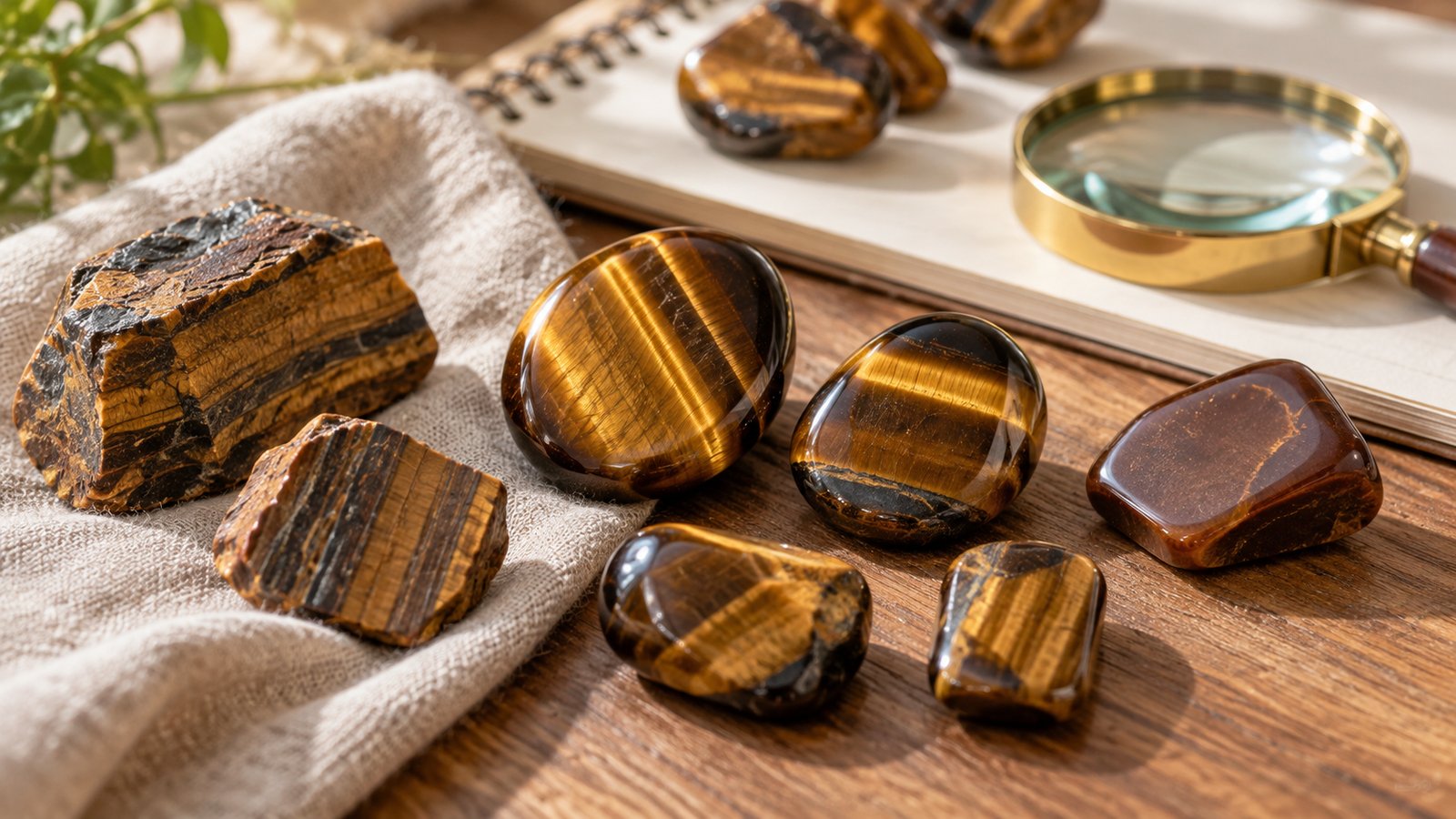
Tiger’s eye is common, so fakes are mostly about passing something else off as it. Watch for these cases.
- Glass “cat’s eye.” Glass with embedded fibers can show a band of light, but the band looks too sharp and uniform, the stone feels slightly colder and slippery, and it may show tiny round bubbles under magnification.
- Molded resin or plastic. It feels warm and light, scratches easily with a fingernail edge or coin, and the pattern often repeats in exactly the same way across a bag of beads.
- Dyed stones. Blue, green, purple and pink tiger’s eye does not occur in nature at those colors. Hawk’s eye is a muted blue-gray, so a vivid electric blue is dyed. Color sitting only in cracks or on the drill hole is another sign.
- Reconstituted or “tiger iron” confusion. Tiger iron mixes tiger’s eye with red jasper and gray hematite in bands. It is real, but it is a different material and should be priced accordingly.
Natural tiger’s eye has fibers that look like silky threads. Rotate the stone and the band should shift smoothly and stay inside the stone’s own structure, with slight variation from end to end. Treated colors such as red or gray are accepted in the trade when disclosed, and ox-blood stones made by heating are common.
Buying Tips
Ask whether the stone is natural, heated or dyed, and ask for a return policy. Look for a crisp, wide band and even polish. Avoid sellers who give only tags like “healing grade,” which means nothing in mineralogy. A good tumbled piece costs a few dollars, so a high price should come with a clear explanation, such as a rare carving or fine jewelry setting. Photograph the stone in daylight when it arrives and tilt it slowly on video, because the moving band is the easiest feature to verify and the hardest one to fake well. Keep the receipt and the listing text together in case you need to ask for a refund later.
Frequently Asked Questions
Is tiger’s eye a real crystal?
Tiger’s eye is real quartz with fibrous inclusions, so it is a natural stone, but it is not a single, clear crystal like a quartz point. Its microscopic quartz grains grow together to make a solid mass.
Can tiger’s eye go in water?
Brief contact with water is fine for plain polished stones. Skip soaking for jewelry with glue or dye, and dry the stone afterward.
What is the difference between tiger’s eye and hawk’s eye?
Hawk’s eye keeps the original blue-gray fibers, while tiger’s eye has oxidized fibers that turned golden brown. Many pieces contain both colors in bands.
What zodiac sign is tiger’s eye linked to?
Crystal lists often link it with Leo and sometimes Capricorn or Gemini, but these are modern associations rather than historical rules. Our zodiac crystals guide compares several systems.
Does tiger’s eye fade in the sun?
Natural-color stones are generally stable, though long exposure to strong heat or light is best avoided, especially for dyed or treated pieces.
Is red tiger’s eye natural?
Red tiger’s eye starts as natural tiger’s eye. Gentle heating oxidizes the iron to produce the red tone, and the trade treats this as a standard enhancement, so ask the seller to say so.