| ✨Hey there! This post may contain affiliate links, meaning we earn a commission if you make a purchase through our links, at no cost to you. Please read our disclosures for more info. |
Quick answer: a crystal grid is an arrangement of stones laid out in a pattern, usually around a central stone, to represent an intention or simply to make an attractive display. To build one, choose a clear intention, pick a flat surface, set a center stone, add supporting stones in a pattern, and take a quiet moment to focus. Grids are a personal ritual and decoration, with no proven effect on health, money or luck.
Crystal grids appear everywhere online, from tidy circles of tumbled stones to elaborate geometric patterns on cloth. They look striking, and many people find that making one is calming. The practice is relatively modern, and it blends ideas from sacred geometry, meditation and the long human habit of arranging objects with meaning.
This guide explains what a grid is, what the parts are, how to choose a layout and stones, and how to assemble a simple one. Care and safety get attention too, such as keeping soft stones dry and handling candles carefully. The guide is honest about the limits as well. Crystals do not diagnose, treat or cure illness, and there is no scientific evidence that a grid changes events. Think of it as a mindful craft, not a remedy.
Anyone brand new to stones can begin with the basics in our guides to clear quartz and amethyst, two durable stones that suit a first grid.
Contents
hide
What a Crystal Grid Is
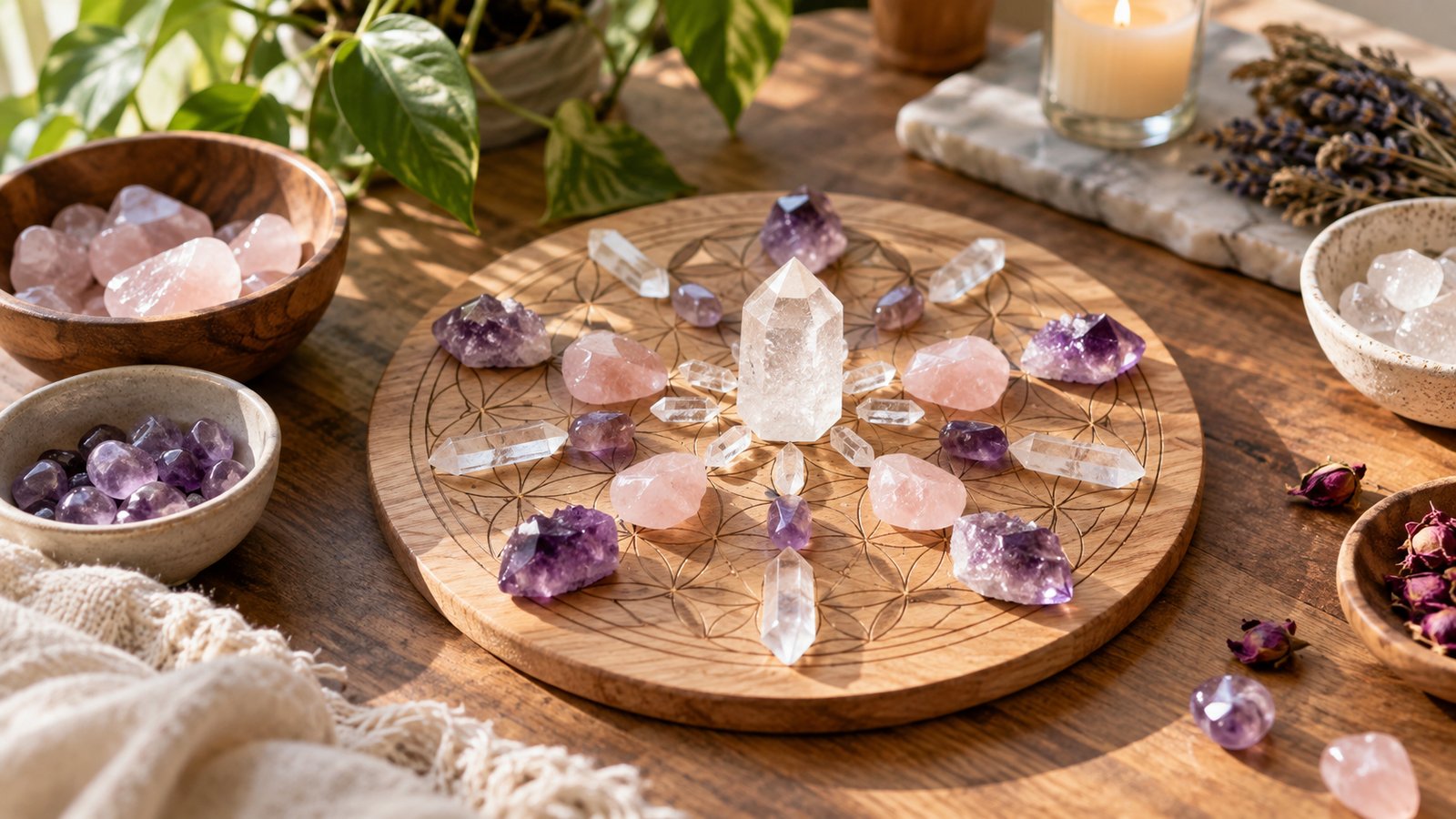
A crystal grid is a deliberate layout of stones. Most grids have three parts: a base, a center stone and supporting stones.
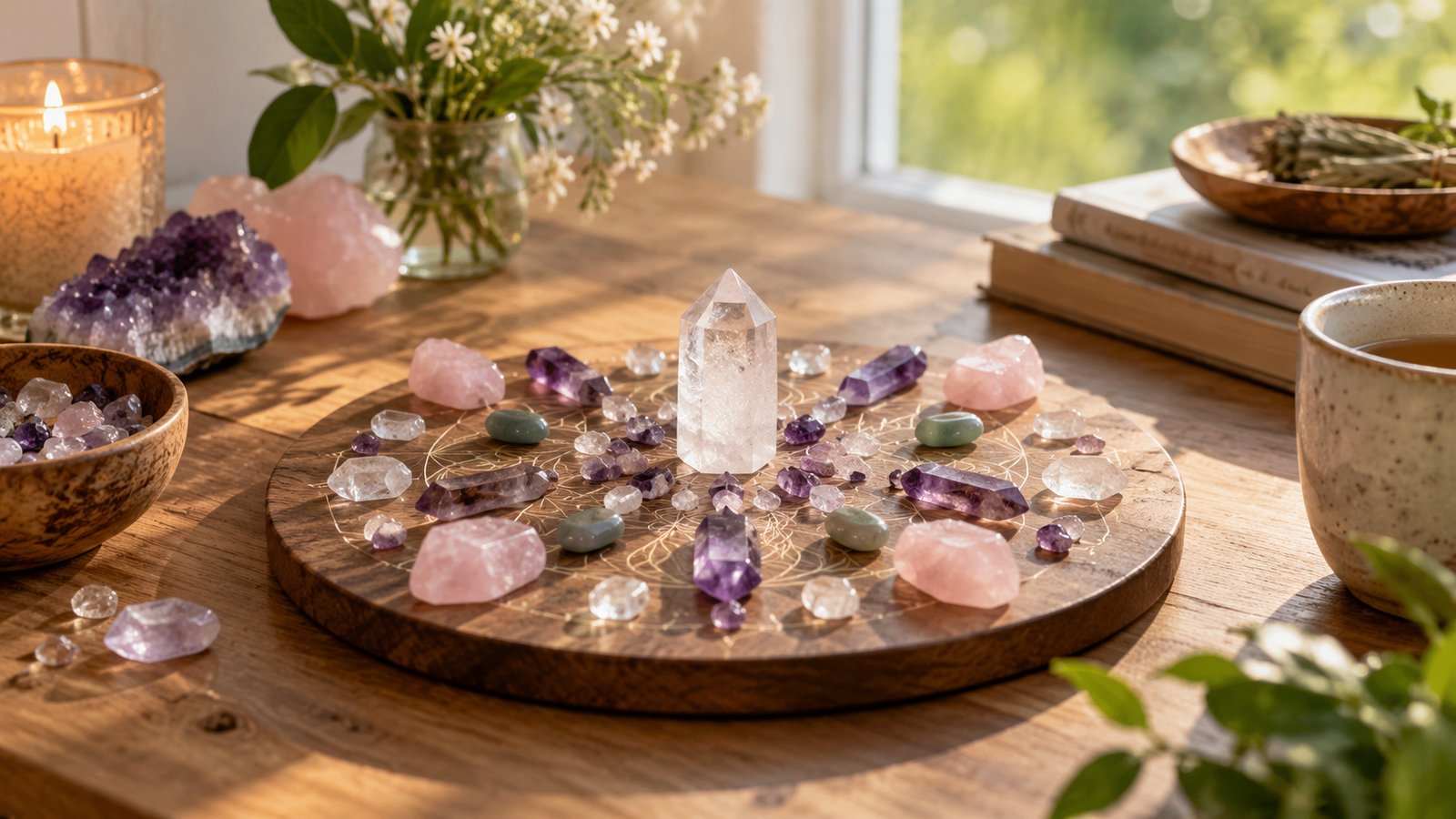
The base is the surface the grid sits on. Options include a cloth with a printed pattern, a wooden board, a plate, or just a clear patch of table. Many people use a piece of fabric with a geometric design, often called a grid cloth, since it provides guide lines. The base should be stable and out of the way of pets and children.
The center stone is the focal point. People often choose a larger piece, such as a point or sphere, to represent the main intention.
Supporting stones sit around the center in a pattern. They are usually smaller and chosen to match the theme. Some grids also include a point-shaped stone in each corner or a ring of stones at the edge.
The ideas behind grids are a mix. Some practitioners cite sacred geometry, the belief that certain shapes carry meaning. Others see grids as visual meditation tools. Whatever the framework, the common thread is intention: you decide what the arrangement stands for, and the act of building it gives you a pause to think about it.
Choose an Intention
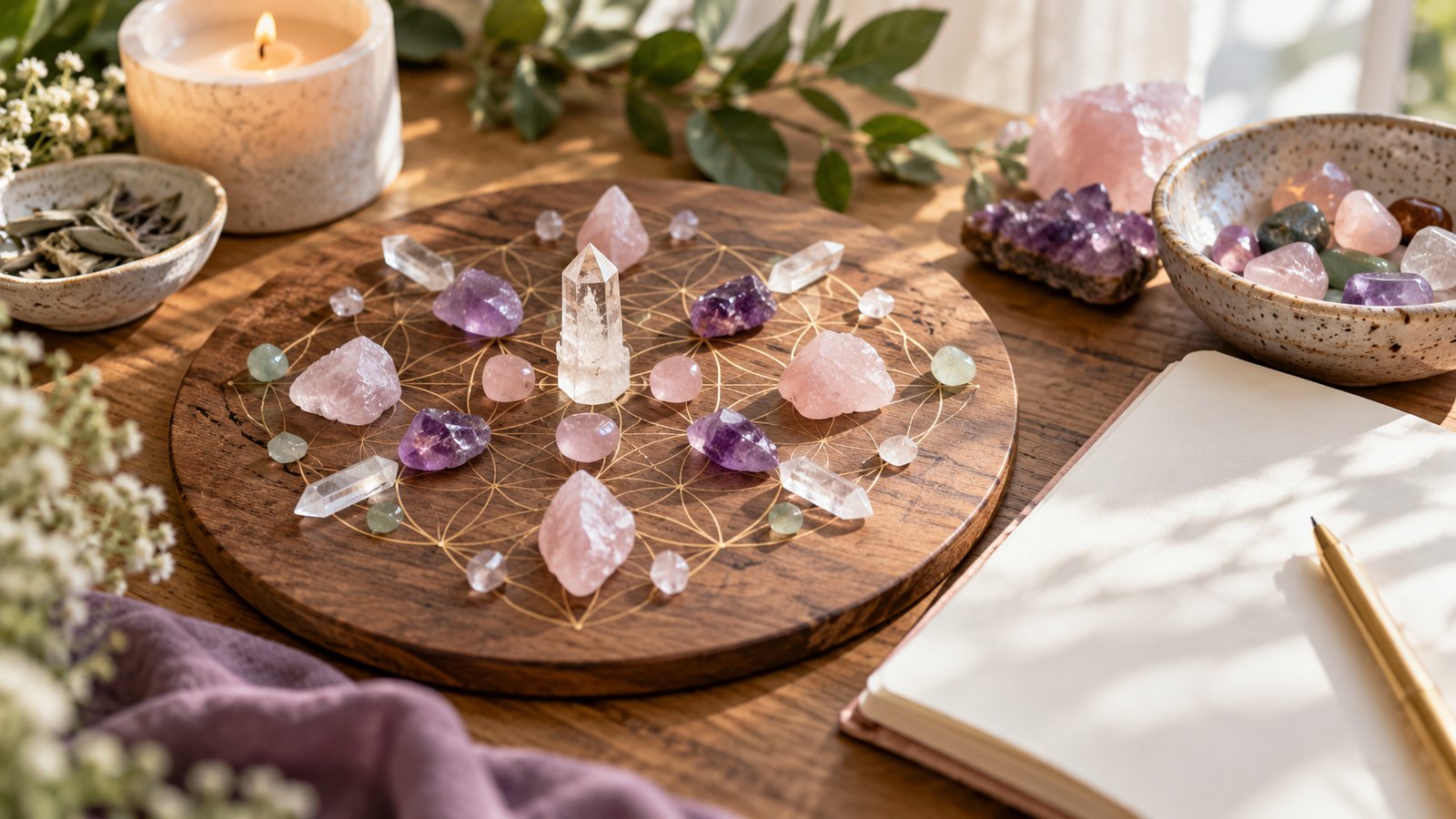
An intention is a short statement of what you want the grid to represent. Examples include calm during a busy season, focus for study, or gratitude. Keep it positive and simple. Instead of “I never want to feel stressed,” try “I want to practice slowing down.”
Write the intention on a small piece of paper and place it under the center stone if you like. Writing it down helps you stay clear. Writing also turns the grid into a reminder, which may be the most useful part of the practice.
Be realistic. A grid cannot guarantee a job, a relationship or a cure. Building one may help you focus on a goal, in the same way that a vision board or a candle on a desk can. If you are dealing with a health problem, anxiety or grief that feels heavy, talk to a doctor, therapist or someone you trust, and treat the grid as a small comfort alongside real support.
Choose Your Stones
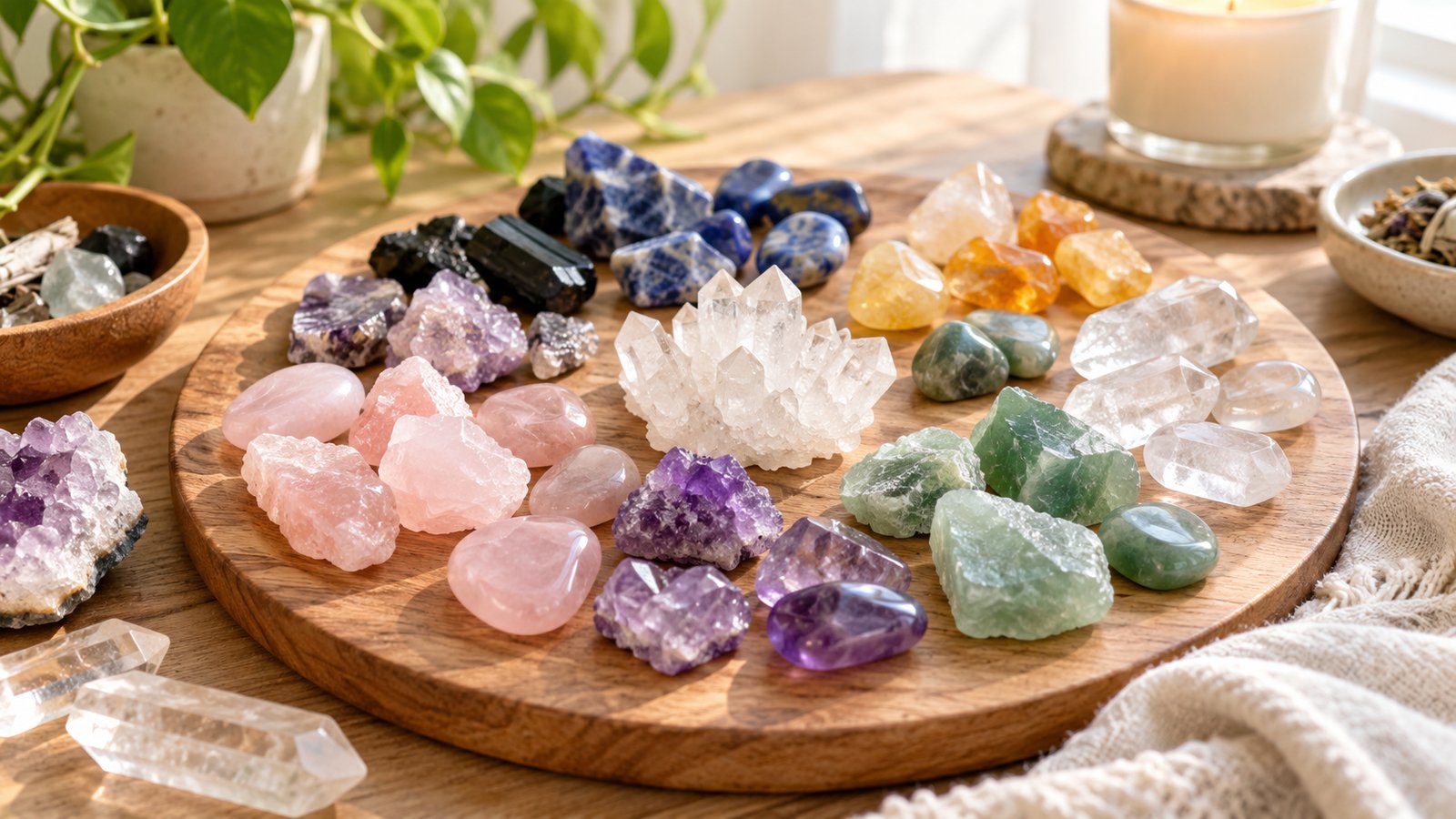
Pick stones that you like and that suit the intention in a traditional sense. Traditions are not facts, but they offer a starting point. Here are a few common associations:
- Calm and peace: amethyst, rose quartz, selenite
- Focus and clarity: clear quartz, citrine
- Protection and grounding: black tourmaline, obsidian
- Gratitude and warmth: carnelian, citrine
Our profile of rose quartz explains why that stone is so often tied to gentleness, and the guide to selenite covers the soft white stone often used as a base plate.
Think about durability. Hard stones such as quartz can sit in a grid for years. Soft stones, such as selenite, scratch easily and should be kept dry and handled carefully. Choose tumbled stones that tolerate handling when you plan to move the grid often.
Keep it small at first. Seven to twelve stones is plenty for a beginner. Too many stones make a grid look cluttered and can be expensive. Mixing sizes adds visual interest, with one large center stone, a few medium stones, and several small ones.
Pick a Layout
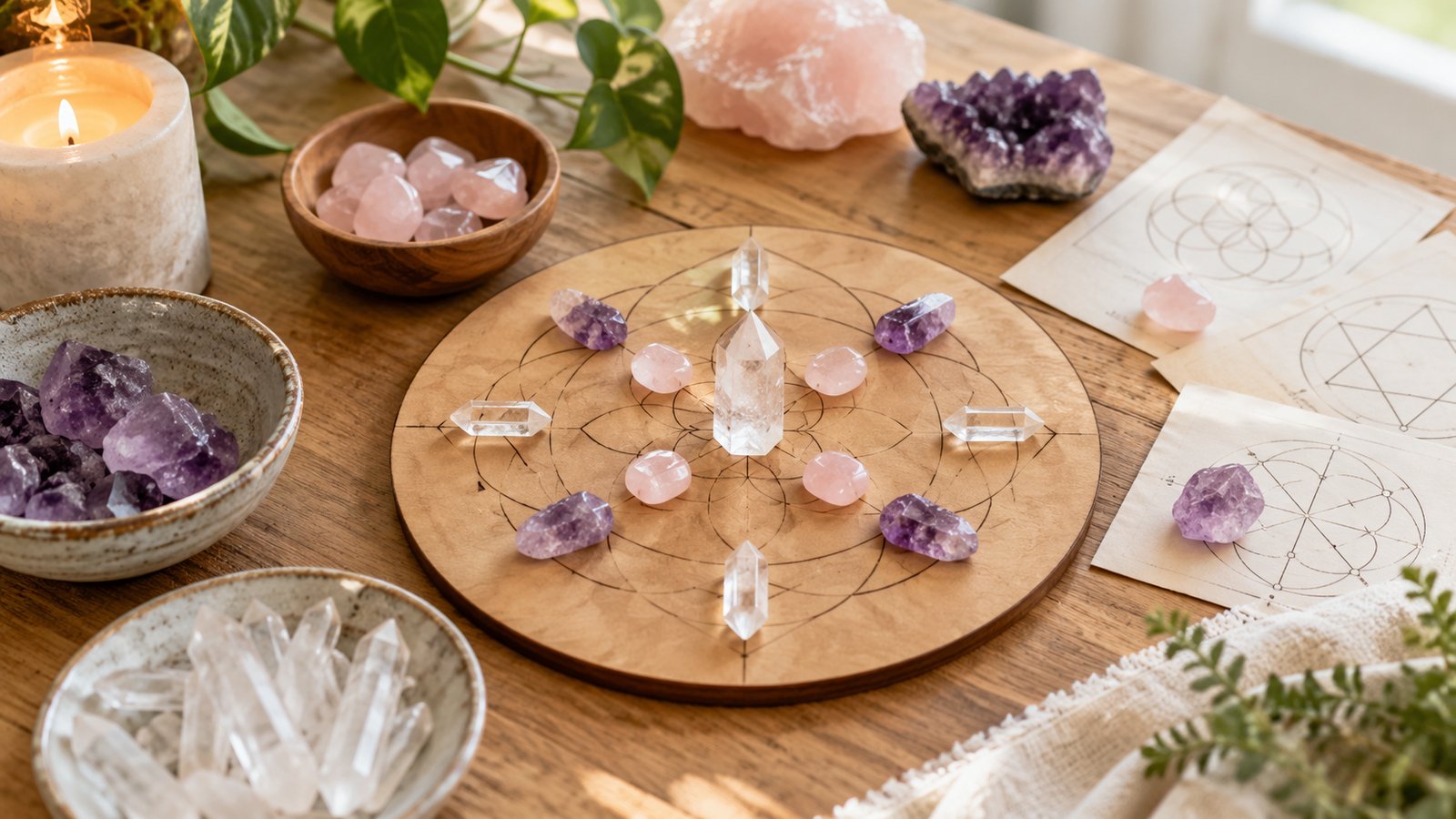
Layouts range from simple to elaborate. A few classic shapes work well.
Circle
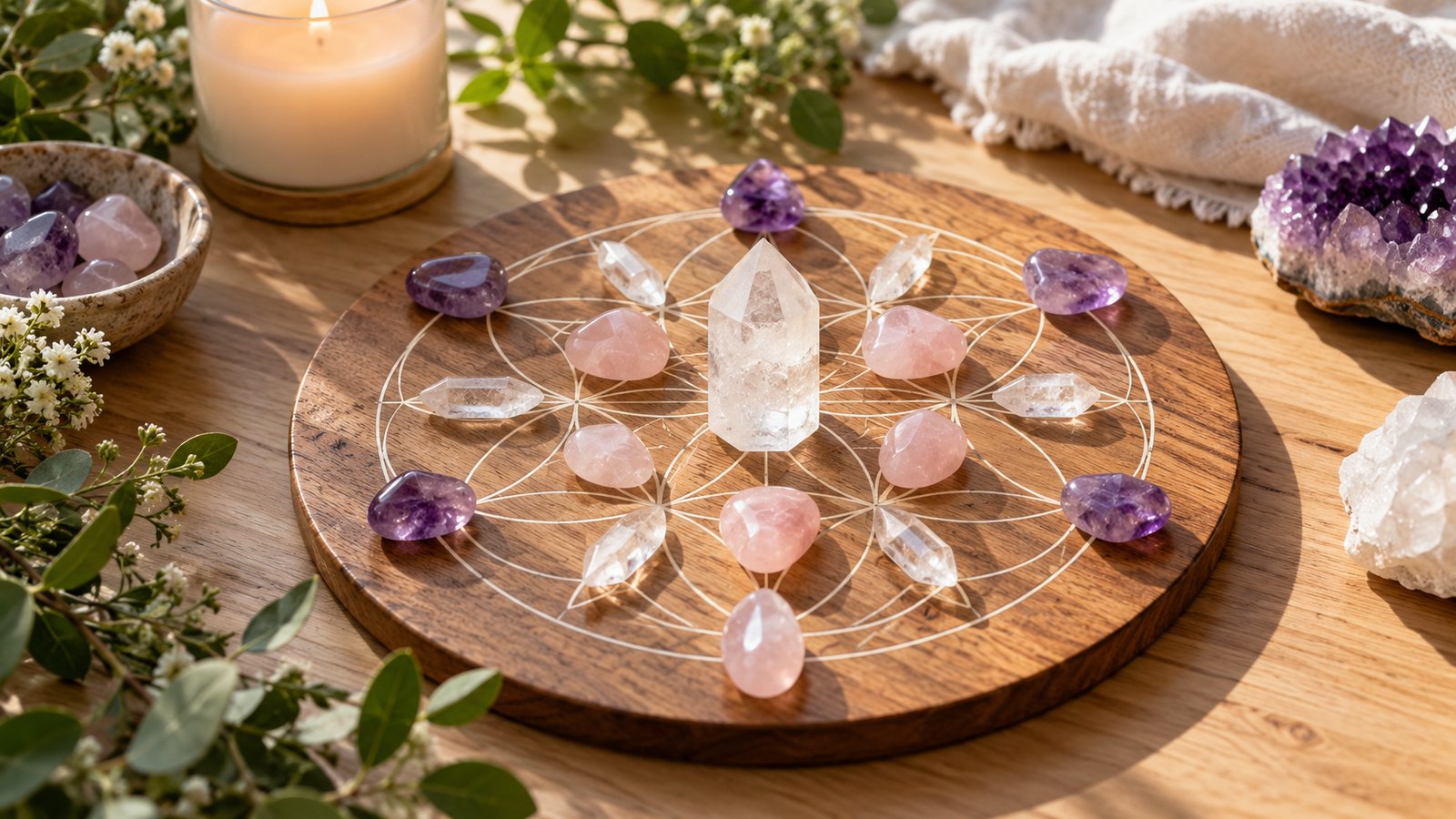
A center stone surrounded by a ring of six or eight stones is the easiest design. The result looks balanced and suits almost any intention.
Triangle
Three stones form a triangle, with a center stone inside or an extra stone at the apex. The shape is compact and works on a small shelf.
Spiral
Stones form an expanding spiral from the center. The design suggests growth or movement and looks lovely with graduated sizes.
Flower or six-pointed star
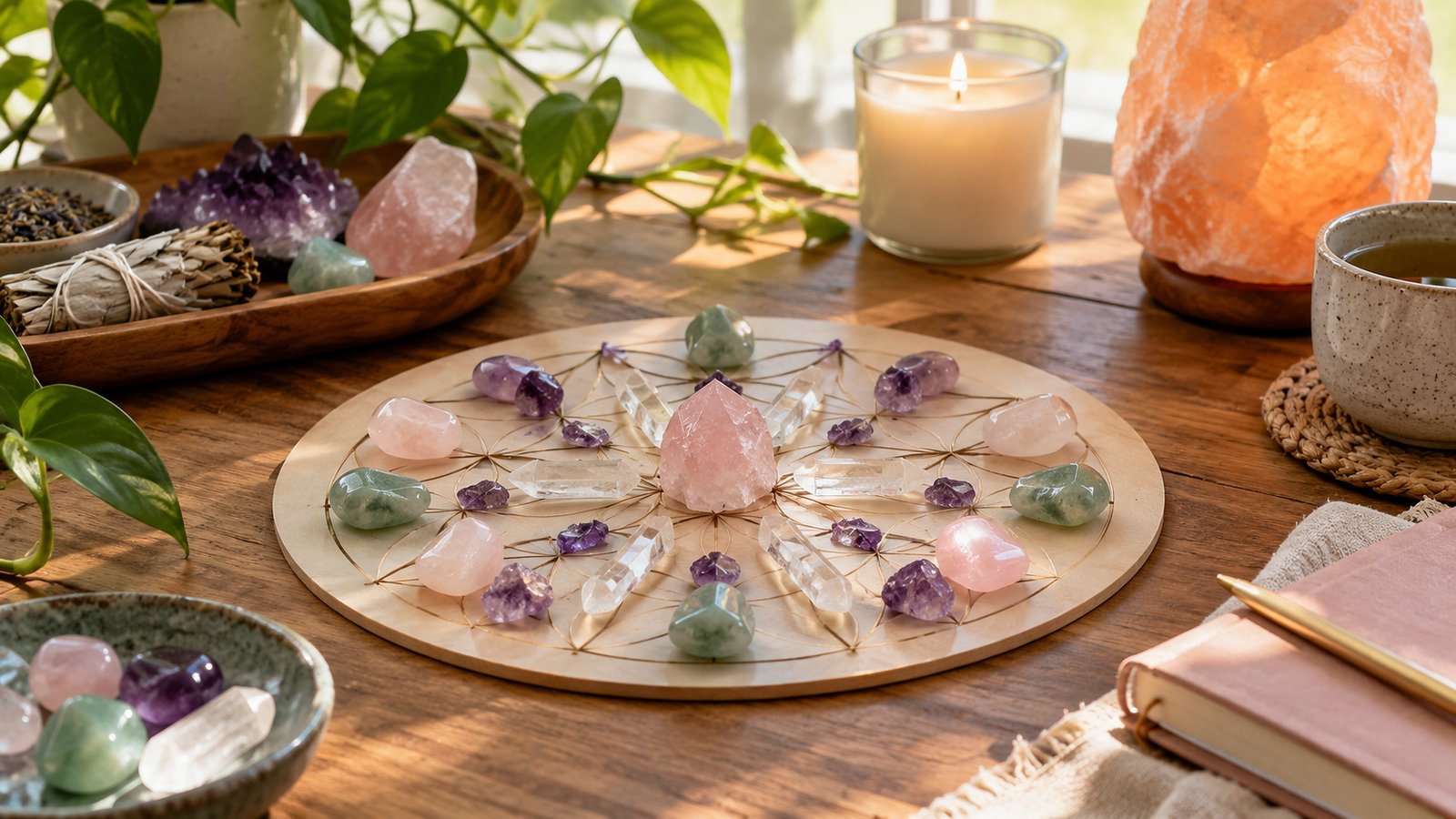
Sets of stones create petals or points around the center. These layouts are more detailed and make an attractive display. Printed grid cloths often include these shapes.
Choose a layout based on the space you have. A grid on a bedside table needs to be compact. A grid on a coffee table can spread out. Draw the pattern on paper first if you want to plan the placement.
How to Build a Simple Grid
Follow these steps for a basic circle grid.
- Choose a clear space and clean the surface. Dust and clutter distract from the purpose.
- Gather your stones, a piece of paper and a pen, and any base such as a cloth or plate.
- Write your intention on the paper and place it in the center of the base.
- Set the center stone on top of the paper.
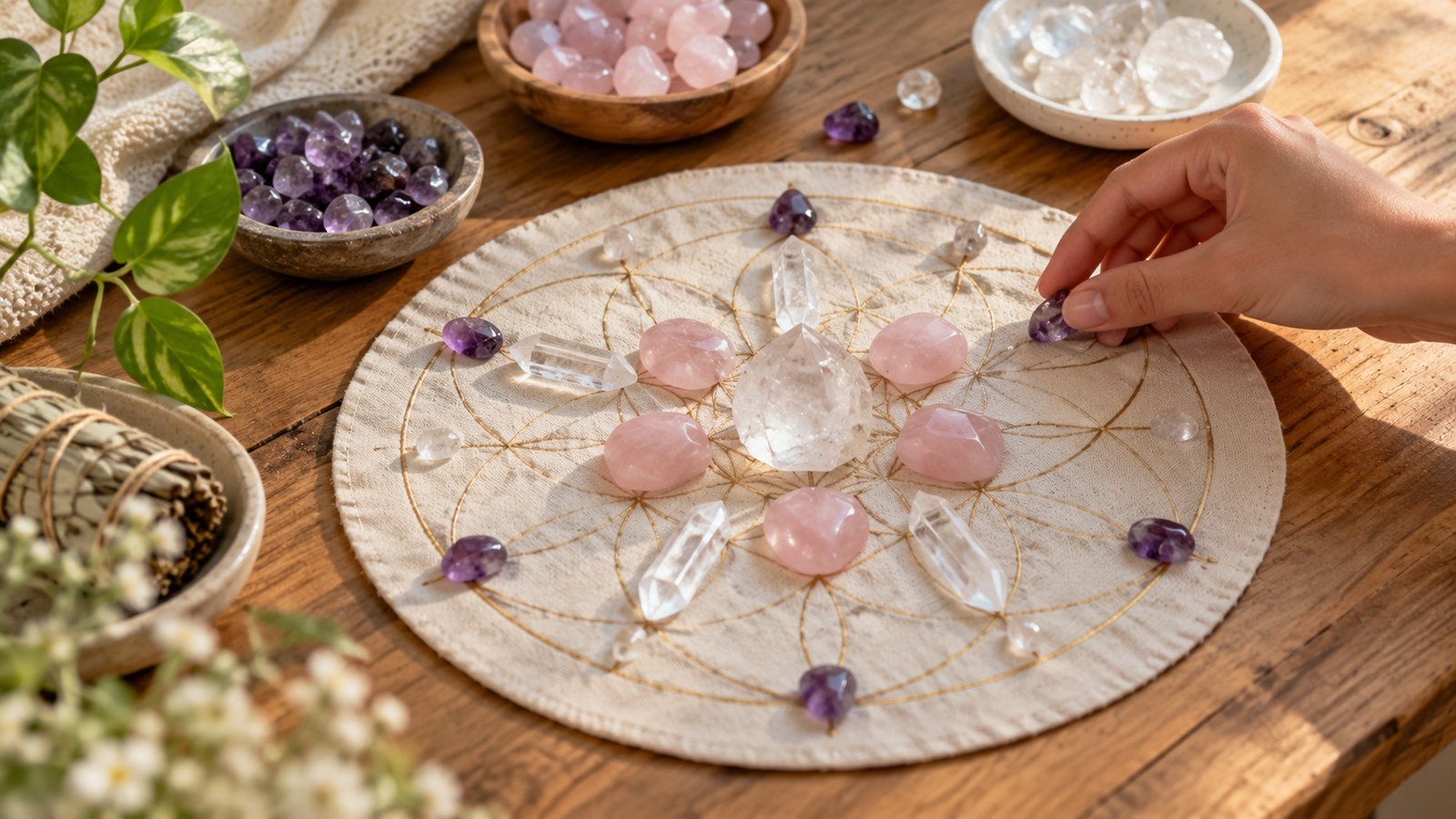
- Place six supporting stones in a ring around it, spacing them evenly. Pointed stones can face outward, inward or straight up. Choose what looks right to you.
- Take a moment to look at the grid. Breathe slowly and read your intention.
- Leave the grid where you can see it, or dismantle it when it has served its purpose.
Some people add a ritual such as lighting a candle, ringing a bell or holding a pointed stone over each position. These steps are optional. When using a candle, place it on a heatproof dish, keep it away from fabric, paper and curtains, and never leave it burning unattended. A battery-powered light is a safer option.
Grids for Specific Spaces
Think about where the grid will live. A desk grid should be small and tidy, with a few smooth stones that will not roll off when you bump the table. A bedside grid works best with calm, quiet colors and no candles. A grid for a living room can be larger and more decorative, with a tray or a wooden slice to keep stones together.
Seasonal grids are a fun variation. A spring grid might use green and pink stones with fresh flowers on the base, while a winter grid could pair clear quartz and white stones with a few evergreen sprigs. Because the point is reflection, not rules, there is no wrong arrangement.
Gift grids make thoughtful presents. A small box with a printed cloth, a center stone and a handful of tumbled stones, along with a short card explaining the layout, is easy to assemble. Include a note that the meanings are traditional and that the stones should be kept dry if any are soft.
Common Beginner Mistakes
Overcrowding is the most common. A grid with too many stones loses its shape and its calm. Mixing very soft and very hard stones in close contact is another, since the hard ones can scratch the soft. Using stones that fade in the sun on a bright windowsill is a third. A fourth is spending too much on a kit before learning what you like. Start with what you can afford, and upgrade over time.
Finally, avoid treating the grid as a replacement for action. If your intention is to study better, the grid can remind you to open your books, and the books do the work.
Caring for the Stones in Your Grid
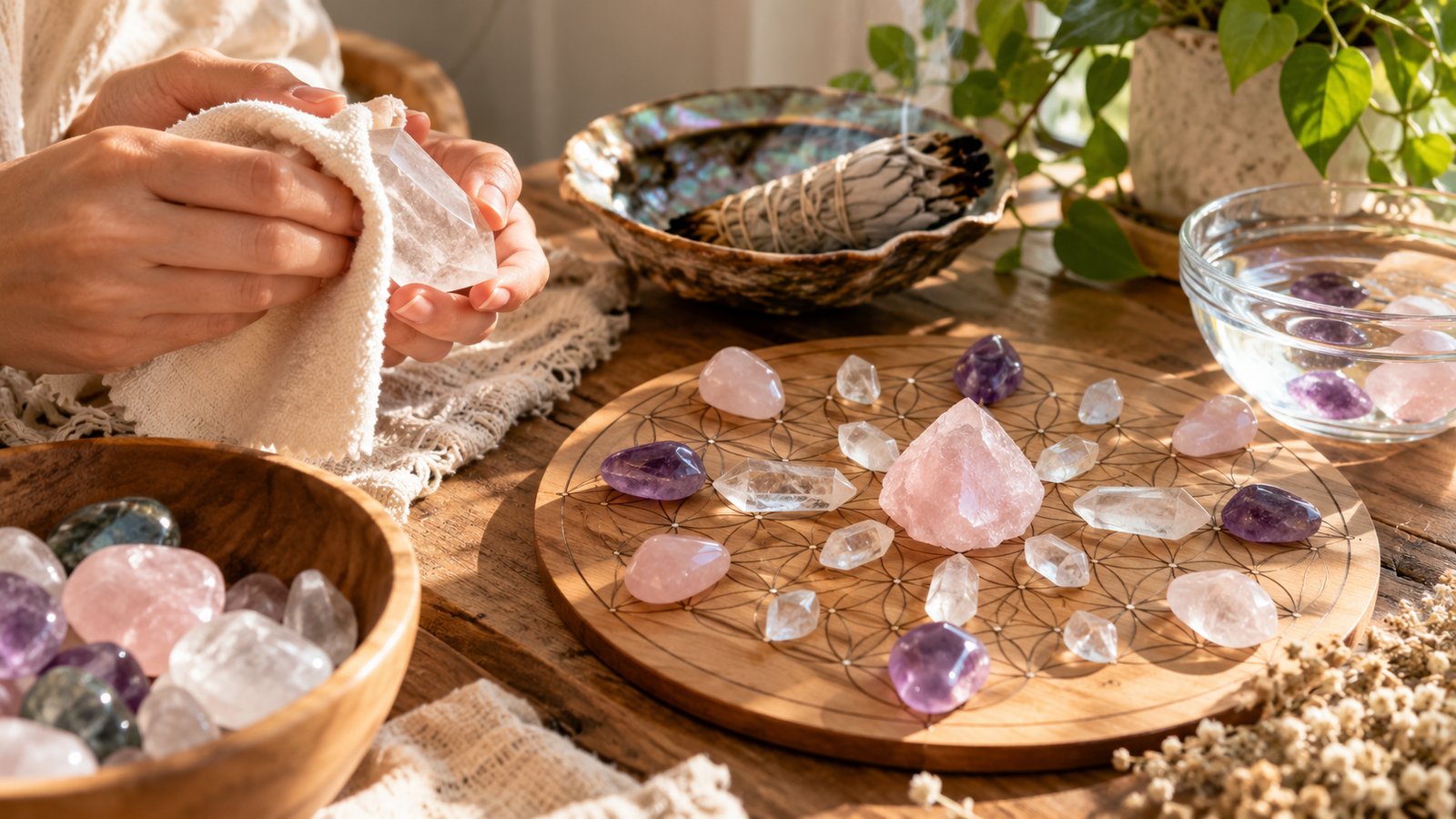
Grids sit out, so the stones need protection. Keep the grid away from direct sunlight, since amethyst and rose quartz can fade. Dust it with a soft brush or cloth. Do not use water on soft, porous or water-sensitive stones. Our guide to how to cleanse crystals explains gentle methods, and you can check which stones to keep dry before you build.
Place the grid where it will not be knocked over. Pets and small children may swallow or chew small stones, so keep grids out of reach of toddlers and animals. Avoid placing stones in a spot where they could fall from a high shelf.
Refresh the grid from time to time. Many people change the arrangement with the seasons, swap stones when their needs change, or take the grid apart when the intention has been met. Treat it as flexible, not permanent.
Photographing and Sharing Your Grid
Many people enjoy sharing grids online. Natural window light, a plain background and a top-down angle show the pattern clearly. Wipe fingerprints off polished stones first, and tidy stray threads or dust from the cloth. Share honestly, describing it as a craft or ritual and skipping any promises about results, since your followers may be dealing with real struggles and deserve accurate information.
Taking a Grid Down
A grid does not have to stay forever. When the season passes or the intention has been met, dismantle it mindfully. Pick up each stone, wipe it with a dry cloth, and return it to its storage spot. Some people say a short thank you or note what they learned. Others photograph the grid before taking it apart, creating a small record of the arrangements they have tried.
Store stones by hardness, with soft ones wrapped separately, and keep the base cloth folded flat and clean. Reusing the same stones in new layouts is a cheap way to keep the practice fresh.
Honest Expectations
Here is a plain statement of what a crystal grid can offer. A grid can give you a pretty arrangement, a pause in a busy day and a visual reminder of something you care about. Grids cannot predict the future, diagnose or treat an illness, or replace medical care.
Be wary of sellers who promise results for a high price. Grid kits, special cloths and rare stones can be fun, but they do not need to be expensive. A handful of tumbled stones and a clean plate work just as well as a premium kit.
Respect other people’s beliefs, too. Some people find deep meaning in this practice, and others see it as decoration. Both views can be enjoyed side by side.
Sources worth checking include mineral references such as Mindat for stone hardness and properties, and the Gemological Institute of America for care of treated and fragile stones.
Frequently Asked Questions
Do crystal grids work?
There is no scientific evidence that grids change events or treat illness. Many people use them as a focusing ritual or display, and that can feel meaningful.
How many stones do I need for a grid?
A beginner grid can use as few as three stones, and seven to twelve is plenty for most designs. Start small and add more as you learn what you like.
What stones are good for a beginner's grid?
Durable stones such as clear quartz, amethyst, rose quartz and citrine are popular because they tolerate handling. Keep soft stones like selenite dry and handle them carefully.
Can I leave a grid out all the time?
Yes, away from direct sun and out of reach of children and pets. Dust it occasionally, and watch for fading in colored stones.