| ✨Hey there! This post may contain affiliate links, meaning we earn a commission if you make a purchase through our links, at no cost to you. Please read our disclosures for more info. |
Quick answer: selenite is the transparent, colorless variety of gypsum (CaSO4·2H2O). The stone is very soft, rating 2 on the Mohs scale, so a fingernail can scratch it, and it dissolves slowly in water. Keep it dry. Crystal traditions connect it with the moon, clarity and cleansing other stones.
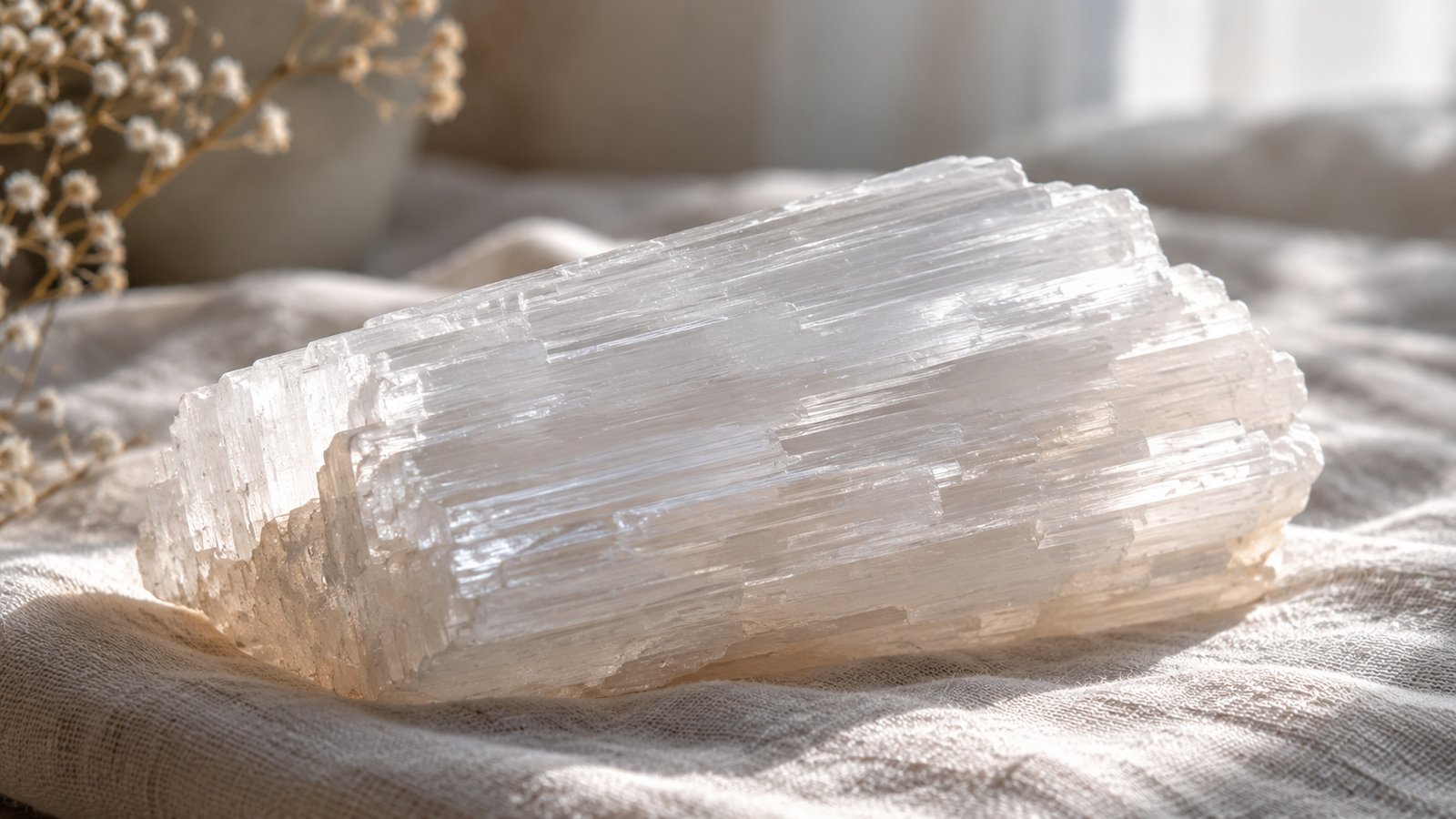
Few stones look as quietly luminous as selenite. A long, ribbed wand glows under a lamp, a slab on a shelf catches light along its edges, and a rough blade seems almost wet with reflected glow. The look suits the name, which comes from the Greek word for the moon.
Appearance hides a trap. Many people buy a selenite wand, rinse it under the tap or stand it in a bathroom, and watch it go dull. Among crystal-shop stones, this one is the softest and most water-sensitive, so its care is unlike that of quartz. Below, the mineral science comes first, drawn from Mindat and published research on the famous giant crystals in Mexico, then the traditions and care. Beliefs are labeled as beliefs.
Contents
hide
What Selenite Is
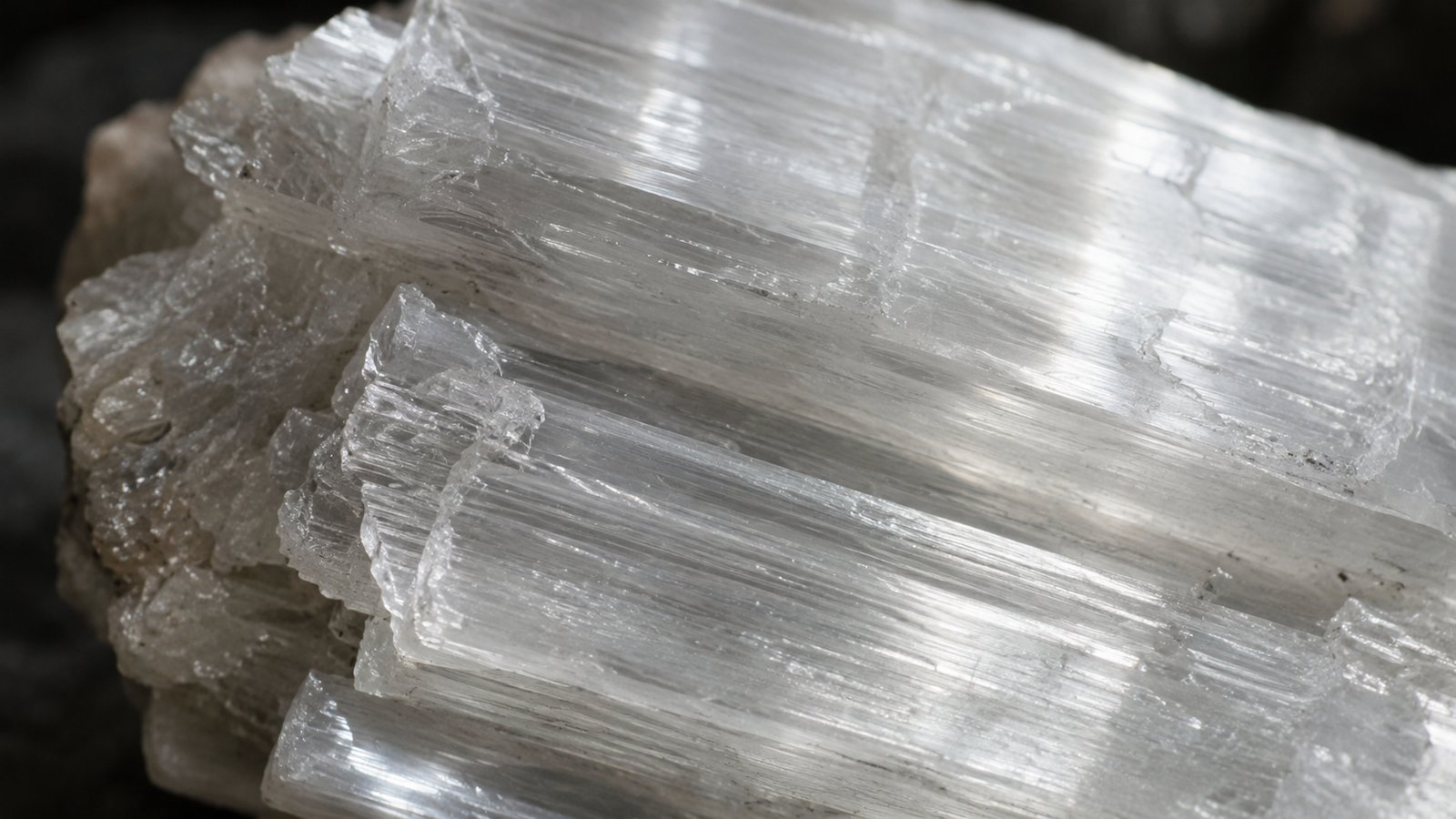
Selenite is a variety of gypsum, a calcium sulfate mineral with the formula CaSO4·2H2O. The two water molecules built into the formula are part of the crystal, which makes gypsum a hydrated mineral. The word selenite refers to the clear, colorless, transparent crystals. Gypsum can also appear as white or tinted masses, fine-grained alabaster and fibrous satin spar.
Hardness is 2 on the Mohs scale. A fingernail, which rates about 2.5, scratches it. Crystals are monoclinic and split easily into thin sheets because gypsum has perfect cleavage in one direction. Sheets of selenite are flexible but not elastic, so a thin plate bends and then stays bent or breaks.
The name comes from selene, the Greek word for the moon, because the glow of polished selenite recalled moonlight. The name has nothing to do with the chemical element selenium, which was named for the same Greek root a good deal later and is unrelated to selenite.
The Varieties You Will See
- Clear selenite: transparent blades and plates, often with striations or small inclusions.
- Satin spar: a fibrous gypsum with a silky sheen. Most polished wands, towers and spheres sold as selenite are actually satin spar.
- Desert rose: rosette-shaped clusters of gypsum crystals formed in arid sand, with grains of sand trapped between the petals.
- Alabaster: fine-grained gypsum, soft and often carved into bowls and lamps.
Gypsum has a layered crystal structure. Sheets of calcium and sulfate ions are separated by layers of water molecules, and the bonds across those water layers are weak. That is why selenite splits so easily into thin sheets and why it is so soft. The same structure explains why heat drives off the water and turns the crystal chalky, which is the principle behind making plaster from gypsum.
Where Selenite Forms
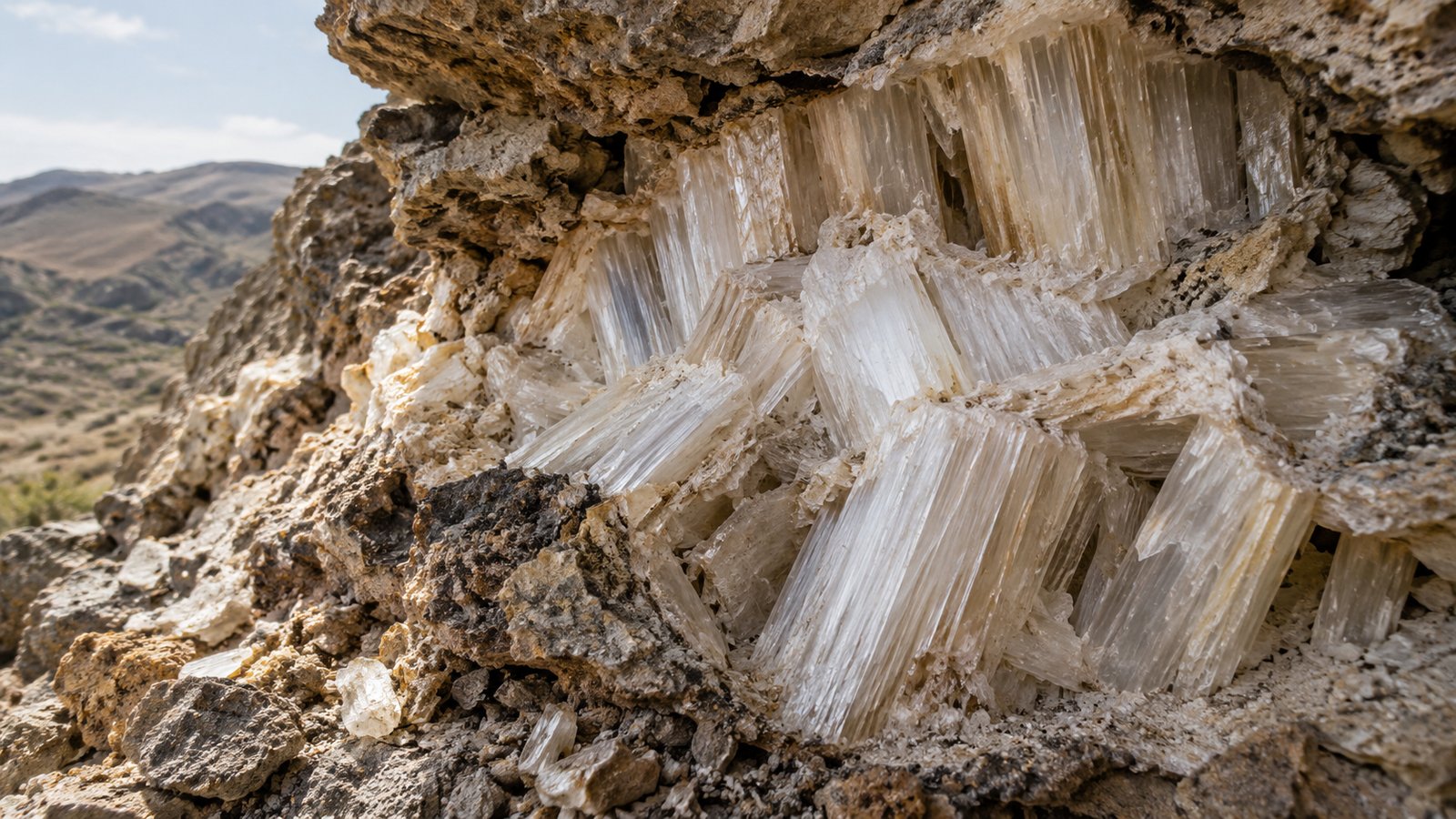
Gypsum is deposited when water rich in dissolved calcium and sulfate evaporates, which is why it is common in dry lake beds, caves and sedimentary rock layers. Gypsum ranks among the most widely distributed sulfate minerals, and the mineral is also mined for industrial use. Plaster, drywall and some cement products are made from gypsum.
Satin spar polished into crystal-shop pieces comes from several countries, and clear plates are found in Mexico, the United States and many other countries. Locality labels vary, and a name on a listing may not be verifiable, so treat origin claims as a bonus rather than a guarantee.
The Giant Crystals of Naica
Selenite holds the record for some of the largest natural crystals ever found. In the Naica Mine in Chihuahua, Mexico, miners broke into caves filled with beams of selenite that reach about 11 to 12 meters in length. Researchers who studied the Cave of the Crystals, including a team led by Juan Manuel García-Ruiz, explained how they grew. Hot water rich in calcium sulfate filled the cave, and as it cooled very slowly below roughly 58 degrees Celsius, gypsum began to crystallize from the water. The temperature stayed within a narrow range, around 54 to 58 degrees Celsius, for thousands of years, giving a few crystals time to grow enormous.
Once the mine was pumped dry and the caves exposed to air, the crystals started to face deterioration. Researchers have studied how air, humidity and carbon dioxide affect them, and conservation of the caves is an ongoing concern. The story is a good reminder that selenite is a mineral that depends on its environment.
What Selenite Means in Crystal Traditions
Crystal practice treats selenite as a stone of light and clarity. These meanings are traditions, not findings from a laboratory.
- Moon energy. The name and the glow tie selenite to lunar rituals, such as setting a piece on a windowsill during a full moon.
- Clarity and calm. Practitioners place a wand or slab in a meditation space to suggest an uncluttered mind.
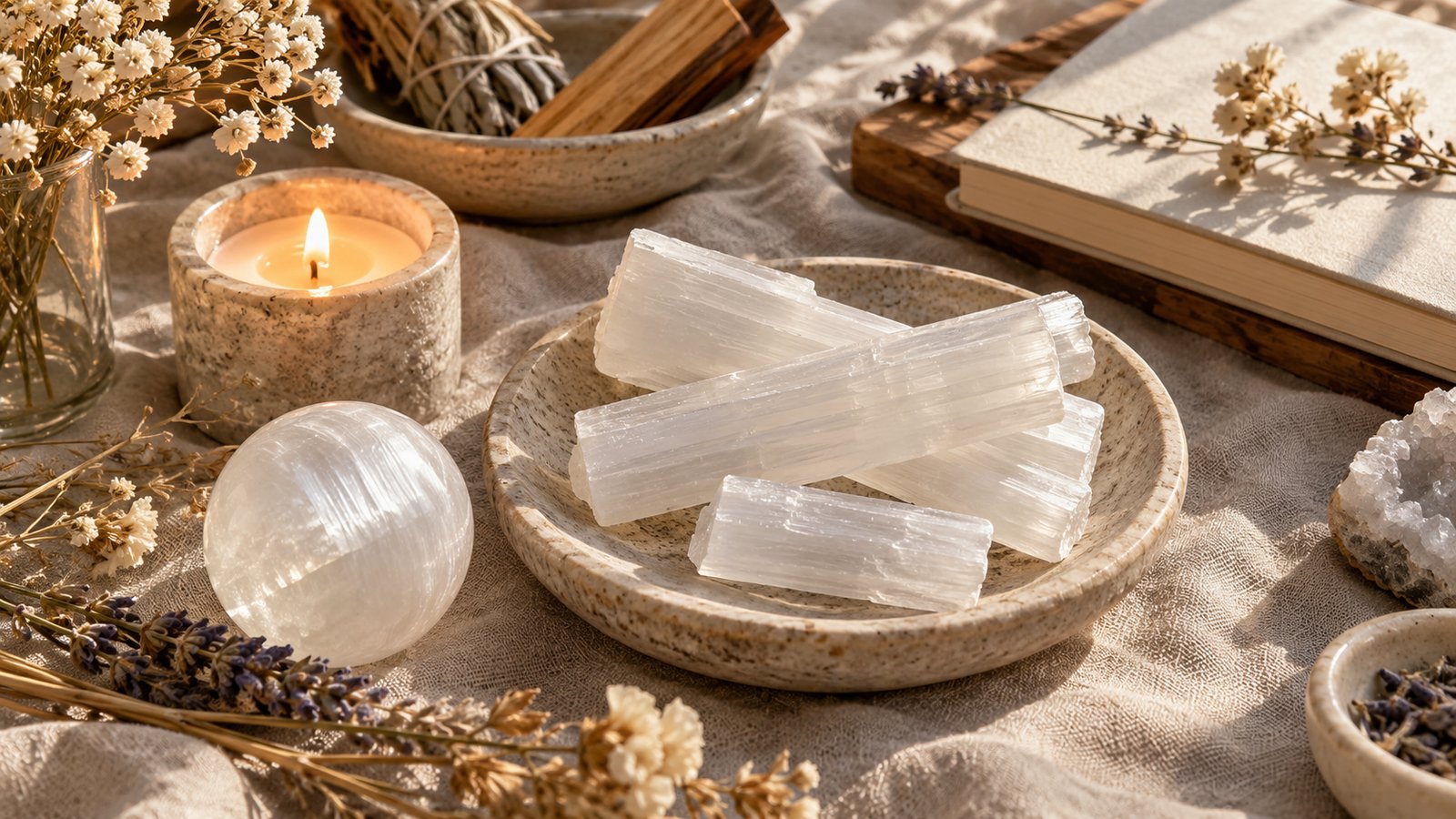
- Cleansing. Many people place other crystals on a selenite plate or near a selenite wand to clear them. The idea is symbolic, and the crystal cleansing guide compares this with other methods.
- Crown chakra and higher awareness. Chakra systems pair white and clear stones with the top of the head.
- Sleep and rest. Some people keep a small piece near the bed as a nightly cue to slow down.
Cleansing with selenite is a ritual practice: people set stones on a plate or beside a wand as a symbolic reset. The physical stone needs only a dry cloth, and the ritual is a pleasant, no-cost habit that, unlike water, does no harm.
Zodiac lists are inconsistent about selenite, with some linking it to Taurus and Cancer, and others calling it suitable for every sign. See our guide to crystals for zodiac signs for a broader comparison.

Selenite and Gypsum Across Cultures
Gypsum has been worked by people for thousands of years. A Norwegian Geological Survey study of the northern Faiyum quarries in Egypt reports that alabaster, the massive, fine-grained form of gypsum, was used for vessels from the Predynastic Period to at least the 4th Dynasty (2613 to 2494 BCE), and that the coarsely crystalline selenite was used to make gypsum plaster from the Predynastic period onward.
In Mesopotamia, the Metropolitan Museum of Art holds Sumerian gypsum alabaster objects, including a small female head (about 2600 to 2350 BCE) and a rectangular container with shell and bitumen inlay from Nippur (about 2600 to 2500 BCE). The Brooklyn Museum describes the monumental reliefs of the Neo-Assyrian king Ashurnasirpal II at Nimrud (about 883 to 859 BCE) as carved from gypsum alabaster quarried nearby and originally painted in bright colors.
Clear selenite itself was used in the Roman world. An archaeological study of the North Sinai survey collection reports selenite fragments at a fortified Roman-era settlement that likely come from a workshop making small window panes. The word selenite, meaning moon, ties the mineral to lunar traditions that continue in crystal practice today.

Selenite in the Home
Because selenite is soft and sheet-like, it suits decoration better than jewelry. Wands and towers stand on a shelf, lamps carved from satin spar throw a soft light, and large plates work as trays for a few small objects. Anyone who wants selenite jewelry should know that a pendant will scratch quickly and a ring will not last.
Placement matters more than for most stones. A bedroom shelf or study desk is dry and stable. A kitchen windowsill above a sink or a bathroom counter is not. Humidity does not dissolve gypsum quickly, but years of steam and splashes leave a dull, pitted surface. If a piece looks chalky or rough, a gentle wipe with a dry soft cloth restores some shine, and a bit of fine polishing paper can smooth a scratch. Light sanding changes the surface, so treat it as a last resort.
Lamps deserve a safety note. Choose a bulb that does not run hot, since a heated gypsum shell may weaken over time. Many selenite lamps use low-heat LED bulbs for that reason. Follow the maker’s instructions and never leave a lamp that feels hot unattended.
Selenite in Everyday Life Beyond Crystals
Gypsum is a working mineral. Builders use it to make drywall and plaster, farmers apply it as a soil amendment, and cement makers add it to control setting time. Sculptors have carved alabaster for thousands of years. The softness that makes selenite hard to keep as a decor piece is exactly what makes gypsum so easy to shape in industry. Knowing that gives the stone some context on the shelf: a rock holding up the walls of many homes now sits quietly on a table.
How to Care for Selenite
Selenite needs more caution than almost any other popular crystal. Its two enemies are water and rough handling.
- Keep it dry. Gypsum dissolves slightly in water, and long soaking can dull the surface or dissolve it. Do not wash selenite under running water, soak it in a bowl, or leave it in a shower, bathroom or damp basement.
- Dust with a dry cloth or soft brush. For a stubborn spot, use a barely damp cloth, then dry it immediately.
- Handle gently. Sheets and wands chip, flake and scratch. Do not stack heavier stones on a thin plate.
- Avoid sharp edges. Raw blades and broken tips can splinter, so handle them with care and keep them away from children.
- Skip heat. Gypsum can lose water when heated, becoming chalky. Keep it away from radiators and ovens.
- Do not use it in drinking water or elixirs. The same rule applies to most crystals, and especially to soft ones that dissolve.
- Store separately. Wrap in cloth, and keep it away from harder minerals that will scratch it, which is nearly every other crystal.
For energy cleansing of selenite itself, choose dry methods: sound, smoke, breath or moonlight. Water, salt and burial in earth are poor choices because they can damage the surface.

Selenite and Other Crystals
Collectors often display selenite beside harder stones, and the combination looks good: the soft white glow of gypsum against the saturated color of amethyst or the clarity of clear quartz. Keep in mind that quartz has a hardness of 7 and gypsum of 2, so the quartz will scratch the selenite if they touch. Set selenite on a cloth, a wooden stand or a felt pad, and keep a gap between pieces.
The charging plate is a popular accessory. A flat selenite slab holds smaller stones overnight as part of a cleansing routine. The practice is symbolic, and the plate gradually scuffs with use, so check it for fine scratches and dust. A thin cloth between plate and stones reduces wear.
Selenite travels poorly. A wand in a suitcase will chip and scratch, and a tower in a car trunk will crack. Wrap each piece in tissue or cloth and carry it in a box, or leave it at home.
Reading a Seller's Description
A good listing names the mineral as gypsum or selenite, states the form, such as satin spar wand or clear plate, and gives dimensions. It mentions the softness and offers care advice. A listing that promises that the stone will cleanse your home or cure ailments is making claims it cannot back up. Prefer shops that describe the stone, not the miracle.
How to Spot Fake or Mislabeled Selenite
Selenite is inexpensive, so fakes are mostly look-alikes passed off under the wrong name.
- Satin spar sold as selenite. Mislabeling like this is common and not exactly fake, since it is also gypsum. Satin spar shows a silky, fibrous sheen that moves as you turn it. Transparent selenite shows sheets and plates.
- Calcite. Calcite is a calcium carbonate and often forms white or clear, with a Mohs hardness of 3, so a fingernail does not scratch it. Calcite also fizzes in vinegar.
- Alabaster. Soft and also gypsum but fine-grained and opaque, sold as carved bowls and lamps. Real gypsum, though not selenite crystal.
- Glass or acrylic. A glass tower will not scratch with a fingernail and will feel heavier and colder. Acrylic is light and warm.
- Quartz points sold as selenite. Quartz has a Mohs hardness of 7 and is far harder than gypsum.
- Aragonite and other minerals. White fibrous aragonite can look similar, but it is harder and reacts with acid. See our post on aragonite for details.
The simplest hardness test is the one fingernail test, performed in an inconspicuous spot. A nail mark means the stone is soft and probably gypsum. The test leaves a tiny scratch, so use it only when a purchase is in doubt. When buying online, ask what the mineral is and the Mohs hardness.
For a collector piece or an expensive item, ask about origin and about whether it has been dyed. Some selenite is dyed in bright colors, which are not natural. Dye typically shows in cracks and rubs off on a damp cloth.

Frequently Asked Questions
Is selenite water safe?
No. Gypsum is soluble in water to a small degree, and soaking can dull or dissolve it. Keep it dry and wipe it with a dry cloth.
How hard is selenite?
Its Mohs hardness is 2, and a fingernail can scratch it.
What is the difference between selenite and satin spar?
Both are gypsum. Selenite is the clear, transparent crystal form, while satin spar is a fibrous, silky variety. Many polished wands are satin spar.
Is selenite the same as selenium?
No. The names share a Greek root, but selenite is a calcium sulfate mineral and selenium is a chemical element.
Can selenite go in the sun?
Sunlight does not change the color, but heat can affect gypsum over time. A bright window with a dry shelf is fine, while a steamy bathroom is not.
Does selenite cleanse other crystals?
That is a widely shared crystal-community tradition: the plate or wand acts as a symbolic reset for other stones. Treat the ritual as symbolic.
Where are the biggest selenite crystals?
The Cave of the Crystals in the Naica Mine, Mexico, holds beams of selenite roughly 11 to 12 meters long, according to published research.
Why does my selenite look cloudy?
Moisture, handling and tiny scratches dull a surface. Use a dry cloth, keep it away from humidity and accept some natural change over time.