| ✨Hey there! This post may contain affiliate links, meaning we earn a commission if you make a purchase through our links, at no cost to you. Please read our disclosures for more info. |
Quick answer: a windowsill herb garden needs three things above all: bright light, pots with drainage holes and a light, fast-draining potting mix. Place herbs in your sunniest window (south- or west-facing in the Northern Hemisphere), add an LED grow light if you get less than about six hours of direct sun, water only when the top inch of soil feels dry, and harvest often by snipping just above a pair of leaves. Chives, mint, parsley, basil, thyme and oregano are the easiest herbs to start with.
Fresh herbs make home cooking better, but buying a plastic clamshell of basil every week adds up, and half of it often wilts before you use it. A few pots on a sunny windowsill give you snips of fresh flavor whenever you need them, even in an apartment with no outdoor space.
Indoor herbs are not hard to grow, but they do have a few non-negotiable needs. This guide covers light, containers, soil, watering, feeding, harvesting and troubleshooting, plus which herbs thrive indoors and which are trickier. For a wider introduction to cooking with herbs, brewing tea and eating more plants, start with our beginner’s guide to herbs.
Sources: University of Minnesota Extension, University of Illinois Extension and Penn State Extension guides to growing herbs indoors and in containers; Clemson Cooperative Extension Home and Garden Information Center; ASPCA Animal Poison Control Center toxic and non-toxic plant lists; National Center for Home Food Preservation (NCHFP) on drying herbs. Checked October 2026.

Contents
hide
Why Grow Herbs on a Windowsill?
A windowsill herb garden puts fresh flavor within arm’s reach of the stove, costs little to start, and fits into the smallest kitchen. Snipping a few leaves as you cook also means less waste than buying large bunches.
What to expect
Indoor herbs usually grow more slowly and produce less than the same plants outdoors in summer, because even a bright window gives less light than full sun. Think of a windowsill garden as a steady source of garnishes, sauces and teas rather than a harvest for big batches of pesto. With good light, though, many herbs will keep producing for months.

Light: The Most Important Factor
Light is where most indoor herb gardens succeed or fail. Cooperative extension guides commonly recommend at least six hours of direct sunlight a day for sun-loving culinary herbs such as basil, rosemary, thyme and oregano.
Choosing a window
- South-facing windows get the most direct light in the Northern Hemisphere and are usually best.
- West-facing windows get strong afternoon sun and are a good second choice.
- East-facing windows get gentler morning light, which suits parsley, chives and mint.
- North-facing windows rarely provide enough light for most culinary herbs without a grow light.
Signs of too little light include tall, floppy stems with long gaps between leaves, pale growth and plants leaning hard toward the glass. Rotate pots a quarter turn every few days so they grow evenly.
Adding a grow light
A grow light turns any spot into a workable herb garden and makes winter growing much easier. Modern LED grow lights use little electricity and give off little heat.
- Choose a full-spectrum LED designed for plants.
- Position the light a few inches above the plant tops, raising it as they grow; follow the manufacturer’s distance guidance.
- Many extension guides suggest running grow lights for about 12 to 16 hours a day.
- Use an inexpensive outlet timer so the lights switch on and off automatically.

Pots, Drainage and Potting Mix
Herbs hate soggy roots. The right container and soil prevent the most common cause of indoor herb death: root rot from overwatering.
Containers
- Every pot needs drainage holes. Decorative pots without holes can hold a plain plastic nursery pot inside them.
- Use a saucer under each pot and empty standing water after watering.
- A pot about 6 inches wide suits most single herb plants; mint and parsley appreciate a bit more room.
- Terracotta dries out faster, which suits rosemary, thyme and oregano. Plastic and glazed ceramic hold moisture longer, which suits basil and parsley.
Potting mix
Use a quality potting mix made for containers, not garden soil. Garden soil compacts in pots, drains poorly and can bring in pests. For Mediterranean herbs, mixing in some perlite improves drainage.
Grouping herbs
Group herbs by their water needs. Rosemary, thyme, oregano and sage like to dry out between waterings, while basil, parsley, chives and mint prefer evenly moist soil. Mint should always have its own pot, because its spreading roots crowd out neighbors.

The Easiest Herbs to Grow on a Windowsill
Some herbs adapt to indoor life far better than others. Start with two or three from the easy list before trying the more demanding ones.
| Herb | Difficulty indoors | Light needs | Notes |
|---|---|---|---|
| Chives | Easy | Moderate to bright | Snip leaves at the base; regrow quickly |
| Mint | Easy | Moderate to bright | Grow alone; very vigorous |
| Parsley | Easy | Moderate to bright | Slow to start from seed; buy a young plant |
| Basil | Moderate | Bright | Needs warmth and lots of light; pinch often |
| Thyme | Moderate | Bright | Let soil dry between waterings |
| Oregano | Moderate | Bright | Similar care to thyme |
| Lemon balm | Easy | Moderate to bright | Mint relative; grows readily |
| Rosemary | Harder | Very bright | Needs strong light and good drainage; dislikes soggy soil |
| Cilantro | Harder | Bright | Tends to bolt (flower) quickly; sow small batches every few weeks |
Several of these herbs have a long history in home apothecaries; our guide to the most useful herbs in apothecary covers their traditional uses.

Seeds, Starter Plants or Cuttings?
You can start an indoor herb garden three ways, and each has its place.
Starter plants
Young potted herbs from a garden center or grocery store are the fastest way to begin. Check for healthy green leaves and no pests under the leaves. Supermarket “living” herbs are often several seedlings crowded into one pot; gently dividing them into two or three pots gives each more room to grow.
Seeds
Seeds are inexpensive and offer more variety. Basil, chives, cilantro and dill sprout fairly quickly. Parsley is notoriously slow to germinate, sometimes taking several weeks. Sow seeds at the depth on the packet, keep the soil lightly moist and place the pots in bright light as soon as seedlings appear.
Cuttings
Some herbs root easily from cuttings. Basil and mint stems will often grow roots in a glass of water on the windowsill within a couple of weeks. Rosemary, thyme and oregano cuttings can be rooted in moist potting mix. Pot up cuttings once roots are an inch or two long.

Watering Indoor Herbs
Overwatering kills more indoor herbs than underwatering. The goal is moist, not wet, soil for most herbs, and slightly dry soil between waterings for Mediterranean types.
How to tell when to water
Push a finger about an inch into the soil. If it feels dry, water; if it feels damp, wait. Lifting the pot also helps: a dry pot feels noticeably lighter.
How to water
- Water slowly until a little drains from the bottom, then empty the saucer.
- Use room-temperature water.
- Water the soil, not the leaves, to discourage fungal problems.
- Expect to water more often in warm, sunny weather and less in winter.
Humidity
Indoor air can become very dry in winter when the heat is on. Setting pots on a tray of pebbles with a little water (keeping pot bottoms above the waterline) slightly raises humidity around the plants.

Temperature and Placement
Most culinary herbs grow well at ordinary indoor temperatures, roughly the same range people find comfortable. Basil is the most cold-sensitive and suffers when nighttime temperatures drop near 50 degrees Fahrenheit.
- Keep leaves from touching cold window glass in winter.
- Avoid spots directly above radiators or heating vents, which dry plants out.
- Move plants away from drafty doors.
- On very hot summer days, a south window can scorch tender leaves; a sheer curtain helps.

Feeding Your Herbs
Potting mix runs out of nutrients over time, especially in small pots. Herbs need only light feeding, though, and too much fertilizer can produce lush leaves with weaker flavor.
Many extension guides suggest a balanced liquid fertilizer at half strength about once a month during active growth, with less or none in winter when growth slows. Follow the label directions on the product you choose.

How to Harvest for Bushy Plants
Regular harvesting is good for herbs. Cutting the tips encourages side shoots, so plants grow fuller instead of tall and thin.
Harvesting rules
- Never remove more than about one-third of a plant at once.
- Snip stems just above a pair of leaves or a leaf node; new shoots will grow from that point.
- Cut chives and parsley stems from the outside of the clump, close to the base.
- Pinch off basil flower buds as soon as they appear to keep leaves tender.
- Harvest in the morning when leaves are full of moisture.
Using and preserving extra herbs
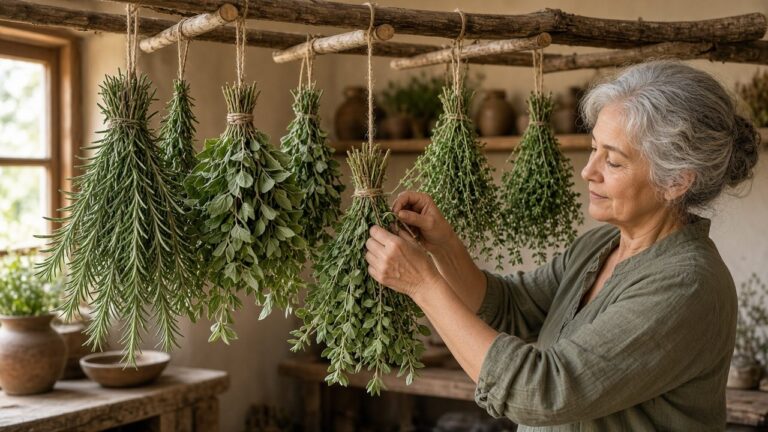
Fresh herbs are best used right away. When plants produce more than you can use, dry or freeze the extras. The National Center for Home Food Preservation describes simple methods such as air drying small bundles of hardy herbs or using a dehydrator at low temperatures. Herbs also freeze well chopped into ice cube trays with water or oil.

Common Problems and Fixes
| Problem | Likely cause | Fix |
|---|---|---|
| Tall, leggy, pale stems | Too little light | Move to a brighter window or add a grow light |
| Yellow lower leaves | Overwatering or poor drainage | Let soil dry more; check drainage holes |
| Wilting despite wet soil | Root rot | Repot in fresh mix; trim mushy roots; water less |
| Crispy brown leaf edges | Underwatering, dry air or heat | Water more consistently; move away from vents |
| Tiny flies around soil | Fungus gnats, encouraged by wet soil | Let the top of the soil dry out; use sticky traps |
| Fine webbing, speckled leaves | Spider mites | Rinse leaves; use insecticidal soap per label |
| Sticky leaves, clustered small insects | Aphids | Wipe or rinse off; use insecticidal soap per label |
| Basil turning black | Cold damage | Keep away from cold glass and drafts |
When to start over
Herbs like basil and cilantro are annuals and naturally decline after flowering. Starting a fresh pot every couple of months keeps a steady supply.

Keeping Herbs Safe Around Pets
If you have cats or dogs, check each herb before you bring it home. The ASPCA Animal Poison Control Center lists some common herbs as toxic to cats and dogs, including chives (an allium), mint and oregano, while basil and rosemary appear on its non-toxic list. Place herbs where pets cannot chew them, and call a veterinarian or animal poison control if a pet eats a plant that may be harmful.

A Simple Windowsill Herb Plan
- Pick your brightest window, or set up an LED grow light on a timer.
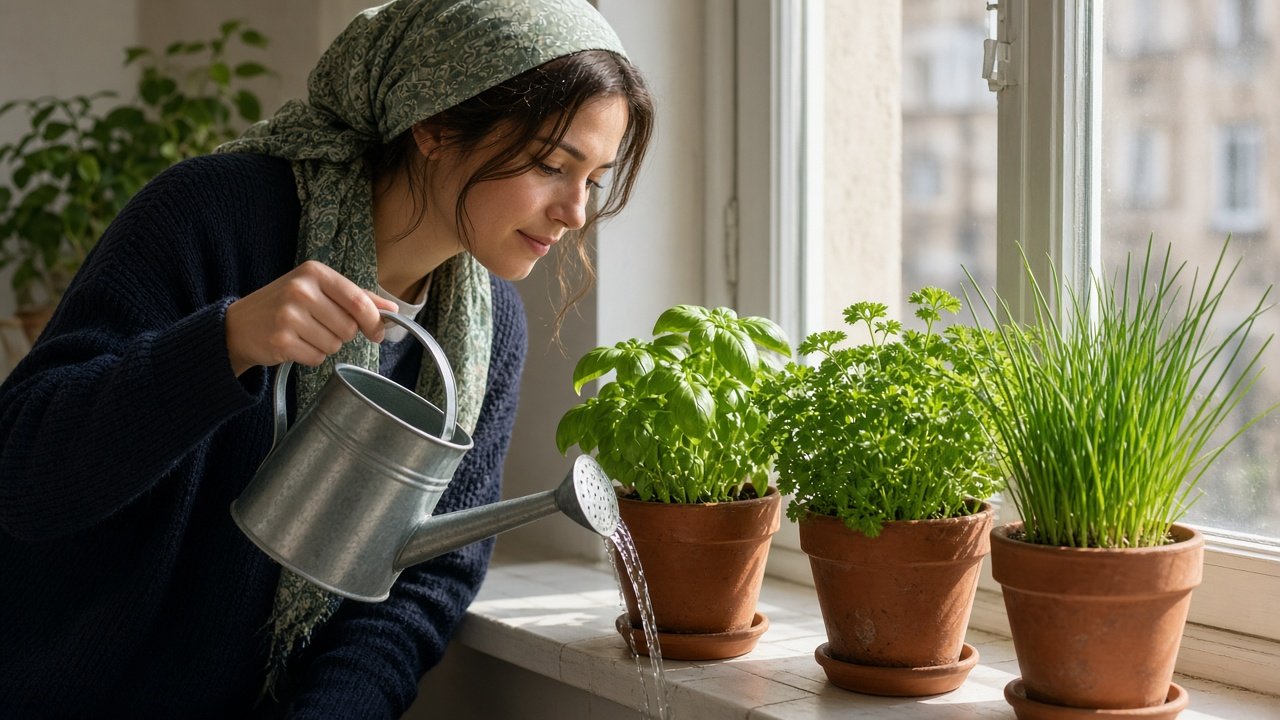
- Buy two or three healthy starter plants: for example, chives, parsley and basil.
- Pot each into a 6-inch container with drainage holes and fresh potting mix.
- Water only when the top inch of soil is dry.
- Harvest a little every week, cutting above leaf pairs.
- Feed lightly once a month during active growth.
- Add a new herb, such as mint in its own pot, once the first ones are thriving.

Ways to Use Your Windowsill Herbs
Small daily harvests add up. A few ideas:
- Snip chives over eggs, potatoes and soups.
- Tear basil into tomato salads and pasta.
- Stir chopped parsley into grains and beans.
- Add mint to water, fruit or yogurt.
- Brew fresh mint or lemon balm into tea.
Using more herbs is an easy way to make vegetables and whole grains more appealing, which supports the colorful, plant-rich eating described in our guide to the chromatic diet and phytochemicals. For more everyday food habits, see our tips on how to improve your diet.

Frequently Asked Questions
What herbs grow best on a windowsill?
Chives, mint, parsley, lemon balm, basil, thyme and oregano are among the easiest. Rosemary and cilantro are possible but more demanding indoors.
How much sun do indoor herbs need?
Most culinary herbs do best with at least six hours of direct sunlight, according to cooperative extension guides. If your window gets less, add an LED grow light for about 12 to 16 hours a day.
How often should I water herbs on a windowsill?
Water when the top inch of soil is dry rather than on a fixed schedule. Let rosemary, thyme and oregano dry out more between waterings, and always empty the saucer.
Can you grow herbs indoors in winter?
Yes. Winter light is weaker, so a south-facing window or a grow light becomes more important. Keep leaves away from cold glass and heating vents.
Why are my indoor herbs dying?
The most common causes are too little light and too much water. Leggy, pale growth points to light; yellowing leaves and wet soil point to overwatering or poor drainage.
Can you grow herbs from grocery store cuttings?
Often, yes. Basil and mint stems frequently root in a glass of water within a couple of weeks and can then be potted up.

Sources
- University of Minnesota Extension. Growing herbs indoors.
- University of Illinois Extension. Herb gardening and indoor herbs.
- Penn State Extension. Growing herbs in containers.
- Clemson Cooperative Extension, Home and Garden Information Center. Indoor herbs and common pests.
- ASPCA Animal Poison Control Center. Toxic and non-toxic plants list.
- National Center for Home Food Preservation. Drying Herbs.