| ✨Hey there! This post may contain affiliate links, meaning we earn a commission if you make a purchase through our links, at no cost to you. Please read our disclosures for more info. |
Quick answer: for beginners, the easiest way to bring herbs into everyday life is through food and tea. Start with five or six familiar culinary herbs (basil, parsley, mint, rosemary, thyme and chives), grow one or two in a sunny window, brew simple herbal teas such as peppermint or chamomile, and use herbs to make more vegetables, beans and whole grains taste good. Treat herbal supplements differently from kitchen herbs: they are less regulated, can interact with medications, and deserve a conversation with a pharmacist or doctor first.
Herbs have been part of cooking and home remedies for thousands of years. A handful of fresh parsley brightens a soup, a mug of mint tea feels soothing after dinner, and a pot of basil on the windowsill makes cooking feel a little more special. Herbs are also one of the simplest ways to eat more plants without making meals complicated.
In this guide
- Herbs vs Herbal Medicine: Know the Difference
- The Most Useful Herbs to Know First
- How to Cook With Fresh and Dried Herbs
- Eat the Rainbow: Herbs and Colorful Nutrition
- Growing Herbs at Home
- How to Make Herbal Tea
- Drying and Storing Herbs
- Buying Herbs and Supplements Wisely
- Safety and Medication Interactions
- Herbs in Everyday Self-Care
- A Simple Beginner Plan
- Frequently Asked Questions
- Related Herb and Nutrition Guides
- Sources
This guide is a practical starting point. It explains the difference between culinary herbs and herbal medicine, introduces the herbs most worth knowing, and covers growing, drying, storing, brewing and buying herbs. It also connects herbs to the bigger picture of eating a colorful, plant-rich diet and links to our deeper guides on each topic.
Sources: U.S. Food and Drug Administration (FDA), dietary supplements and generally recognized as safe (GRAS) substances; National Center for Complementary and Integrative Health (NCCIH), herb fact sheets and “Using Dietary Supplements Wisely”; Centers for Disease Control and Prevention (CDC), fruit and vegetable intake data (MMWR, 2022); USDA MyPlate; National Center for Home Food Preservation (NCHFP), drying herbs and flavored oils; university cooperative extension guides on growing herbs; American Institute for Cancer Research (AICR) on phytochemicals. This article is general information, not medical advice. Checked October 2026.

Herbs vs Herbal Medicine: Know the Difference
Culinary herbs and herbal supplements come from similar plants but are regulated and used very differently. Kitchen herbs used in normal food amounts are generally considered safe, while concentrated supplements carry more risk.
Culinary herbs
The FDA lists many common spices, herbs and their extracts as generally recognized as safe (GRAS) for their intended use in food. Sprinkling oregano on pizza or adding mint to a salad falls into this everyday category. Culinary herbs add flavor, aroma and small amounts of nutrients and plant compounds.
Herbal supplements
Capsules, tablets, tinctures and concentrated extracts sold for health purposes are regulated as dietary supplements under the Dietary Supplement Health and Education Act of 1994. The FDA explains that supplement makers do not need FDA approval before selling a product, and the agency does not review supplements for safety and effectiveness before they reach the market. Companies are responsible for making sure their products are safe and labeled accurately.
Why the difference matters
A concentrated extract can deliver far more of a plant’s active compounds than you would ever get from cooking. NCCIH reminds consumers that “natural” does not always mean safe, and that some herbs can cause side effects or interact with prescription drugs. Using a tablespoon of fresh sage in stuffing is not the same as taking sage extract capsules daily.
Herbs are not a substitute for medical care. Use them to make food and daily rituals more enjoyable, and talk with a clinician about any health concern.

The Most Useful Herbs to Know First
A short list of familiar herbs covers most everyday cooking and tea needs. Learning a handful well is better than buying dozens of jars you never open.
| Herb | Flavor | Common uses | Fresh or dried |
|---|---|---|---|
| Basil | Sweet, peppery | Tomato dishes, pesto, salads | Best fresh |
| Parsley | Fresh, grassy | Soups, grains, sauces, garnish | Best fresh |
| Mint | Cool, bright | Tea, fruit, yogurt sauces, salads | Fresh or dried |
| Rosemary | Piney, resinous | Roasted vegetables, potatoes, beans, bread | Both work well |
| Thyme | Earthy, savory | Soups, stews, roasted vegetables | Both work well |
| Oregano | Bold, slightly bitter | Tomato sauces, beans, Greek and Mexican dishes | Dried is classic |
| Chives | Mild onion | Eggs, potatoes, dips | Best fresh |
| Dill | Bright, anise-like | Fish, cucumbers, potato salad, pickles | Best fresh |
| Cilantro | Citrusy (soapy to some people) | Salsas, curries, rice, beans | Best fresh |
| Sage | Earthy, savory | Squash, beans, stuffing | Both work well |
Our article on the most useful herbs in a home apothecary goes deeper into traditional uses of several of these plants, and our guide to anise hyssop covers a lesser-known garden herb with a sweet licorice scent.
Herbs vs spices
In everyday cooking, “herbs” usually means the leaves of a plant, while “spices” come from seeds, bark, roots, fruit or flowers. Cinnamon (bark), cumin (seed), ginger (root) and black pepper (fruit) are spices. Both add flavor without adding salt or sugar, which makes them useful for healthier cooking.

How to Cook With Fresh and Dried Herbs
Herbs work best when you add them at the right moment. Hardy herbs can handle long cooking, while tender herbs lose flavor quickly with heat.
Hardy vs tender herbs
- Hardy herbs such as rosemary, thyme, sage, oregano and bay leaves have tough leaves and woody stems. Add them early to soups, stews, roasts and beans.
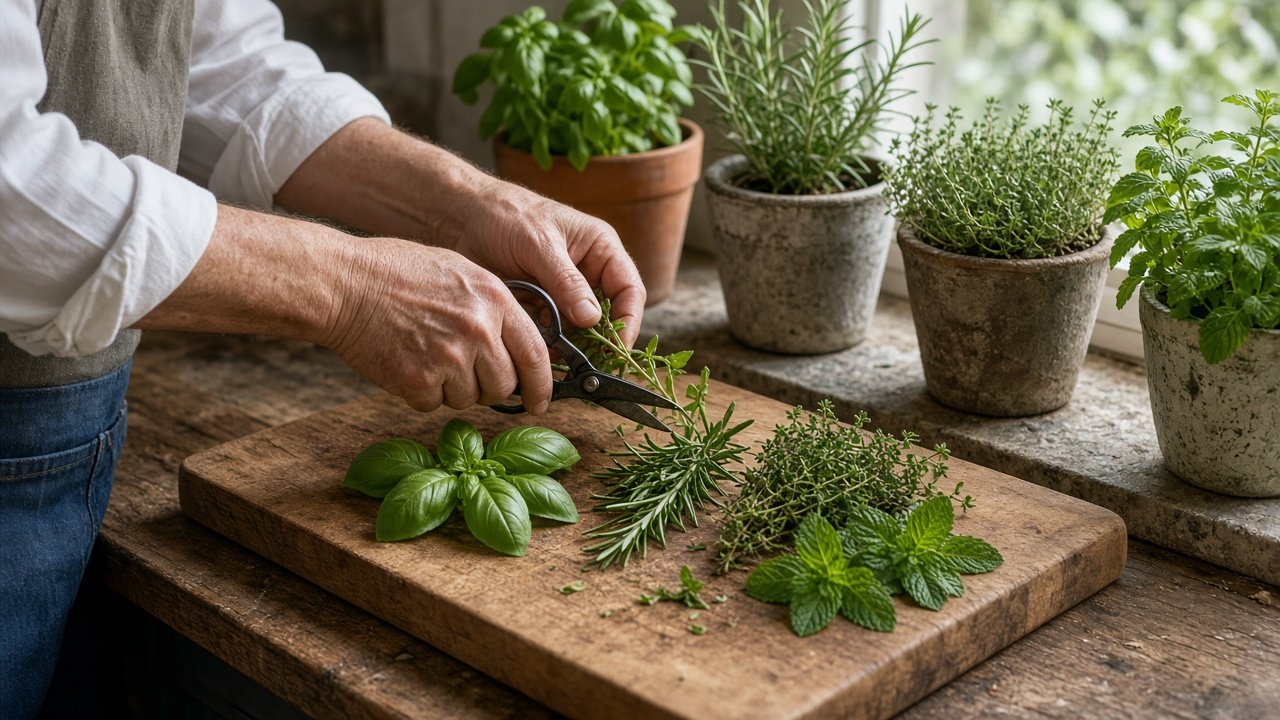
- Tender herbs such as basil, parsley, cilantro, dill, chives and mint have soft leaves. Add them at the end of cooking or use them raw.
Converting fresh to dried
A common kitchen rule from cooperative extension services is that 1 tablespoon of chopped fresh herbs equals about 1 teaspoon of dried herbs, because drying concentrates flavor. Crush dried herbs between your fingers before adding them to release more aroma.
Easy ways to use more herbs
- Stir chopped parsley, dill or chives into grains, potatoes and eggs.
- Blend basil, parsley or cilantro with oil, garlic and nuts or seeds into a quick sauce.
- Toss rosemary and thyme with vegetables before roasting.
- Add mint to fruit salads, yogurt or water.
- Use herbs to replace some salt in recipes.
That last point matters. The Dietary Guidelines for Americans encourage limiting sodium, and herbs and spices are a simple way to keep food flavorful with less salt.

Eat the Rainbow: Herbs and Colorful Nutrition
Herbs fit into a bigger habit: eating a wide variety of colorful plant foods. Different colors in fruits, vegetables and herbs often signal different groups of naturally occurring plant compounds called phytochemicals.
Most adults fall short on produce
According to a CDC report published in 2022, only about 12 percent of U.S. adults met the recommendation for fruit intake and about 10 percent met the recommendation for vegetables in 2019. USDA MyPlate suggests making half your plate fruits and vegetables. Herbs alone will not close that gap, but they make vegetables, beans and salads more appealing.
Colors and what they often contain
| Color | Examples | Plant compounds often present |
|---|---|---|
| Red | Tomatoes, watermelon, red peppers | Lycopene |
| Orange and yellow | Carrots, sweet potatoes, squash | Carotenoids such as beta-carotene |
| Green | Spinach, kale, broccoli, parsley | Lutein, glucosinolates (in cruciferous vegetables), chlorophyll |
| Blue and purple | Blueberries, purple cabbage, eggplant | Anthocyanins |
| White and tan | Garlic, onions, cauliflower | Allium compounds, glucosinolates |
The American Institute for Cancer Research notes that phytochemicals are being studied for many possible health effects and that eating a variety of whole plant foods is the practical way to get them, rather than relying on isolated supplements.
We cover this idea in depth in our guide to the chromatic diet and foods with phytochemicals and in a shorter explainer on phytochemicals and a chromatic diet. For broader food habits, see our practical tips on how to improve your diet.

Growing Herbs at Home
Growing a few herbs is one of the easiest ways to start gardening, even in an apartment. Most popular culinary herbs need plenty of light, well-drained soil and a container with drainage holes.
Light and location
Many cooperative extension guides recommend at least six hours of direct sunlight for sun-loving herbs such as basil, rosemary, thyme and oregano. In the Northern Hemisphere, a south- or west-facing window usually gets the most light indoors. If your windows are dim, an inexpensive LED grow light can fill the gap. Parsley, chives and mint tolerate somewhat less light.
Containers and soil
- Choose pots with drainage holes; soggy roots are a common cause of failure.
- Use a potting mix made for containers rather than garden soil.
- Give mint its own pot, since it spreads aggressively and can crowd out other plants.
- Group herbs with similar needs: Mediterranean herbs (rosemary, thyme, oregano, sage) like to dry out between waterings, while basil and parsley prefer more even moisture.
Annuals, biennials and perennials
- Annuals (basil, cilantro, dill) complete their life cycle in one season; sow or buy new plants each year.
- Biennials (parsley) grow leaves in the first year and flower in the second.
- Perennials (chives, mint, oregano, thyme, sage) return year after year in suitable climates. Rosemary is perennial in mild climates but often needs to come indoors where winters are cold.
Harvesting
Snip regularly from the top, just above a pair of leaves, to encourage bushier growth. Never take more than about a third of the plant at once. Pinching off flower buds on basil keeps the leaves tender and flavorful longer.

How to Make Herbal Tea
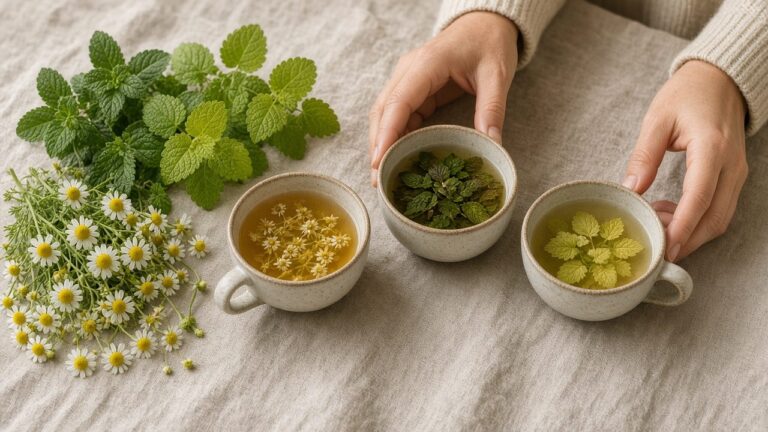
Herbal tea, also called a tisane, is made by steeping herbs, flowers, seeds or roots in hot water. Unlike black or green tea, most herbal teas do not come from the tea plant (Camellia sinensis) and are naturally caffeine-free.
Infusions and decoctions
- Infusion is for leaves and flowers such as mint, chamomile and lemon balm. Pour just-boiled water over the herbs, cover the cup to keep aromatic compounds in, and steep about 5 to 10 minutes.
- Decoction is for tougher parts such as roots, bark and seeds, like ginger or cinnamon. Simmer them in water for 10 to 20 minutes, then strain.
Simple ratios
A common starting point is about 1 to 2 teaspoons of dried herb, or 1 to 2 tablespoons of fresh herb, per cup of water. Adjust to taste. Fresh mint from the windowsill makes one of the easiest homemade teas.
Beginner-friendly herbal teas
| Tea | Taste | Notes |
|---|---|---|
| Peppermint | Cool, refreshing | Popular after meals; may worsen heartburn in some people |
| Chamomile | Mild, apple-like | Related to ragweed; people with those allergies should be cautious |
| Lemon balm | Lemony, gentle | Member of the mint family; easy to grow |
| Ginger | Warm, spicy | Make as a decoction from sliced fresh root |
| Hibiscus | Tart, cranberry-like | Deep red; NCCIH notes limited research on blood pressure |
| Rooibos | Earthy, sweet | Naturally caffeine-free |
Tea rituals pair well with rest; our guide to self-care and everyday happiness has ideas for building calm moments into the day.

Drying and Storing Herbs
Drying preserves a summer harvest for winter cooking. Storing fresh and dried herbs correctly keeps them flavorful and safe.
Drying methods
The National Center for Home Food Preservation describes several ways to dry herbs:
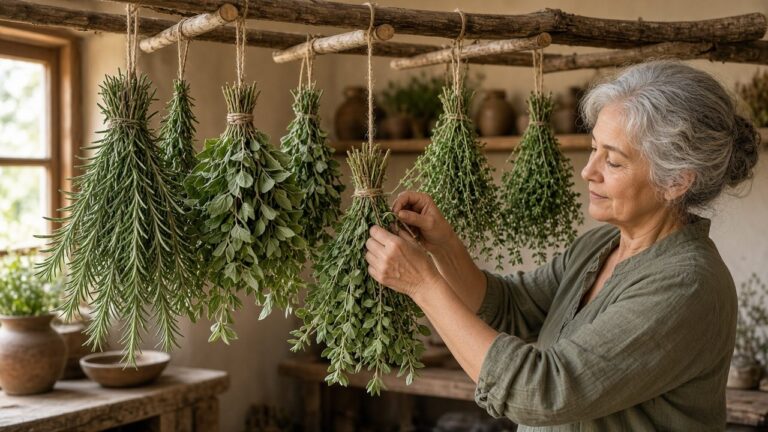
- Air drying. Tie small bundles of hardy herbs such as rosemary, thyme and sage and hang them upside down in a warm, dry, dark and well-ventilated spot. Drying usually takes one to two weeks.
- Dehydrator. NCHFP suggests a dehydrator temperature of about 95 to 115 degrees Fahrenheit for herbs, slightly higher in humid areas. Leaves are ready when they crumble easily.
- Microwave or oven. Small batches can be dried quickly, but watch closely so the herbs do not scorch.
Storing dried herbs
Keep dried herbs in airtight glass jars away from heat, light and moisture, such as in a cupboard rather than above the stove. Label jars with the date. Dried leafy herbs gradually lose aroma; many extension guides suggest using them within about a year.
Storing fresh herbs
- Treat basil like cut flowers: trim the stems and stand them in a glass of water at room temperature, since cold can blacken the leaves.
- Store parsley and cilantro upright in a jar of water in the refrigerator, loosely covered with a bag.
- Wrap hardy herbs like thyme and rosemary in a slightly damp paper towel and refrigerate in a container.
- Freeze chopped herbs in ice cube trays with water or oil for cooking later.
A food safety warning about herbs in oil
Homemade herb- or garlic-infused oils can support the growth of Clostridium botulinum, the bacteria that cause botulism, when stored at room temperature. The National Center for Home Food Preservation advises refrigerating homemade flavored oils and using them within a few days, or freezing them for longer storage. Never leave homemade herb oil on the counter.

Buying Herbs and Supplements Wisely
Quality matters, especially for dried herbs and supplements. Fresh herbs are easy to judge by eye and smell, but packaged products need a closer look.
Fresh and dried culinary herbs
- Fresh herbs should look perky and smell strong, with no slimy or yellowing leaves.
- Dried herbs should still have a strong scent when you open the jar; faded aroma means faded flavor.
- Buy small amounts of herbs you use rarely, so they do not sit for years.
- Bulk sections at grocery or co-op stores can be an affordable way to buy small quantities.
Herbal supplements
Because supplements are not approved before sale, independent testing is useful. Look for seals from third-party programs such as USP Verified, NSF International or ConsumerLab, which check that a product contains what the label says and is not contaminated with harmful levels of certain substances. A seal does not prove that a product works; it only confirms quality and labeling.
Be wary of supplements that promise to cure disease, melt fat or replace prescription drugs. The FDA and the Federal Trade Commission have repeatedly taken action against companies making unproven health claims.

Safety and Medication Interactions
Herbs in food are generally safe for most people, but concentrated herbal products can affect how medications work. Telling your doctor and pharmacist about every supplement you take is one of the most important safety steps.
Examples of known interactions
NCCIH fact sheets describe several well-documented concerns:
- St. John’s wort can interact with many medications, including birth control pills, antidepressants, some heart medications and drugs used after organ transplants, often making them less effective.
- Ginkgo may increase bleeding risk, which is a concern for people taking blood thinners.
- Licorice root in large amounts can raise blood pressure and lower potassium levels.
- Goldenseal can affect how the body processes some medications.
Herbs that are not safe to take by mouth
The FDA advised manufacturers in 2001 to remove oral comfrey products from the market because comfrey contains pyrrolizidine alkaloids, which can cause serious liver damage. Some traditional remedies carry similar hidden risks, which is why researching an herb before taking it as a supplement matters.
Who should be extra careful
- People who are pregnant or breastfeeding
- Children
- Older adults taking several medications
- Anyone preparing for surgery (some herbs affect bleeding or anesthesia)
- People with liver or kidney disease
Foraging: an important caution
Wild plants can be delicious, but some deadly plants look very similar to edible ones. Poison hemlock, for example, resembles wild carrot (Queen Anne’s lace) and other plants in the carrot family. Never eat a wild plant unless an expert has positively identified it, and call Poison Help at 1-800-222-1222 in the United States if you suspect a poisoning.

Herbs in Everyday Self-Care
Many people enjoy herbs as part of daily rituals: a cup of chamomile in the evening, a sprig of rosemary on the counter, or a fresh mint plant on the desk. These habits can make ordinary moments feel more intentional.
Simple herbal rituals
- Brew a pot of herbal tea and drink it away from screens.
- Keep a small herb garden and spend a few minutes tending it each day.
- Make a weekly “herb night” where you try one new herb in a recipe.
- Tie small bundles of rosemary or lavender to dry in the kitchen for scent.
For scent-based rituals using concentrated plant oils, our guide to lavender essential oil uses and safety explains why essential oils need more care than kitchen herbs.

A Simple Beginner Plan
- Buy or grow three herbs you already like: for example, basil, parsley and mint.
- Use one fresh herb in a meal every day for a week.
- Brew one herbal tea, such as fresh mint or chamomile, a few evenings a week.
- Add one new colorful vegetable to your shopping list each week.
- Dry a small bundle of rosemary or thyme and store it in a labeled jar.
- Before trying any herbal supplement, check NCCIH’s herb fact sheets and talk with your pharmacist.

Frequently Asked Questions
What are the easiest herbs for beginners to grow?
Mint, chives, parsley, basil and thyme are commonly recommended for beginners. They grow well in containers, and most need a sunny window or a grow light. Keep mint in its own pot because it spreads quickly.
Are herbs good for your health?
Culinary herbs add flavor and small amounts of plant compounds, and they can help you use less salt. Their biggest benefit is making vegetables, beans and whole grains more enjoyable. Herbal supplements are different and should be discussed with a clinician.
Are herbal supplements regulated by the FDA?
They are regulated as dietary supplements, but the FDA does not approve them for safety or effectiveness before they are sold. Third-party seals such as USP Verified or NSF help confirm quality and labeling.
Can herbal teas interact with medications?
Most common herbal teas are fine for most people in normal amounts, but some herbs, such as St. John’s wort, licorice root and ginkgo, can interact with medications. Ask your pharmacist if you take prescription drugs.
How do you dry fresh herbs at home?
Hang small bundles upside down in a warm, dark, airy place for one to two weeks, or use a dehydrator at about 95 to 115 degrees Fahrenheit as suggested by the National Center for Home Food Preservation. Store dried herbs in airtight jars away from light.
How much dried herb equals fresh?
A common rule is that 1 tablespoon of fresh chopped herbs equals about 1 teaspoon of dried herbs.

Related Herb and Nutrition Guides
- Top useful herbs in a home apothecary (linked above)
- Chromatic diet and foods with phytochemicals (linked above)
- Phytochemicals and a chromatic diet (linked above)
- How to improve your diet (linked above)
- Anise hyssop (linked above)
- Coming soon: herbal teas for beginners, growing herbs on a windowsill, herb drying and storage, chamomile, mint and lemon balm, spice cabinet basics, herb and medication interactions, and foraging safety

Sources
- U.S. Food and Drug Administration. Dietary Supplements; Generally Recognized as Safe (GRAS); 2001 advisory on comfrey products.
- National Center for Complementary and Integrative Health. Using Dietary Supplements Wisely; herb fact sheets (St. John’s wort, ginkgo, licorice root, goldenseal, chamomile, peppermint, hibiscus).
- Centers for Disease Control and Prevention. Adults Meeting Fruit and Vegetable Intake Recommendations, MMWR, 2022.
- U.S. Department of Agriculture. MyPlate.
- U.S. Department of Agriculture and HHS. Dietary Guidelines for Americans.
- National Center for Home Food Preservation. Drying Herbs; Flavored Vinegars and Oils.
- University cooperative extension services. Growing herbs in containers and indoors.
- American Institute for Cancer Research. Phytochemicals: The Cancer Fighters in the Foods We Eat.
- America’s Poison Centers. Poison Help line 1-800-222-1222.